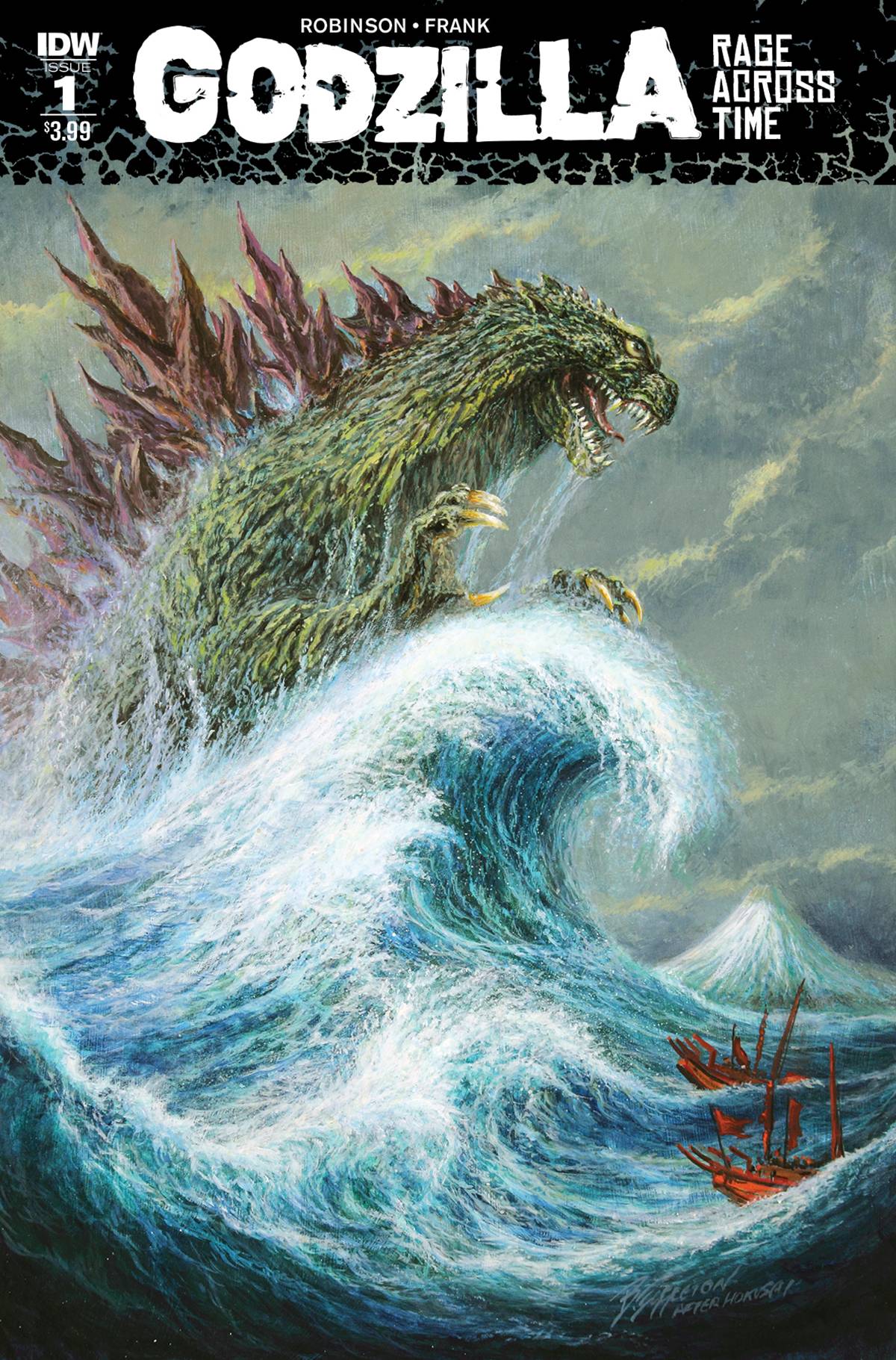
Move over dinosaurs...monsters used to rule the planet! Travel to different time periods to examine the origin of myths that fueled nightmares! In this first installment, Godzilla brings his terror to feudal Japan![1]
„
Plot
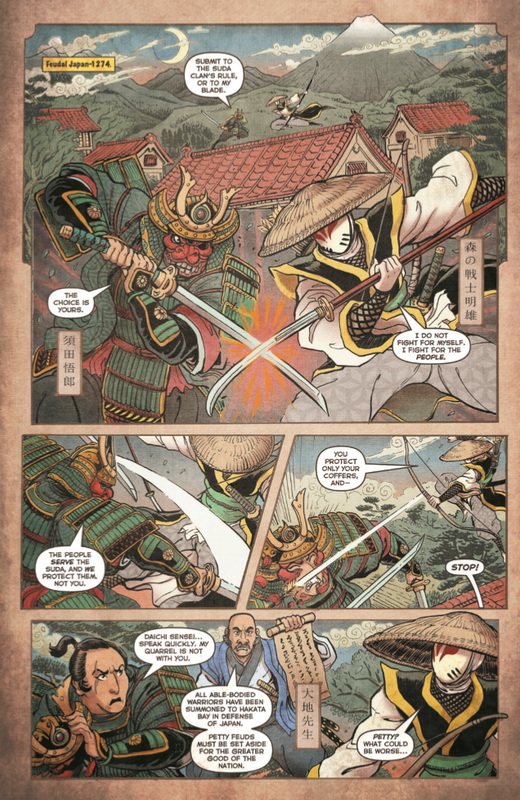
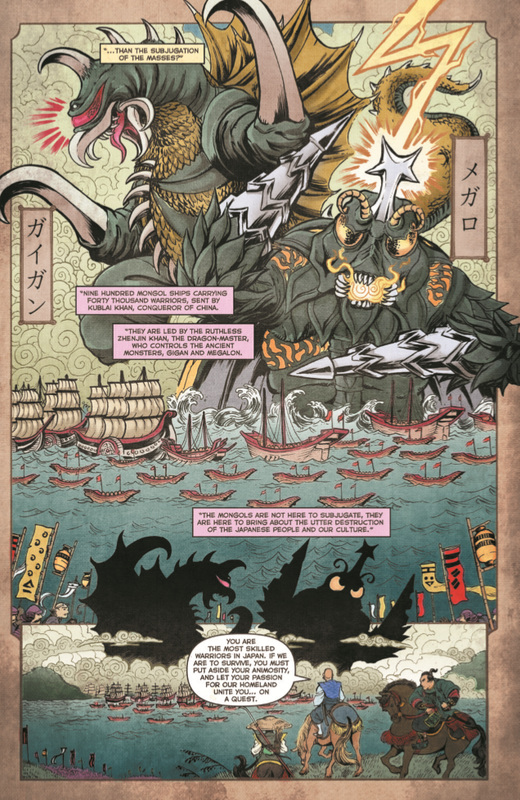
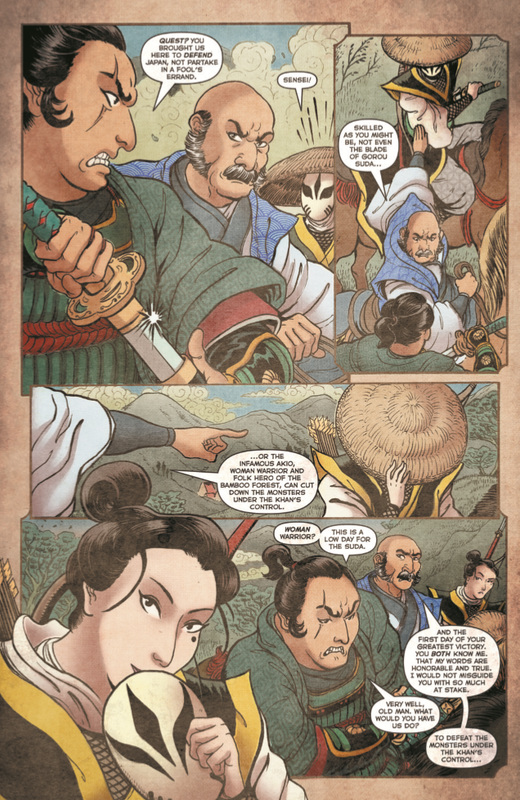
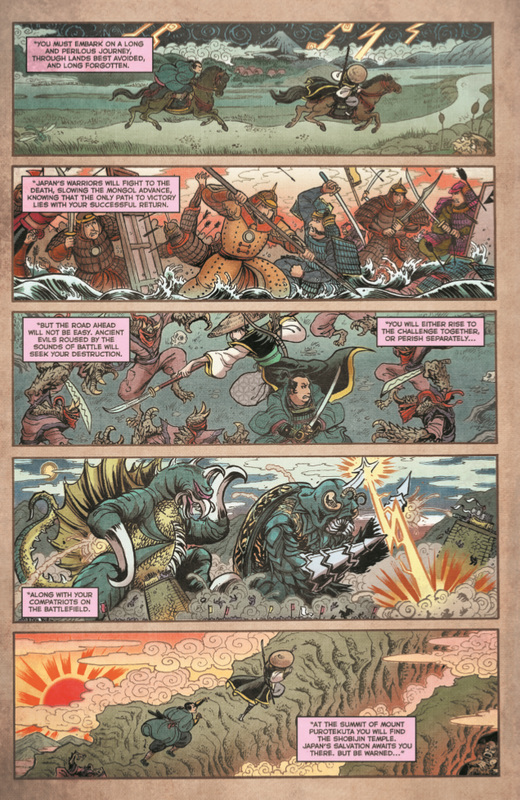
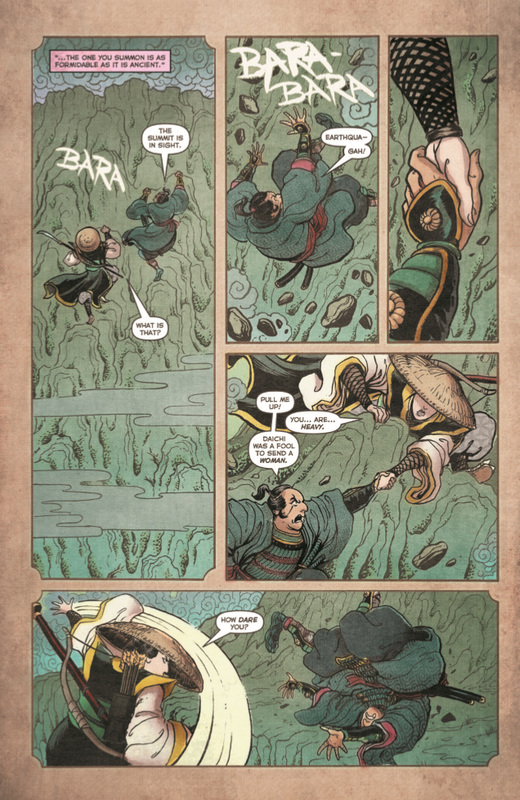
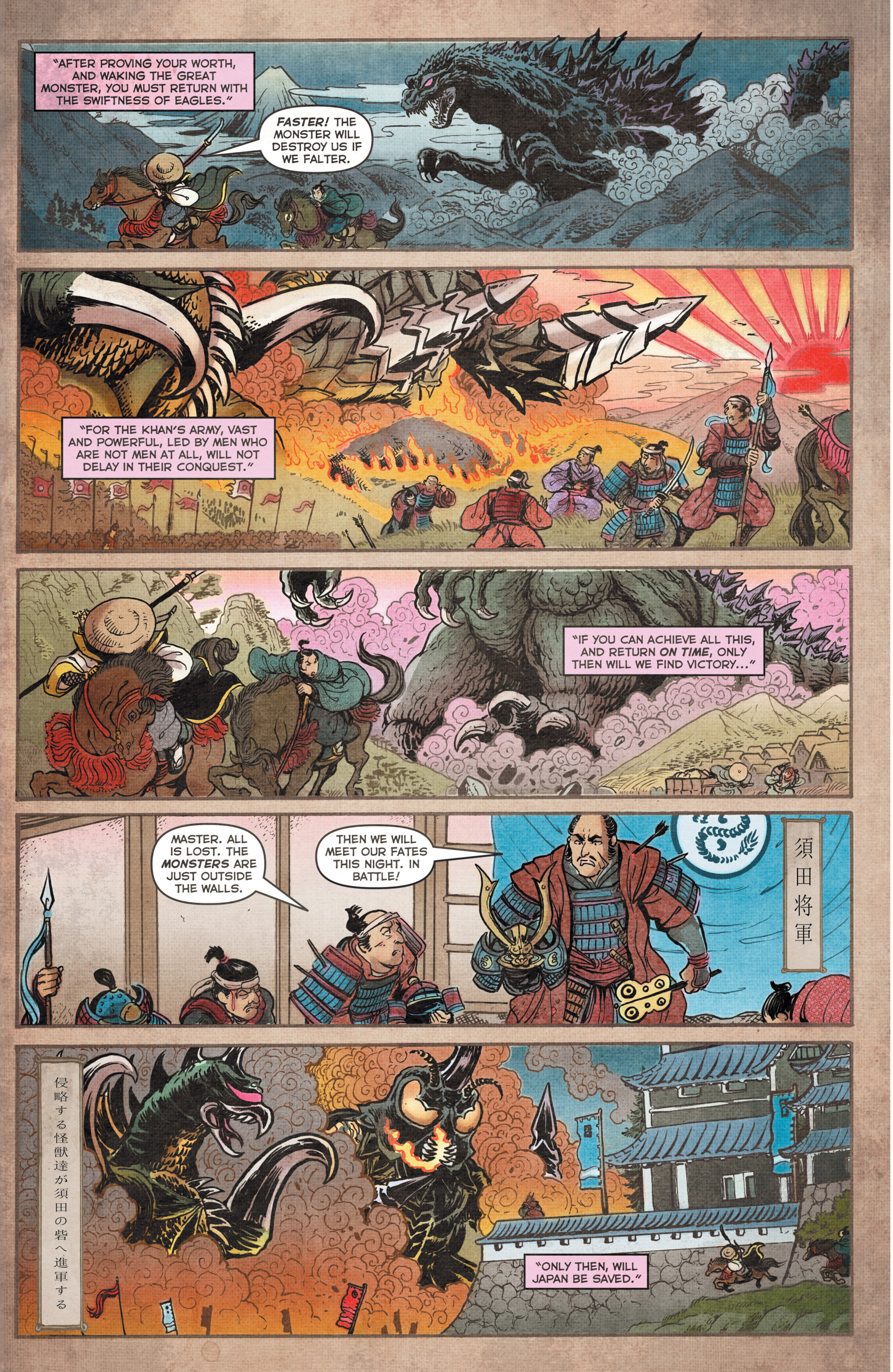
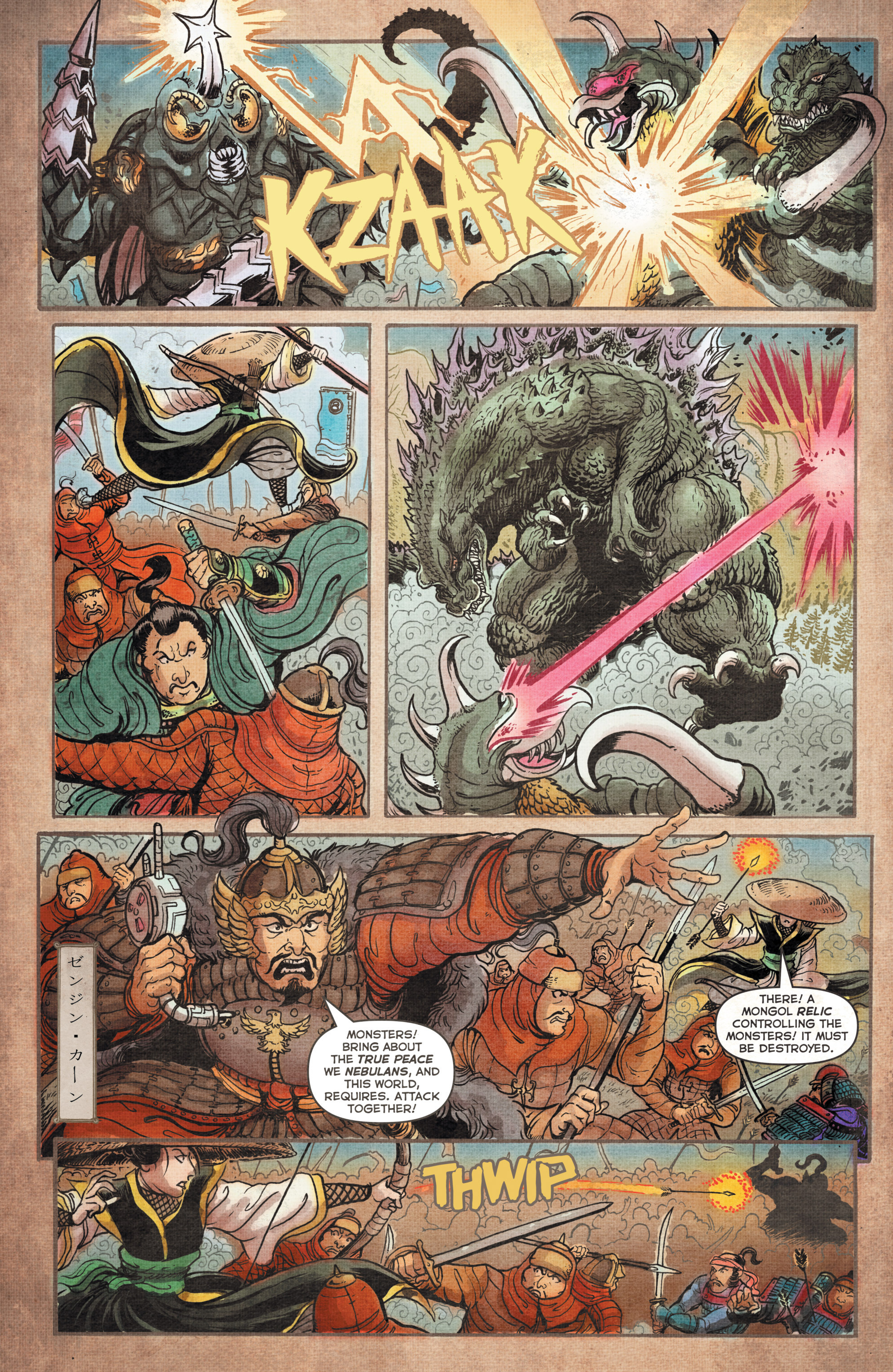
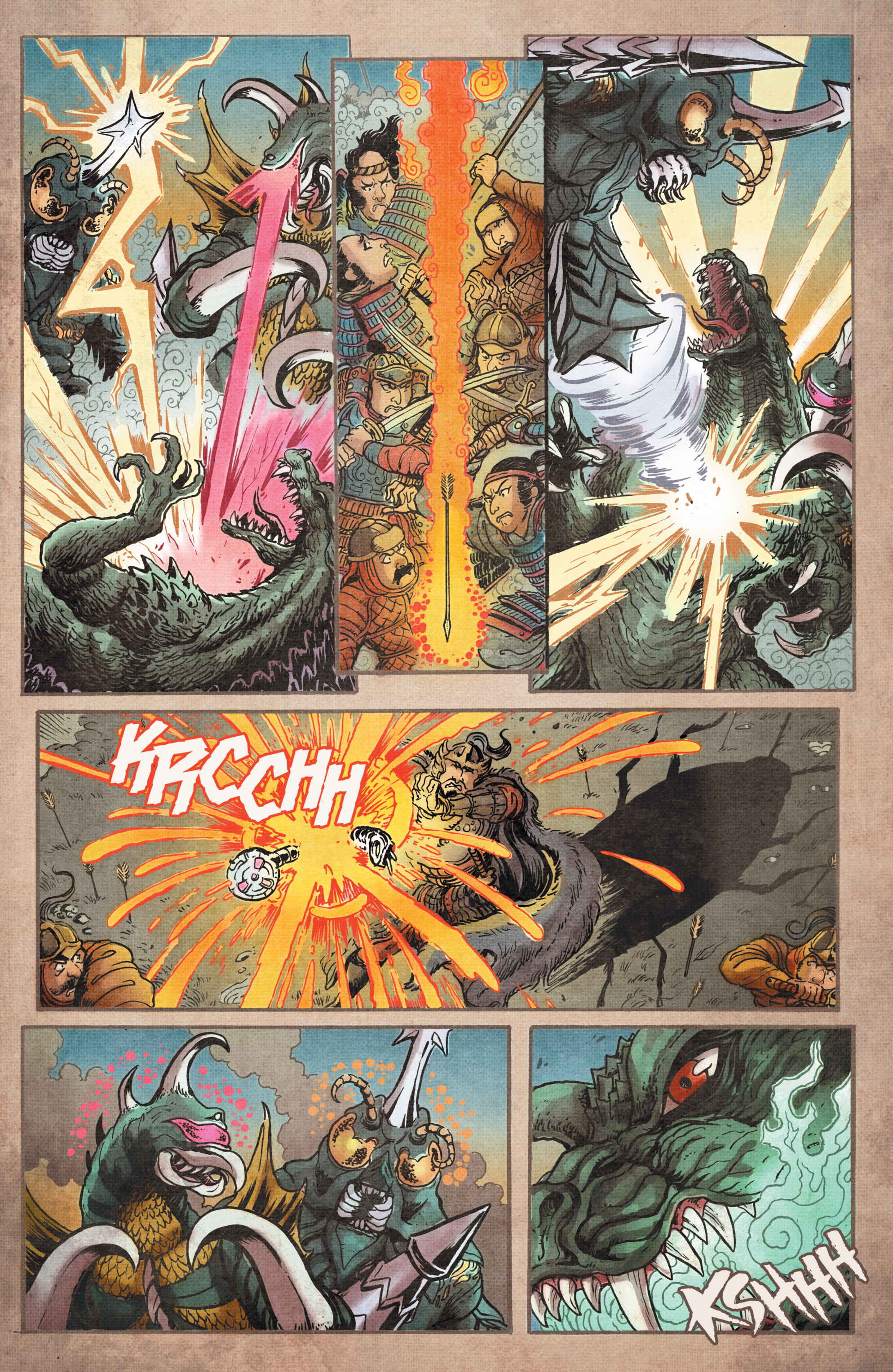
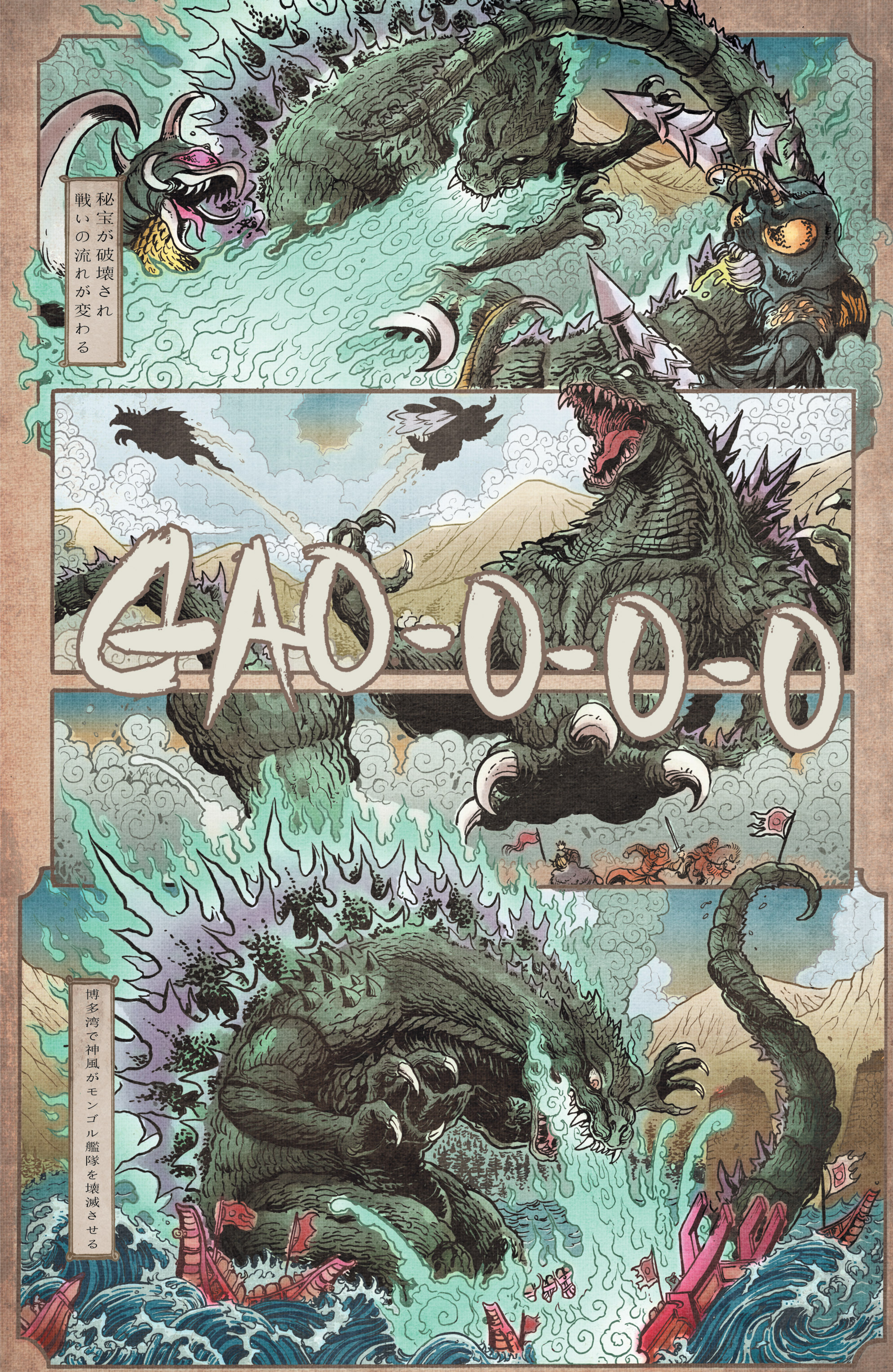
In the year 1274, all able-bodied warriors were called to put aside their political differences to go to Hakata Bay to defend against the Mongol invaders who had gained control of the monsters Gigan and Megalon. The warriors Gorou Suda and Akio, who had been bitter enemies until that point were then tasked with taking down the monsters. The rest of Japan's forces were planned to defend against the Mongols while Akio and Gorou climbed Mount Purotekuta to meet the Shobijin, who would help them save Japan. At the summit, they were faced with a swarm of enormous crabs called Heikegani. After defeating them, the monster Yamata no Orochi rose from the ground, but the Shobijin assured the warriors that they need not defeat Orochi, but control it before taking Gorou with them, putting a spell on Akio's arrow and leaving her to fight Orochi. The Shobijin then gave Gorou an idol that they assured him would put Orochi under his control as long as he was holding it. With Orochi under their control, Akio and Gorou began to head for the bay, but were interrupted by a blast from a mythical monster that Akio knew as Gojira. It quickly defeated Orochi, causing Akio to use one of her arrows to anger it. They then rode as fast as they could to Hakata Bay, with Gojira close behind. Just as Megalon and Gigan had reached the Emperor's castle, Gojira arrived and shifted his attention on to his new opponents. In the battle below the monsters, Akio noticed the Khan general, who referred to himself as a "Nebulan" in need of the planet, using some type of device to control the monsters, which she destroyed with a well placed arrow. With no direction, Gojira quickly defeated the threats and swam out into the bay. Gorou and Akio then put aside their differences and vowed to work together to defend their homeland.
In the year 2016, Dr. Benjamin Thompson and Nikki Kasumi were visiting the sight of the battle against the Mongols at Hakata Bay, where they were looking for evidence that monsters sank the Mongol fleet and not a typhoon. Underwater, they found that the ships had been super-heated, petrified, and preserved, leading them to believe it was the work of the monster then known as Godzilla. Katsumi had a hard time believing Thompson's theory, but he insisted that they keep looking.
A Kappa, a famous yokai from Japanese mythology, appears along the side of a road in this issue, watching Akio and Gorou travel to the Shobijin temple.
The Snowman from the 1955Toho film Half Human makes a brief appearance in this issue, looking out from a cave while Akio and Gorou Suda travel to the Shobijin temple.
Zhenjin is erroneously referred to as "Zhenjin Khan." Unlike his father, Kublai Khan, Zhenjin never became a khagan, and therefore did not carry the title khan.
Despite the phrase "Shobijin temple" appearing in the English dialogue, the fairies are referred to as "Cosmos" (コスモス, Kosumosu) in the Japanese text boxes.
Though not established in the English dialogue, a Japanese text box reads, "Akio's arrow contains Mothra's power" (明雄の矢がモスラの力を宿す, Akio no ya ga Mosura no riki o yadosu).
In a possible reference to Godzilla vs. Gigan, the Sudas' family name (須田, Suda) is one kanji off from that of Fumio Sudo(須東, Sudō), the identity taken by one of the Nebulans in that film.
Godzilla's destruction of the Mongol fleet is inspired by real history; when Mongols landed at Hakata Bay in 1274, they were crippled by a typhoon which came to be regarded as a kamikaze (神風, "divine wind").
This is a list of references for Godzilla: Rage Across Time issue 1. These citations are used to identify the reliable sources on which this article is based. These references appear inside articles in the form of superscript numbers, which look like this: [1]
Showing 6 comments. When commenting, please remain respectful of other users, stay on topic, and avoid role-playing and excessive punctuation. Comments which violate these guidelines may be removed by administrators.




 Concept pitch art
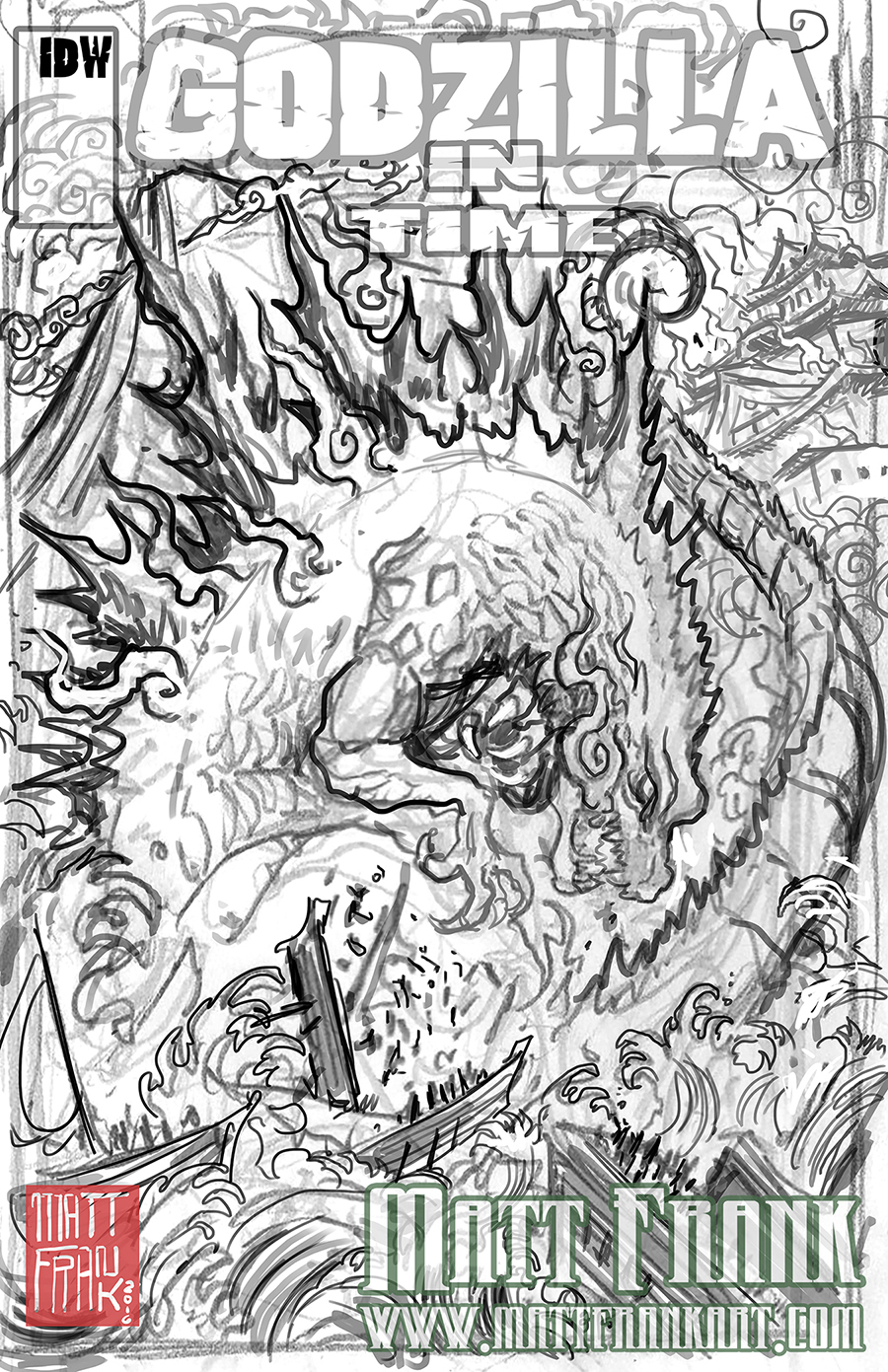
 Early cover concept
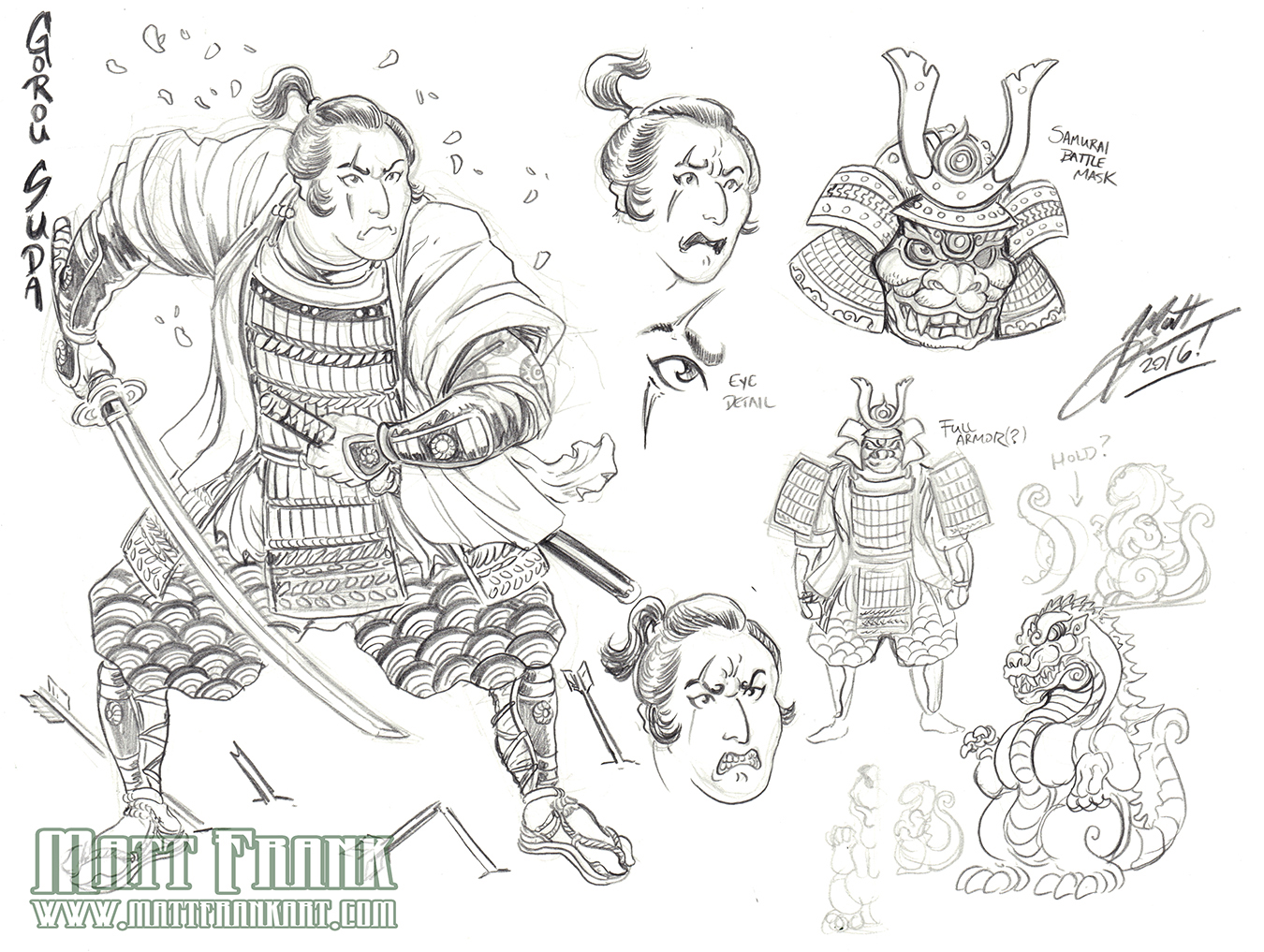
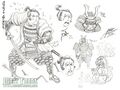 Gorou Suda concept art
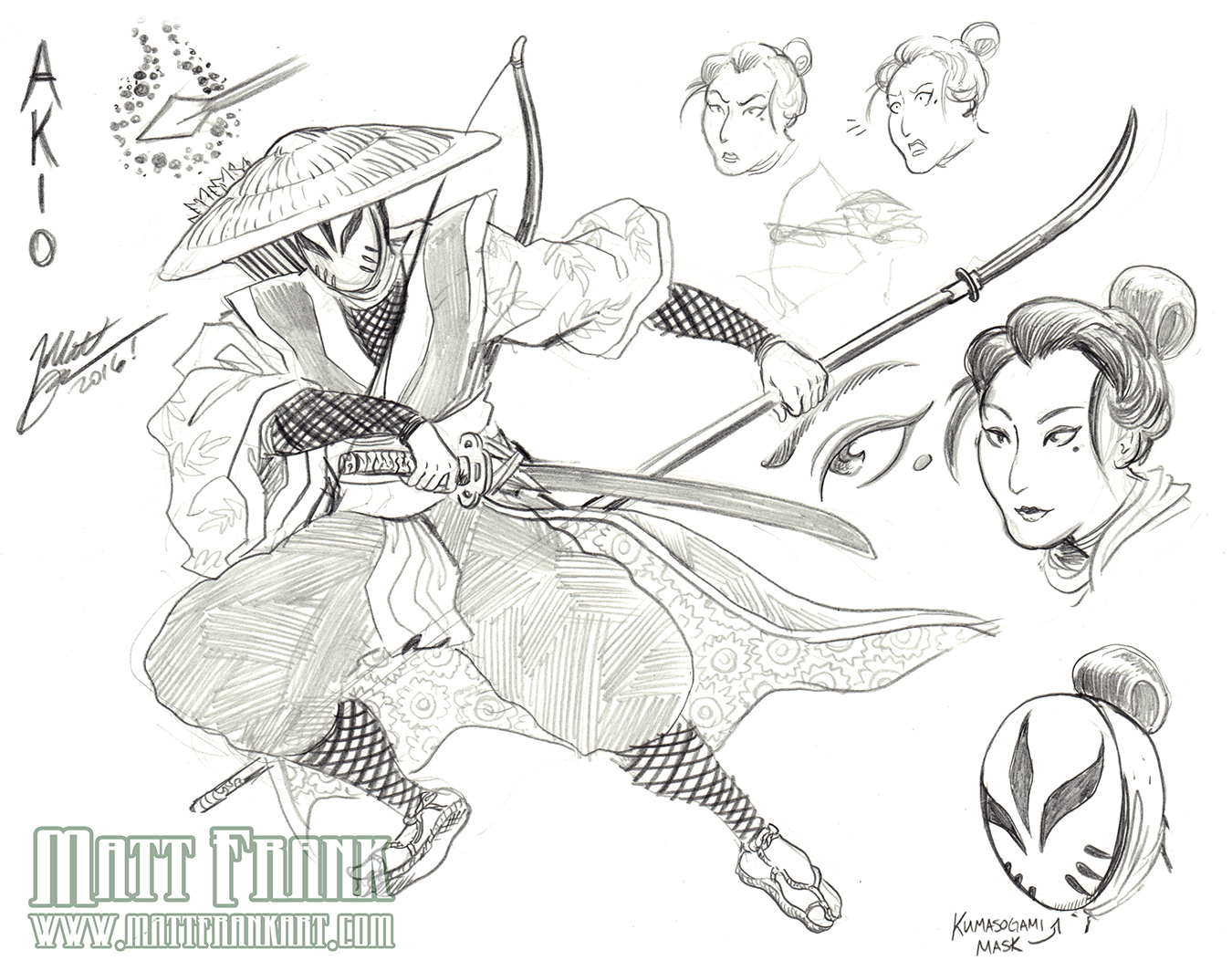
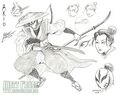 Akio concept art
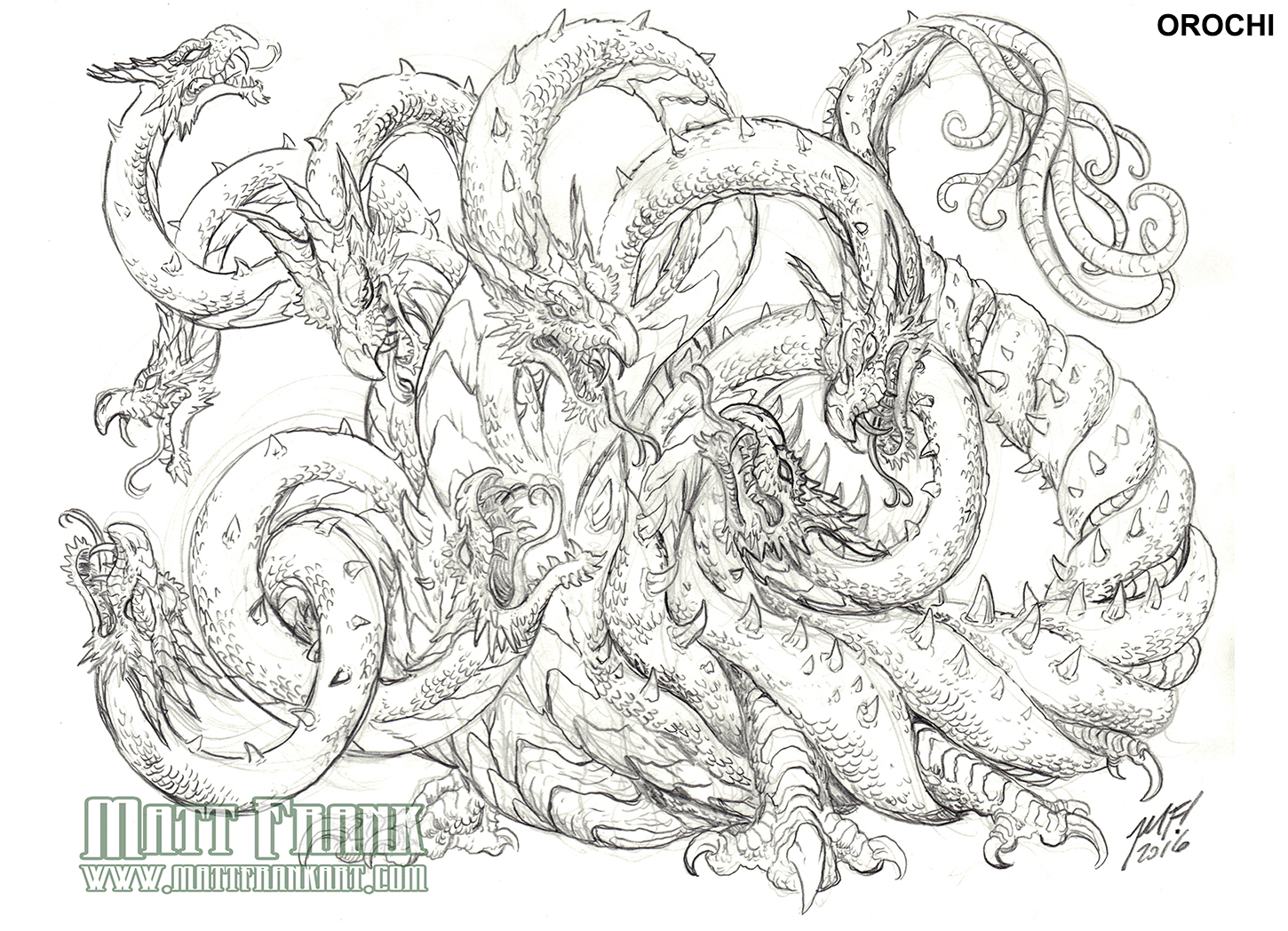
 Orochi concept art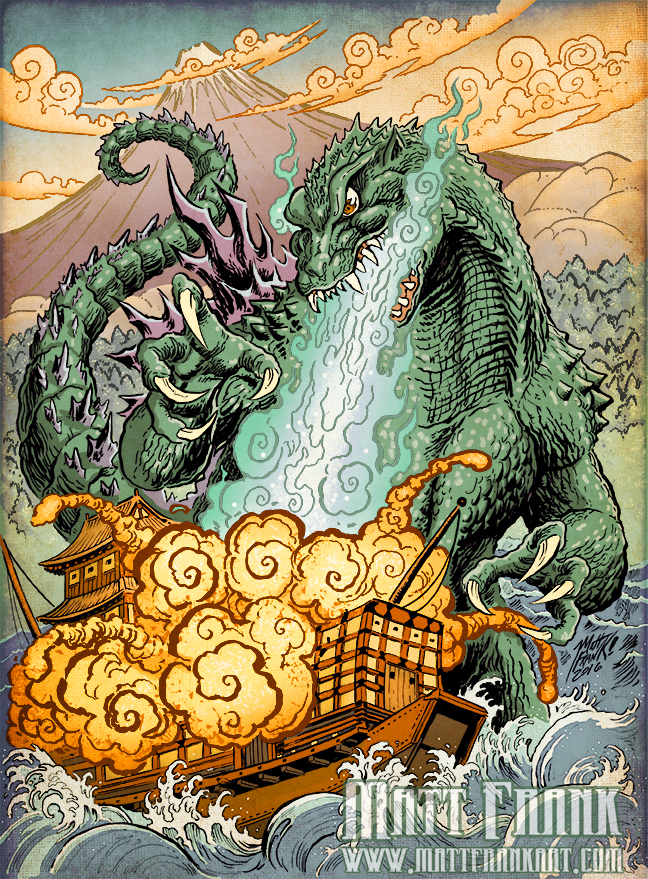
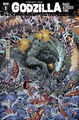
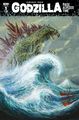 Cover A by Bob Eggleton
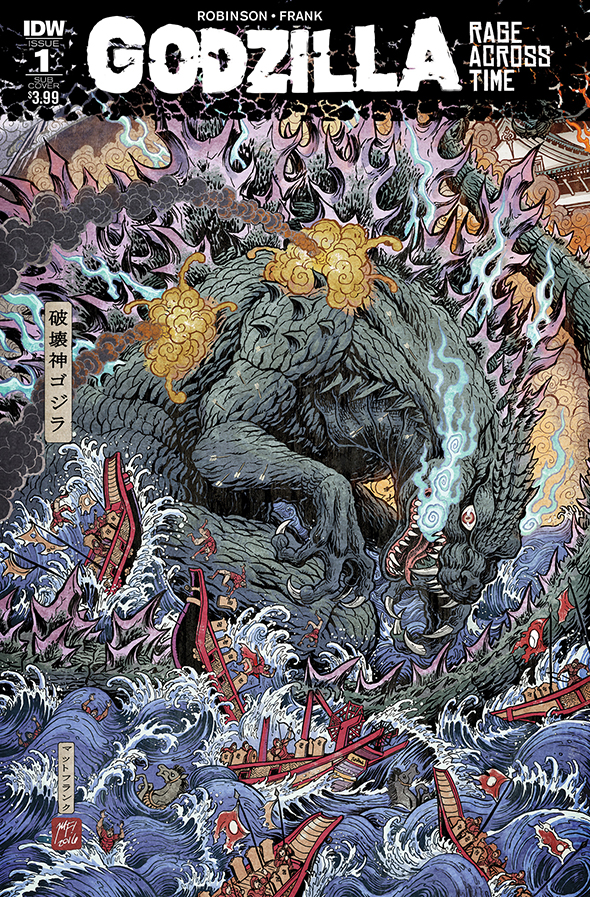
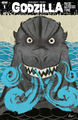
 Subscription cover by Matt Frank
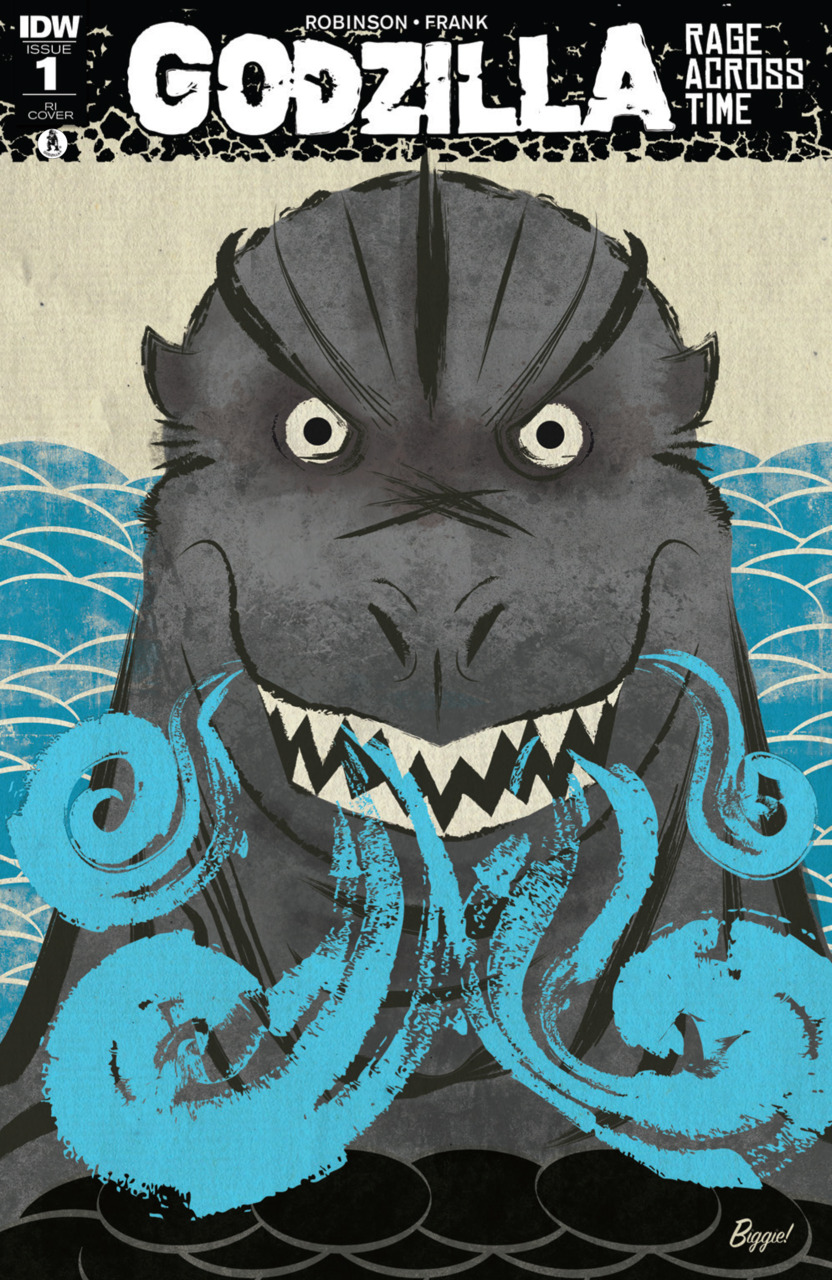
 Retailer incentive cover by Ulises Fariñas