

Pteranodon
| |||||||||||||||||||||||||||||||||||||||||||||||||||||||||||||||||||||||||||||||||||

|
This article or section needs to be cleaned up to meet the standards of Wikizilla. |
|
Pteranodon is an extinct genus of large pterosaur that lived during the late Cretaceous Period, between 86 and 78.25 million years ago. It is one of the most famous and well-known prehistoric reptiles from the time of the dinosaurs. This genus of pterosaur has been featured in numerous science fiction and giant monster films, and is the basis for the popular Toho kaiju Rodan.
Name
The name Pteranodon means "toothless wing" and was given due to the animal's key characteristics: the presence of wings and toothless jaws. The type species, Pteranodon longiceps, is mentioned in the novel Kong Reborn, and its specific name means "long-headed."
Pterodactyl
“
|
“Some sort of pterodactyl?” Kowalski said. “Are those the things you were talking about last night?”
He was referring to Jack’s account of the Venture expedition and the huge pterosaur that had attacked Ann Darrow. |
„
|
— Kong Reborn [2005] |
In popular culture, especially in the 20th century, Pteranodon is often referred to as pterodactyl, leading to confusion with another well-known pterosaur, Pterodactylus. Under this name, Pteranodon is mentioned in The Lost World, the 1932 King Kong novelization, and even in Merian C. Cooper's King Kong. The Lost World is faithful to Conan Doyle's original novel, where the name "pterodactyl" is first mentioned by Professor Challenger, but with the remark that the relic South American flying animal may be a Dimorphodon.[3] This uncertainty stems from the fact that Pterodactylus became a wastebasket taxon in the 19th century, and many unrelated pterosaurs have been classified in this genus. Both Pteranodon and Dimorphodon macronyx, the type species of Dimorphodon, were described as species of Pterodactylus long before the novel was written.[4][5] As new pterosaur discoveries emerged, more and more differences emerged between the various species and genera. Pterodactylus and Pteranodon were included together into a larger group, Pterodactyloidea, but significant differences between these animals should be taken into account. While Pterodactylus was a small, toothy pterosaur that lived in Europe during the late Jurassic, Pteranodon was a large, toothless pterosaur that lived in North America during the late Cretaceous. The distinctive bony crest on the head is characteristic of Pteranodon.
Appearance
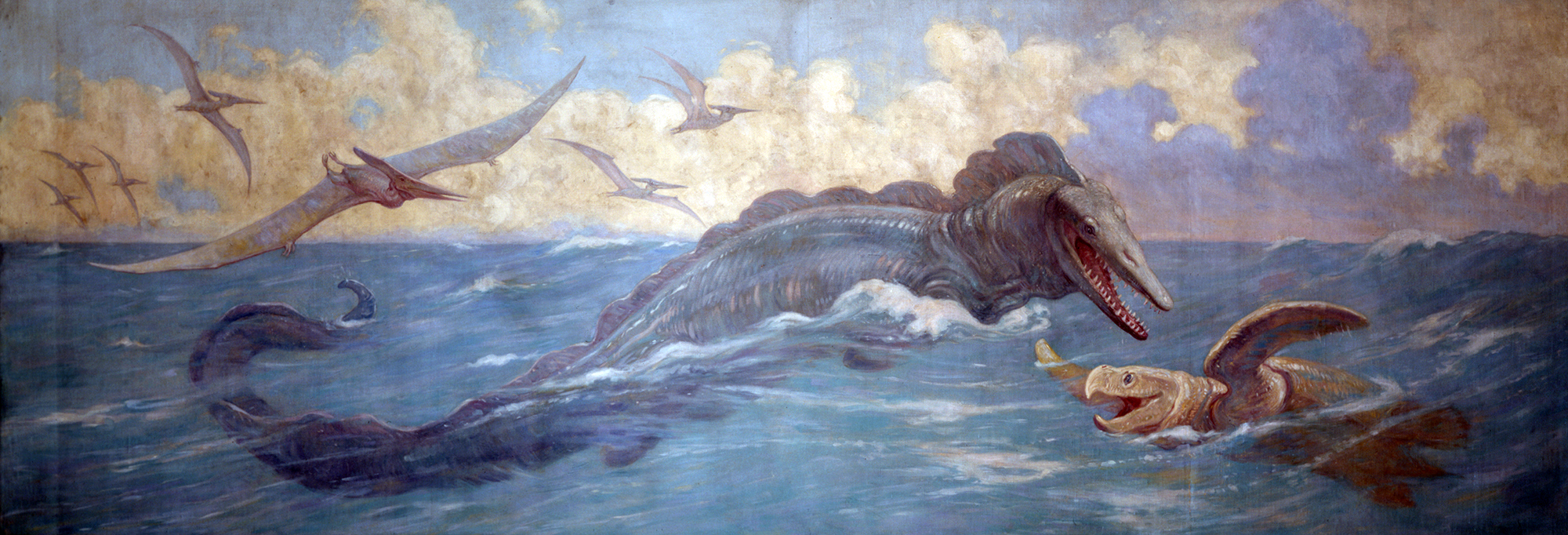
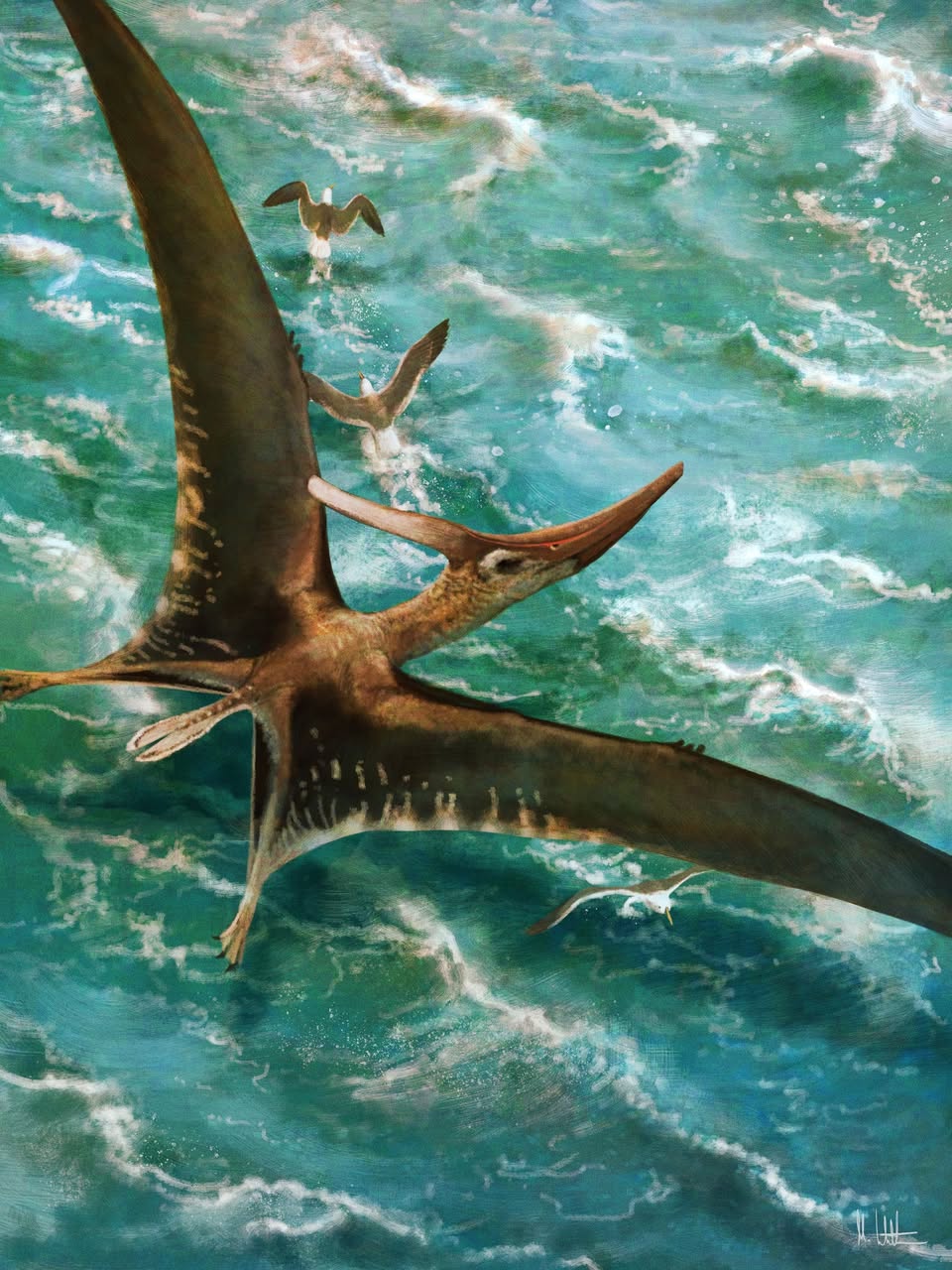
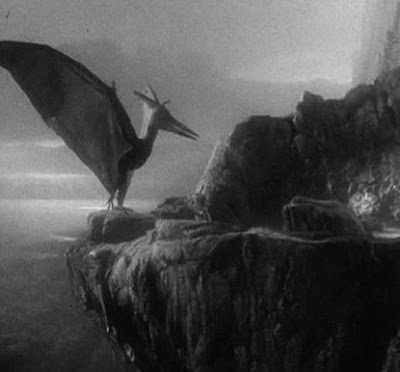
Pteranodon was a large, short-tailed pterosaur, notable for its head crest, which was longer in males than in females. Like all its relatives, it had short hind limbs and flew using a membrane of skin attached to its body and an extended finger on its forelimb. Unlike earlier pterosaurs such as Rhamphorhynchus, Pteranodon lacked teeth and had beak-like jaws. In The Lost World (1925) and some other early films, Pteranodon folds its wings behind its back like a bird when on the ground. Throughout the 19th and 20th centuries, scientists put forward various theories about how pterosaurs moved on land, but in the 1990s, studies of anatomy and fossil tracks showed that these animals walked on four limbs.
Like many extinct animals, Pteranodon is often depicted as oversized in movies. The first specimen seen by researchers at the edge of the plateau in The Lost World is extremely large compared to all known flying animals. The length of this Pteranodon from the tip of its beak to the tip of its outstretched wing is almost the same as that of an adult Brontosaurus.[6] The real Pteranodon had a wingspan of about 6-7 meters, making it noticeably smaller than pterosaurs such as Quetzalcoatlus and Hatzegopteryx. In the 1933 King Kong, a huge Pteranodon grabs Ann Darrow with its hind limbs and lifts her into the air. In reality, the grasping function of the hind limbs is characteristic of many birds, but has not been confirmed in pterosaurs.
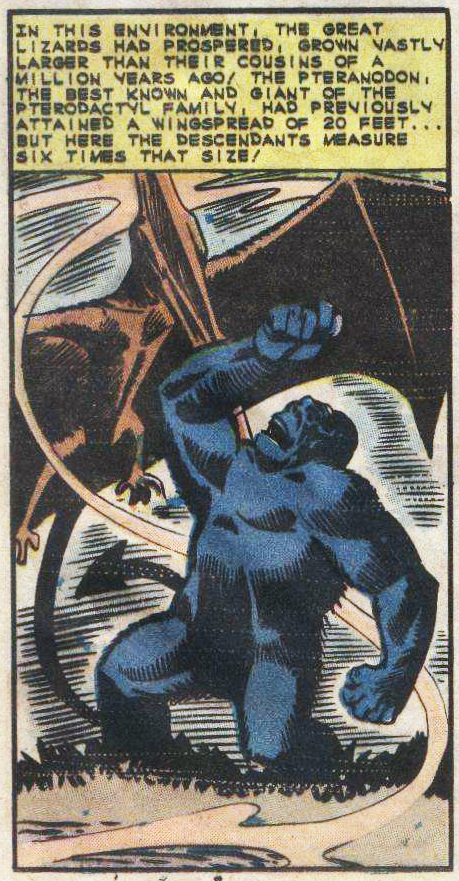
In The Mighty Kong, the Pteranodon's wings have an extra appendage to which a portion of the membrane is attached. Its giant descendants in the Konga comic have similar dragon-like wings. This is a common mistake in depictions of pterosaurs, usually in cartoons and comics. In reality, the membrane of a pterosaur is attached to only one long finger. Among real animals, a similar appendage, known as a styliform element, is found only in Yi and Ambopteryx, which are not pterosaurs, but dinosaurs.
Selected history
- The Lost World (1925)
- King Kong (1933)
- Rodan (1956) [drawing]
- The King Kong Show (TV 1966-1969)
- The Last Dinosaur (1977)
- Godzilla vs. Mechagodzilla II (1993) [fossilized remains]
- The Mighty Kong (1998)
- Rebirth of Mothra 3 (1998)
- Kong: The Animated Series (TV 2000-2001)
- Kong: Return to the Jungle (2006)
- Kong: King of the Apes (TV 2016-2018)
- Godzilla: King of the Monsters (2019) [skeleton]
The Lost World
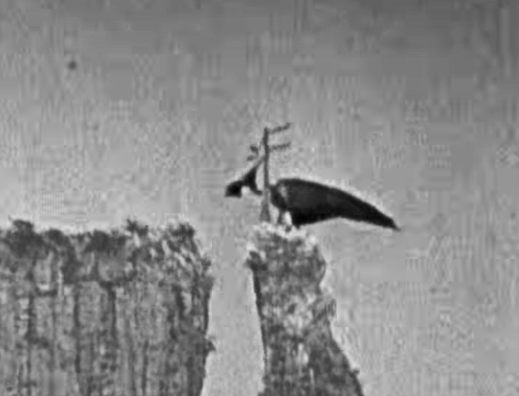
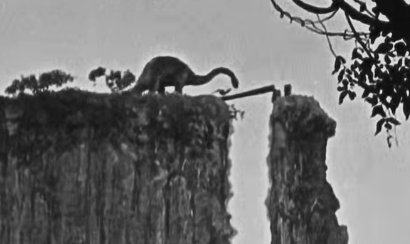
A Pteranodon was the first prehistoric creature spotted by the researchers, eating a Toxodon. Another was later seen getting grabbed and killed by a Tyrannosaurus rex after flying too close to it.
King Kong (1933)
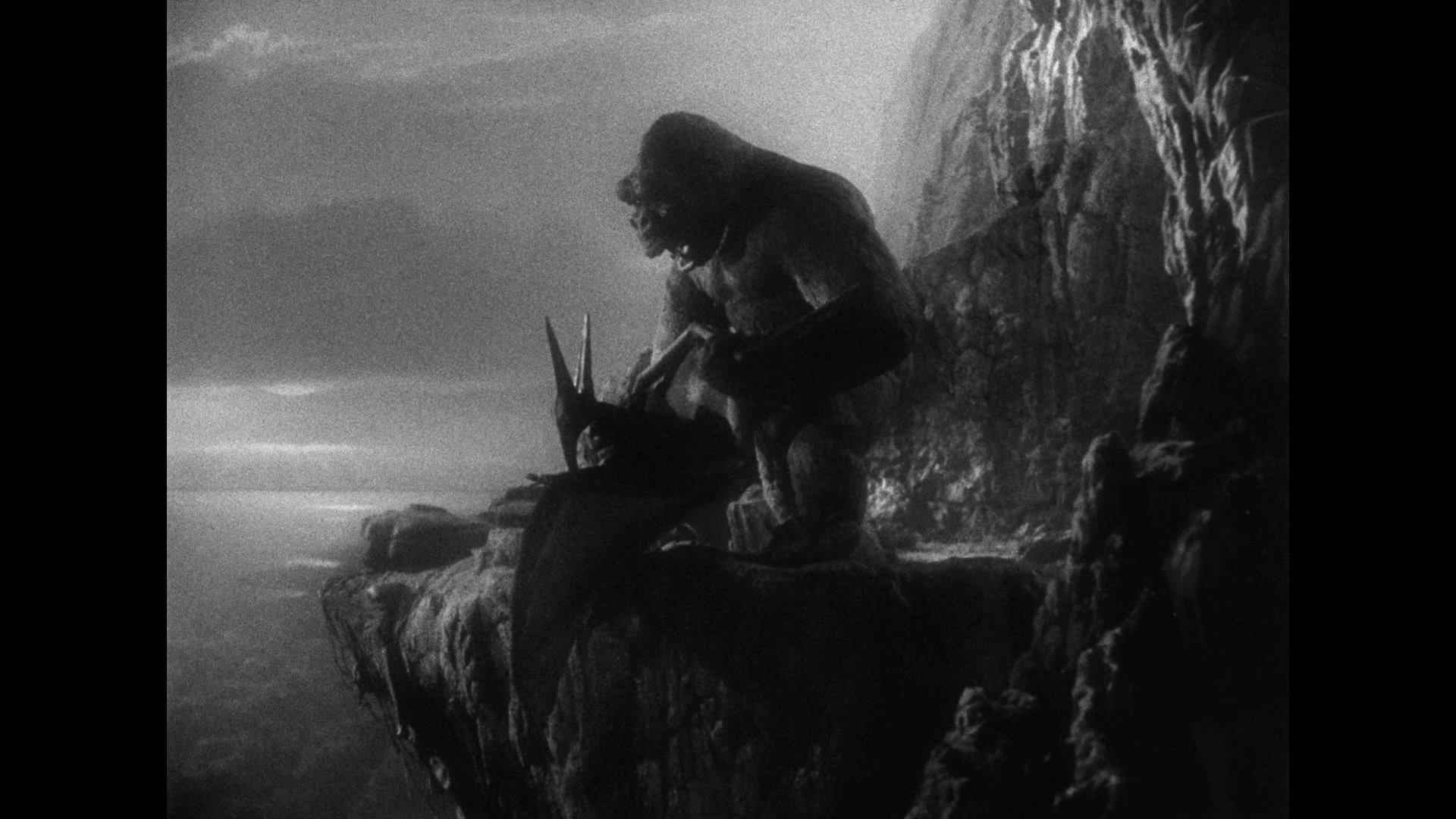
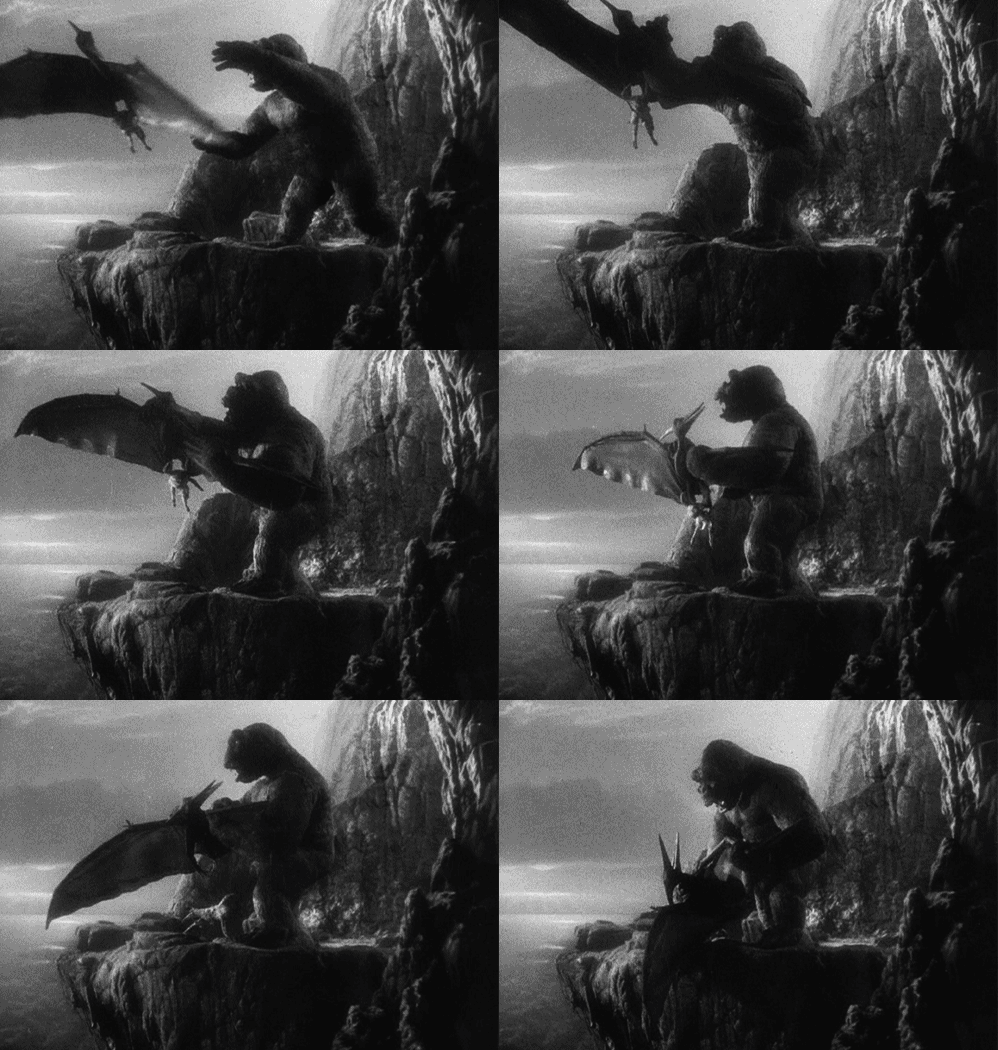
After defeating the Elasmosaurus, King Kong followed Ann Darrow onto the cliff outside his lair, where she was attacked by a Pteranodon, which tried to carry her away. Kong attacked the pterosaur, freeing Ann. Jack Driscoll reached the cliff and rescued Ann while Kong battled the Pteranodon. After killing the Pteranodon, Kong tried to pull Ann and Jack back up by the vine they were climbing down, only for them to jump into the river below and escape unharmed.
The King Kong Show
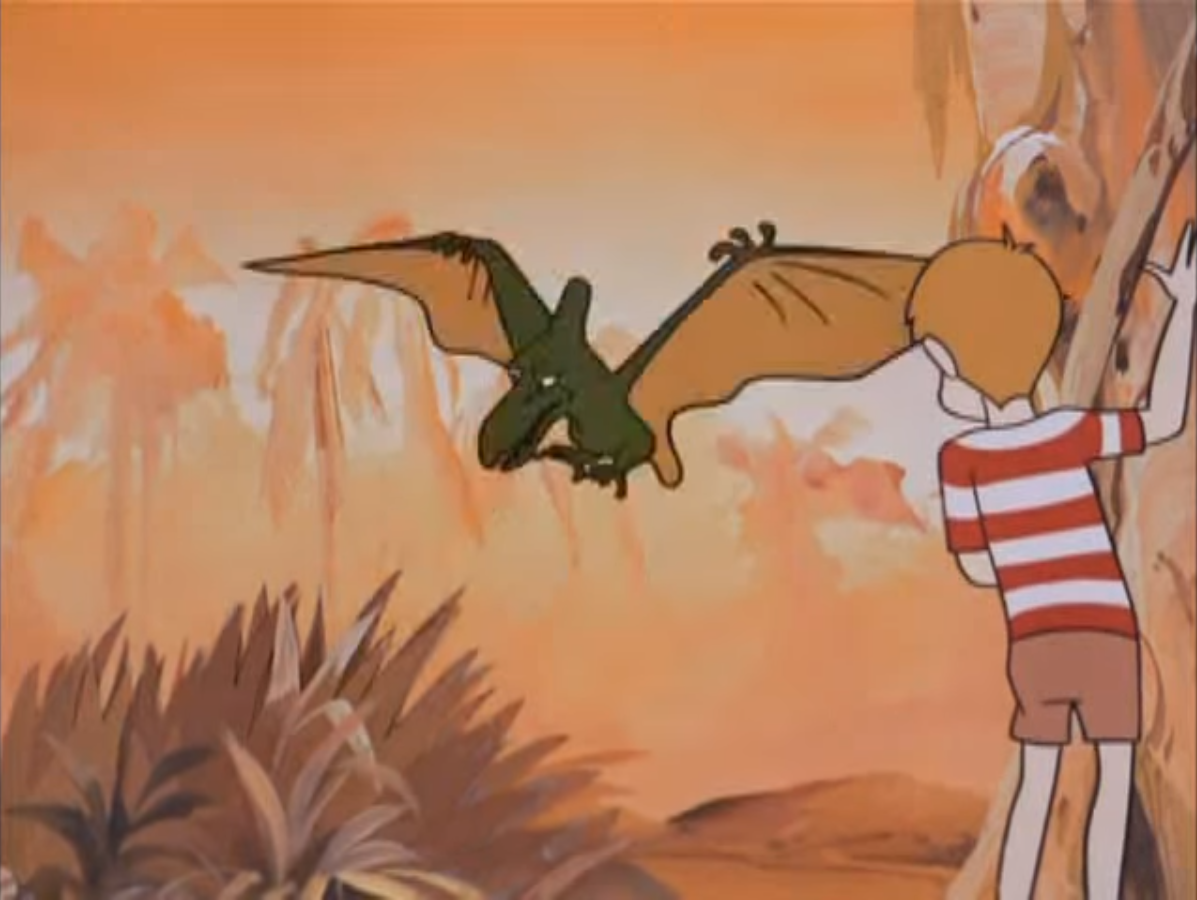
A Pteranodon appeared in the pilot episode, swooping in to catch an armadillo.
Showa era
The Last Dinosaur
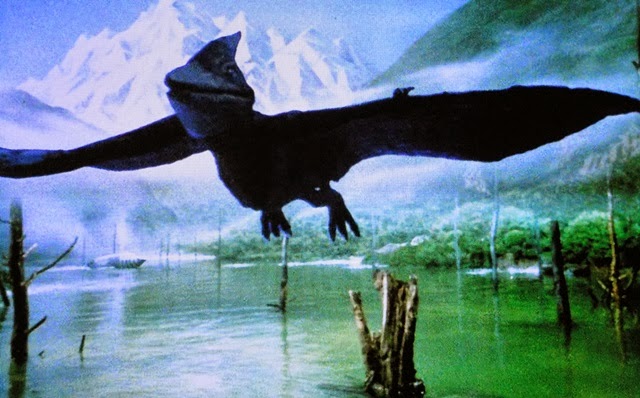
A flock of large Pteranodons were some of the creatures discovered during the Polar-Borer expedition. They were among the first surviving animals to be observed by the crew. One Pteranodon gave them a scare during the expedition's first night, flying low near their fire.
Heisei era
Godzilla vs. Mechagodzilla II
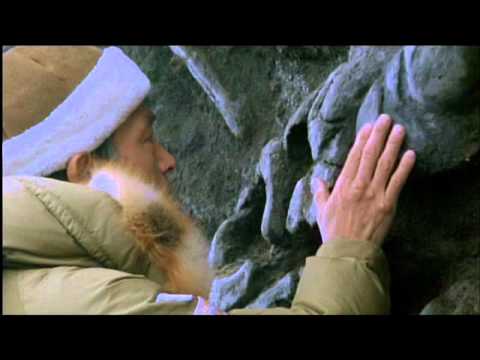
A scientific team led by Hiroshi Omae was called to the irradiated Adonoa Island in the Bering Sea after a group of Russian petroleum surveyors discovered a Pteranodon skeleton along with a nest containing what appeared to be an intact Pteranodon egg and one that had hatched. When the scientists attempted to bring the intact egg back to Japan, the creature that hatched from the other egg, the irradiated and gigantic Pteranodon known as Rodan, attacked them. When Godzilla came ashore on the island and battled Rodan, the scientists were able to escape with the egg, which turned out to hold a baby Godzillasaurus instead of a Pteranodon.
Rebirth of Mothra 3
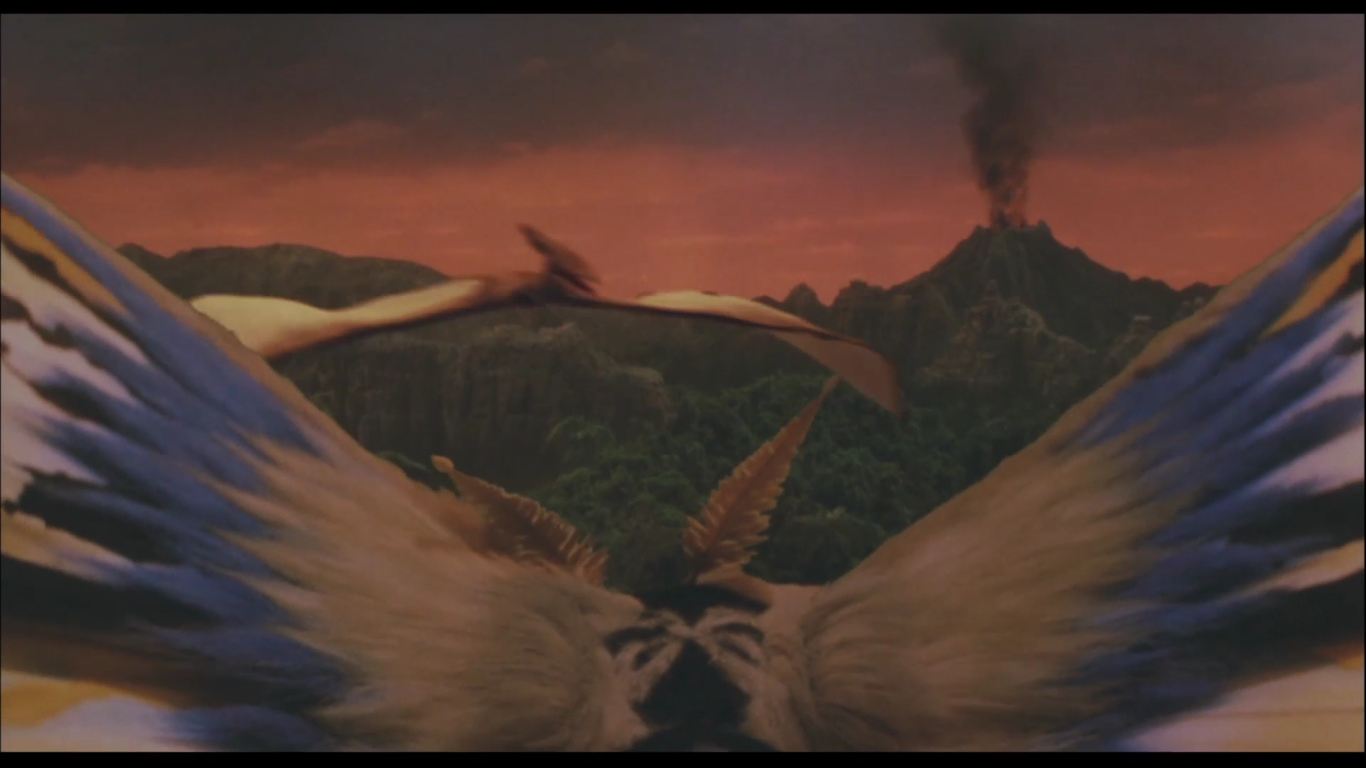
Shortly after Rainbow Mothra traveled back to the Cretaceous Period, a Pteranodon flew past him.
The Mighty Kong
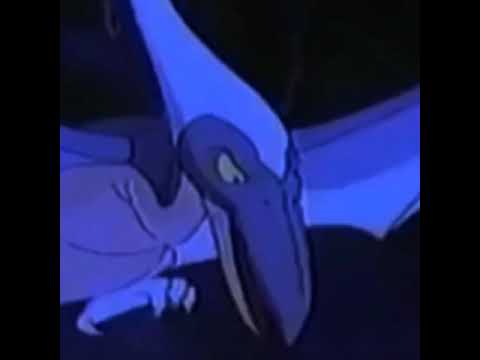
A Pteranodon flew past Jack Driscoll as he first stepped into Skull Island's interior. Two more attacked Kong after he brought Ann Darrow to his volcanic lair. One dove at Ann, but Kong grabbed it and threw it aside. A third joined them as a cave snake descended from the ceiling and constricted Kong. The gorilla eventually prevailed, but the intensity of the battle caused a minor eruption. Jack helped Ann escape while Kong was distracted.
Abilities
Flight
The Pteranodon is specialized for flight.
Physical abilities
Pteranodons possess a beak and talons for hunting prey.
Books
- Kong Reborn (2005)
Kong Reborn
In the year 2009, a species of gigantic Pteranodon with a 70-foot wingspan[7] lived on Skull Island and checked out a group of humans on the beach, but took no interest and flew back into the jungle. They subsisted on giant fish that lived in the island's waters. They were not true Pteranodons, but were identified as such by Ann Darrow after she escaped from the island while being shown photographs of prehistoric creatures.
Comics
- Konga (1961-1965)
- Godzilla: Rulers of Earth #9 (2014) [flashback]
- Godzilla: Rage Across Time #5 (2016)
Konga
Giant Pteranodon descendants with 120-foot wingspans attack Konga in Antarctica's warm subglacial ecosystem. Pteranodon is also shown twice in "The Rulers" story among the animals of the Mesozoic era, flying over marine reptiles and land dinosaurs.
Godzilla: Rage Across Time
"The Cretaceous"
A line of Pteranodon flew over the shores of Cretaceous Israel, where a Tyrannosaurus rex was subduing a ceratopsian. A flock of Pteranodon flew near Rodan when Godzilla shot him out of the sky. Several others were present in the vicinity of a battle between Mothra and Battra and were killed when Keizer Ghidorah, accompanied by a meteor shower, descended to attack the two divine moths.
Gallery
King Kong (1933)
-
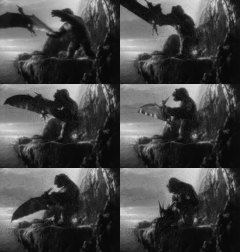 King Kong battles a Pteranodon to save Ann Darrow
 -
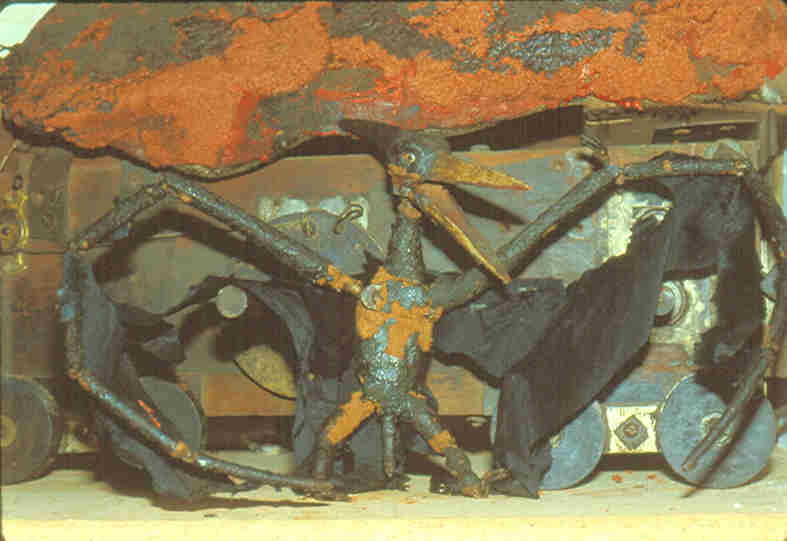
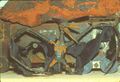 The Pteranodon model from the film as of 1983, 50 years later
 -
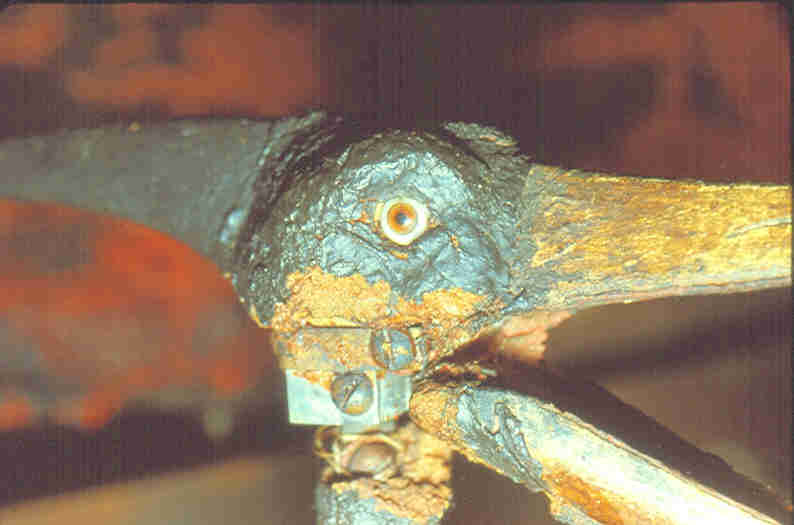
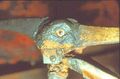 A close-up of the model's head
Rodan
-
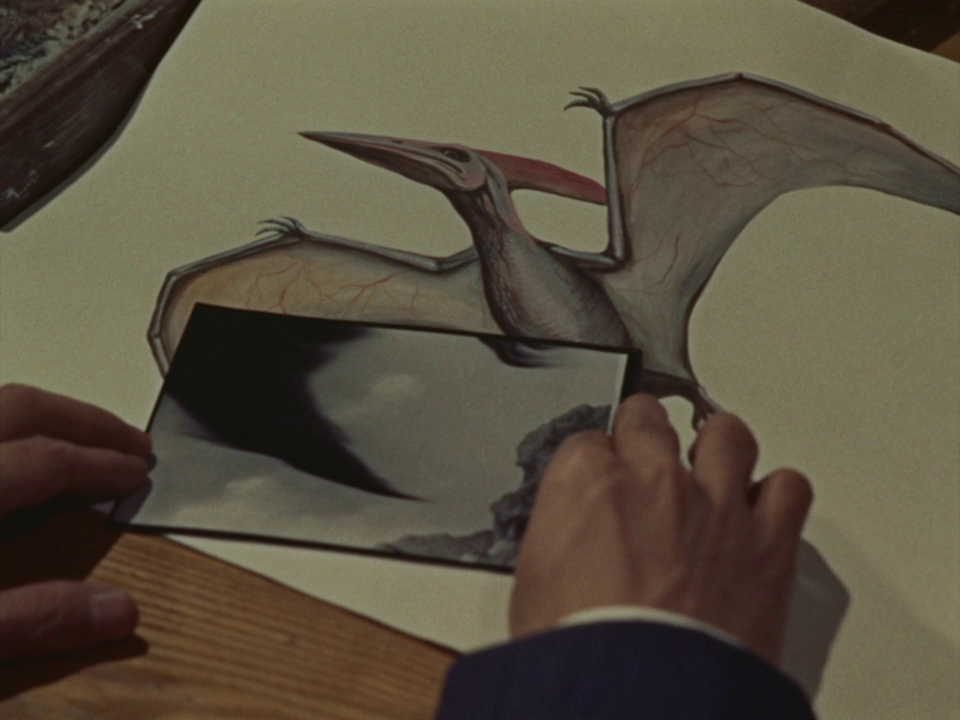
 A portrait of a Pteranodon is compared to a photograph of Rodan's wing
Godzilla vs. Mechagodzilla II
-
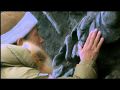 The Pteranodon fossils discovered by Hiroshi Omae in the film
Merchandise
-
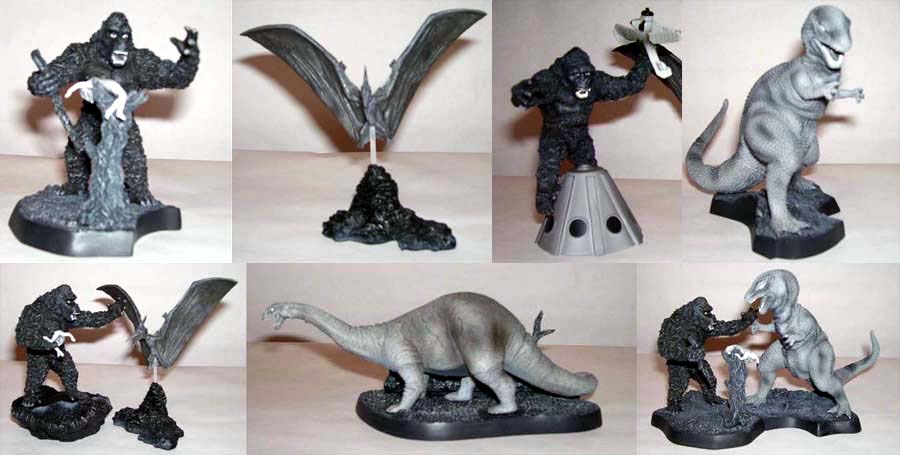
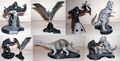 Konami SF King Kong collection
 -
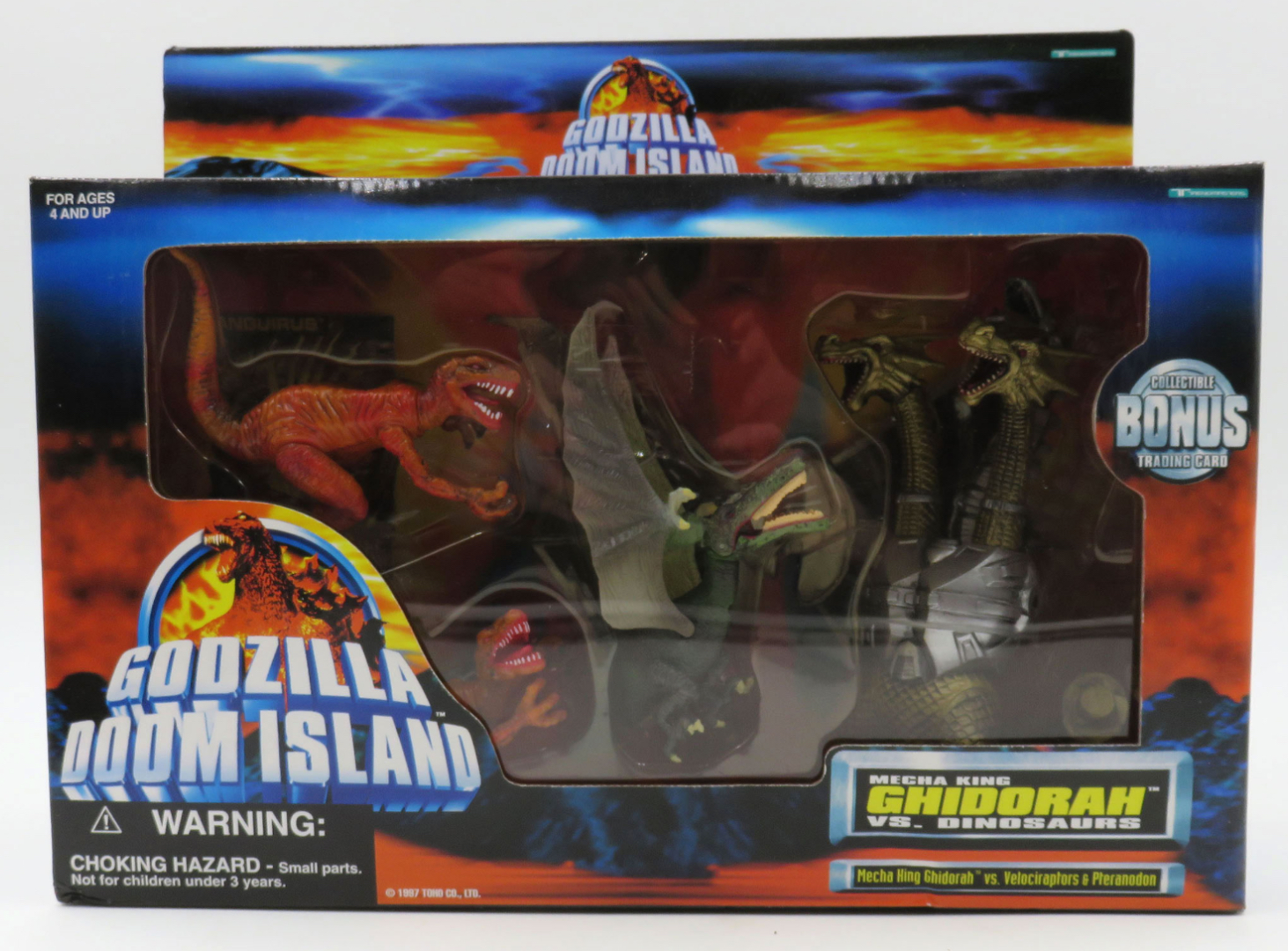
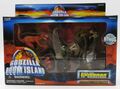 Trendmasters Mecha King Ghidorah vs. Dinosaurs figure set
 -

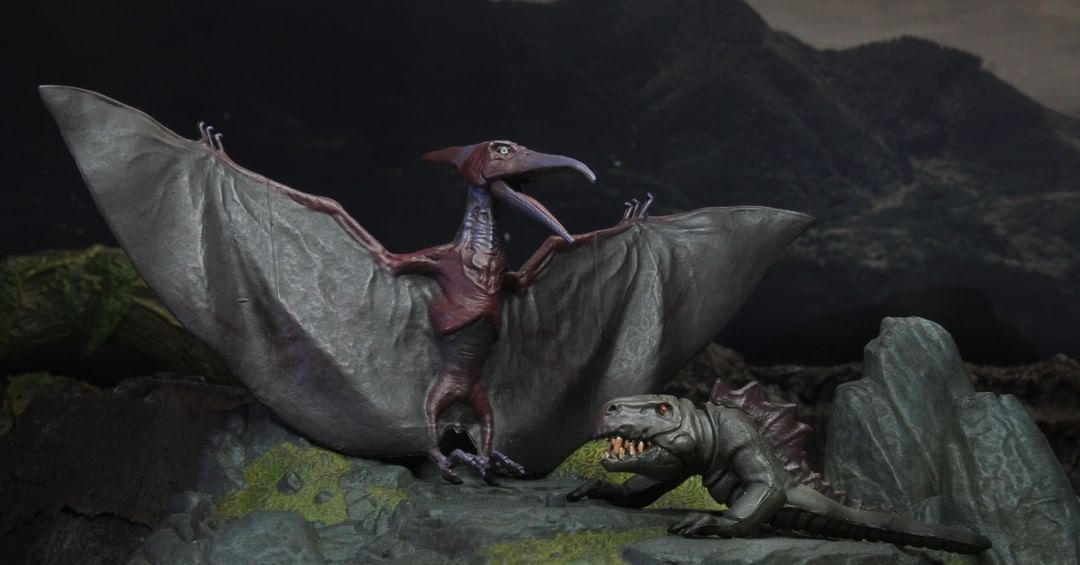
Trivia
- The Showa, Heisei, and Final Wars incarnations of the kaiju Rodan are irradiated Pteranodons. Gyaos' design also appears to be influenced by Pteranodon and other pterosaurs.
- In an early draft of Godzilla vs. Mechagodzilla II, two Pteranodons would be featured in a scene set on Adonoa Island, where they battle Mechagodzilla. The female is killed, but the male is knocked unconscious, exposed to radiation and becomes Rodan. This draft also featured a flashback to the Cretaceous Period showing a Pteranodon battling a Godzillasaurus. The finished draft of the film features a Pteranodon skeleton and a robotic imitation, two remnants of this scrapped plot device.
- In the 2005 remake of King Kong, the Pteranodon is replaced by a swarm of Terapusmordax, giant meat-eating bat-like creatures.
- In the 1932 novelization, the Pteranodon is replaced by "a great pterodactyl".
Related characters
|
|
|
|
External links
References
This is a list of references for Pteranodon. These citations are used to identify the reliable sources on which this article is based. These references appear inside articles in the form of superscript numbers, which look like this: [1]
|
| |||||||||||||||||||||||||||||

| |||||||||||||||||

Comments
Showing 43 comments. When commenting, please remain respectful of other users, stay on topic, and avoid role-playing and excessive punctuation. Comments which violate these guidelines may be removed by administrators. Loading comments...
|

|

|

|

|

|

|

|

|