

Cretaceous
Jurassic ← Cretaceous | Last Ice Age
Prehistoric eras: Precambrian • Carboniferous • Permian • Jurassic • Cretaceous • Last Ice Age
Before 1800: 79 • 1274 • 1348 • 1357 • 1502 • 1556 • 1588 • 1605 • 1749
'00s: 1901 • 1902 • 1903 • 1904 • 1905 • 1906 • 1907 • 1908 • 1909
'20s: 1920 • 1921 • 1922 • 1923 • 1924 • 1925 • 1926 • 1927 • 1928 • 1929
'40s: 1940 • 1941 • 1942 • 1943 • 1944 • 1945 • 1946 • 1947 • 1948 • 1949
'60s: 1960 • 1961 • 1962 • 1963 • 1964 • 1965 • 1966 • 1967 • 1968 • 1969
'80s: 1980 • 1981 • 1982 • 1983 • 1984 • 1985 • 1986 • 1987 • 1988 • 1989
The Cretaceous is a geologic period of Earth's history spanning 80 million years from the end of the Jurassic Period 143.1 million years ago (Mya), to the beginning of the Paleogene 66 Mya. It was the final period of the Mesozoic Era.
In the real world
- Various decapod crustaceans, including Mutotylapsis - a species of marine hermit crab named after the MUTOs - live in the seas.[1]
- Dinosaurs and other reptiles continue their reign as the dominant group of animals. The supercontinents of Laurasia and Gondwana break up into the present day continents, and many of Earth's major landmasses move to similar positions to those of the present day.
- Some of the most famous species of dinosaurs, such as Tyrannosaurus rex, Triceratops, and Styracosaurus, roam the Earth. Famous pterosaurs such as Pteranodon soar the skies. The seas are also inhabited by a variety of reptiles, including Elasmosaurus and Mosasaurus. A variety of ancient mammals and early birds also roam the Earth at this time.
- The first flowering plants appear and rapidly diversify, becoming the dominant group of terrestrial plants by the end of the Cretaceous, a position which they hold to this day.
- A massive asteroid or comet strikes the Earth around 66 Mya off the coast of the Yucatán Peninsula in present-day Mexico, causing the Cretaceous–Paleogene extinction event and killing an estimated 75% or more of all life on the planet, including all non-avian dinosaurs. The extinction event makes way for the Cenozoic Era, during which mammals rise to become the dominant form of life. Three other forms of terrestrial vertebrate and one form of aquatic vertebrate also survive the extinction event: fish, amphibians, reptiles, and birds.
- A second, smaller asteroid strikes Earth at around the same time as the asteroid which triggered the K-Pg mass extinction, impacting the ocean near Guinea, forming the Nadir crater.
- The Deccan traps in India begin erupting around 300,000 years before the impact, and remain active for a further 700,000 years, creating a large igneous province.
In fiction
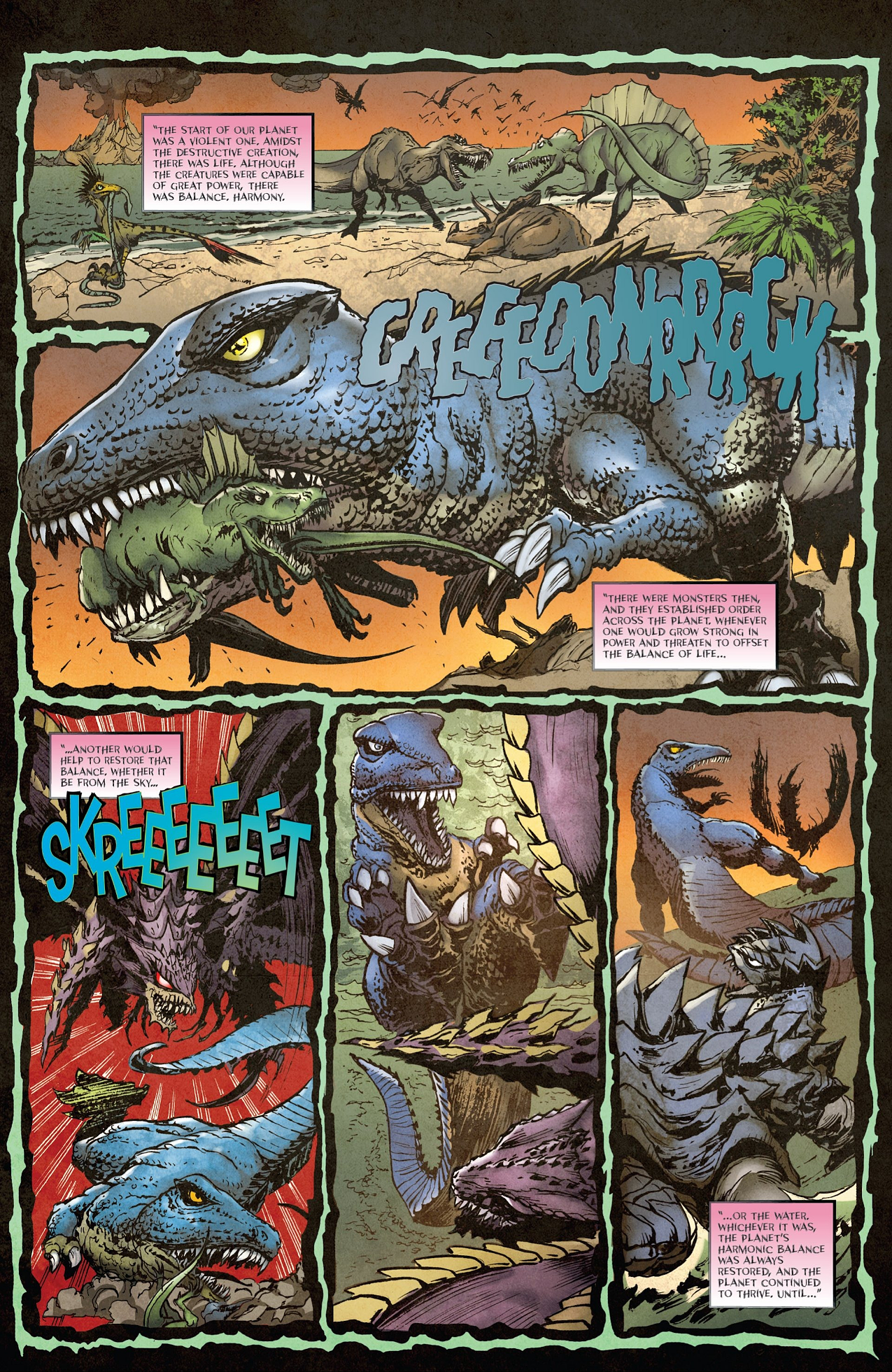
On the sea coast near an erupting volcano, a Tyrannosaurus and a Spinosaurus are ready to start a fight over the carcass of a Triceratops, but Gorosaurus appears and grabs both predators in his jaws. Megaguirus attacks Gorosaurus in turn while Kamoebas watches. (Godzilla: Rulers of Earth #9)
- 136,000,000 years ago
- Godzilla and numerous other kaiju inhabit the Earth. The planet is invaded by Xiliens, whose monster Keizer Ghidorah attacks Godzilla and Anguirus. The aliens set free a pair of archaic humans in an attempt to populate the planet, but both are incinerated in magma brought forth by Godzilla. (Godzilla: Rage Across Time #5)
- 130,000,000 years ago
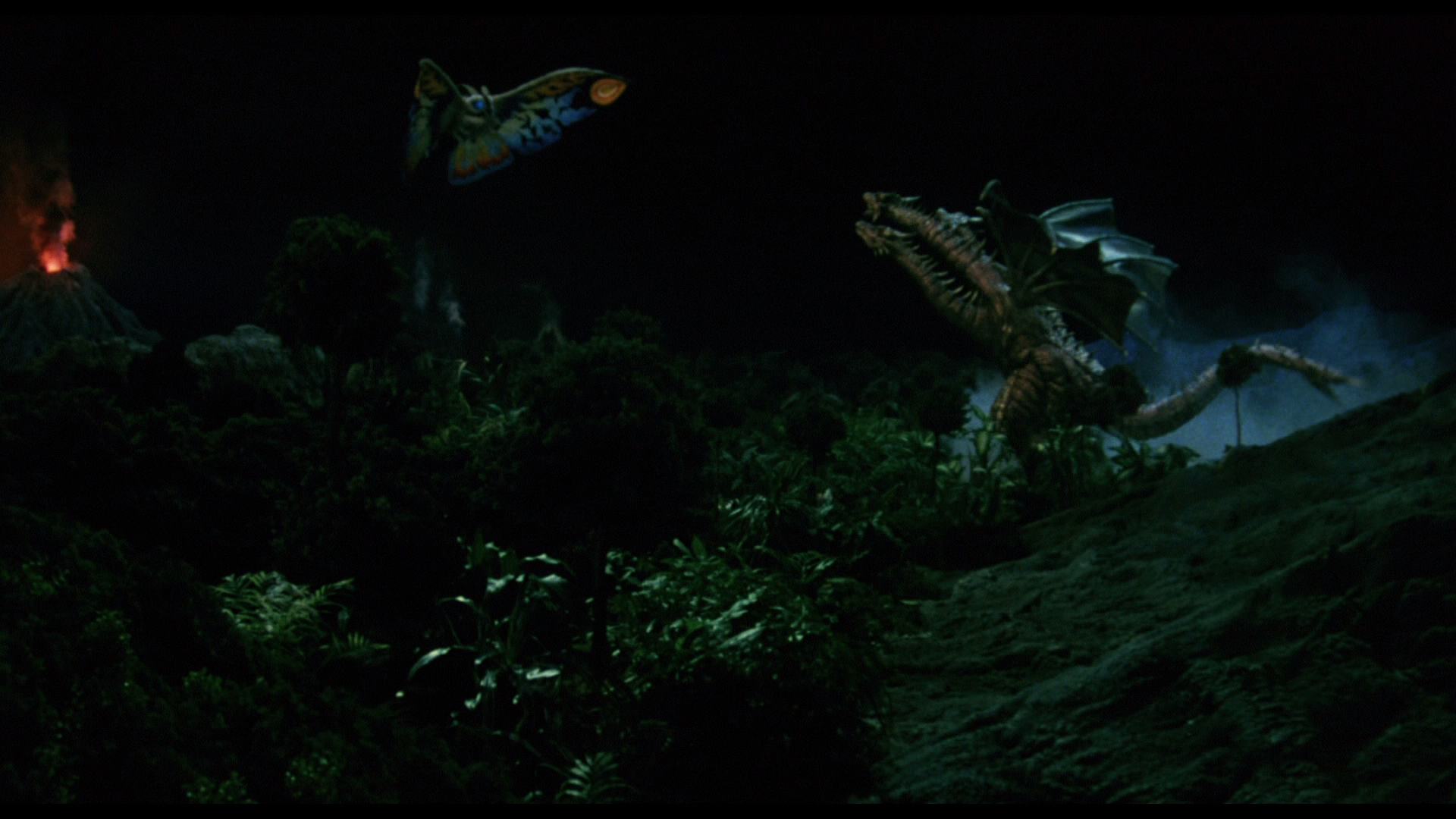
- Cretaceous King Ghidorah lands on Earth and begins to kill dinosaurs. Rainbow Mothra arrives, having traveled back in time from the year 1998, to fight Ghidorah in a younger, weaker form. The two battle, and Leo eventually severs one of Ghidorah's tails, which digs itself into the ground to regenerate. Leo eventually grabs the young King of Terror and drops it into an erupting volcano, killing it. Leo then lands on the ground, badly burned and seriously injured. However, three larval Primitive Mothras - an ancestor of the modern Mothra species - arrive and cover Leo in silk to protect and preserve him through the ages, allowing him to recover from his injuries. (Rebirth of Mothra 3)
- 100,000,000 years ago
- As a result of glaciation, one Rhedosaurus is frozen for millions of years. (The Beast from 20,000 Fathoms)
- 65,000,000 years ago
- An asteroid hits the Earth, killing much of the planet's life. The population of the dinosaurs and other prehistoric creatures is reduced, but many species do not surrender to extinction. Across the planet, many small populations of such species as plesiosaurs, pterosaurs, and even some dinosaurs (including Ankylosaurus and a theropod genus known as "Godzillasaurus") continue to survive and breed.
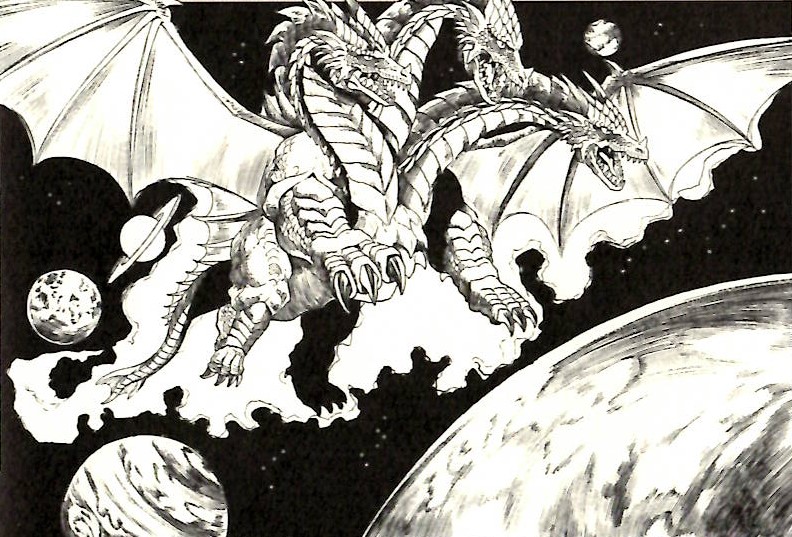
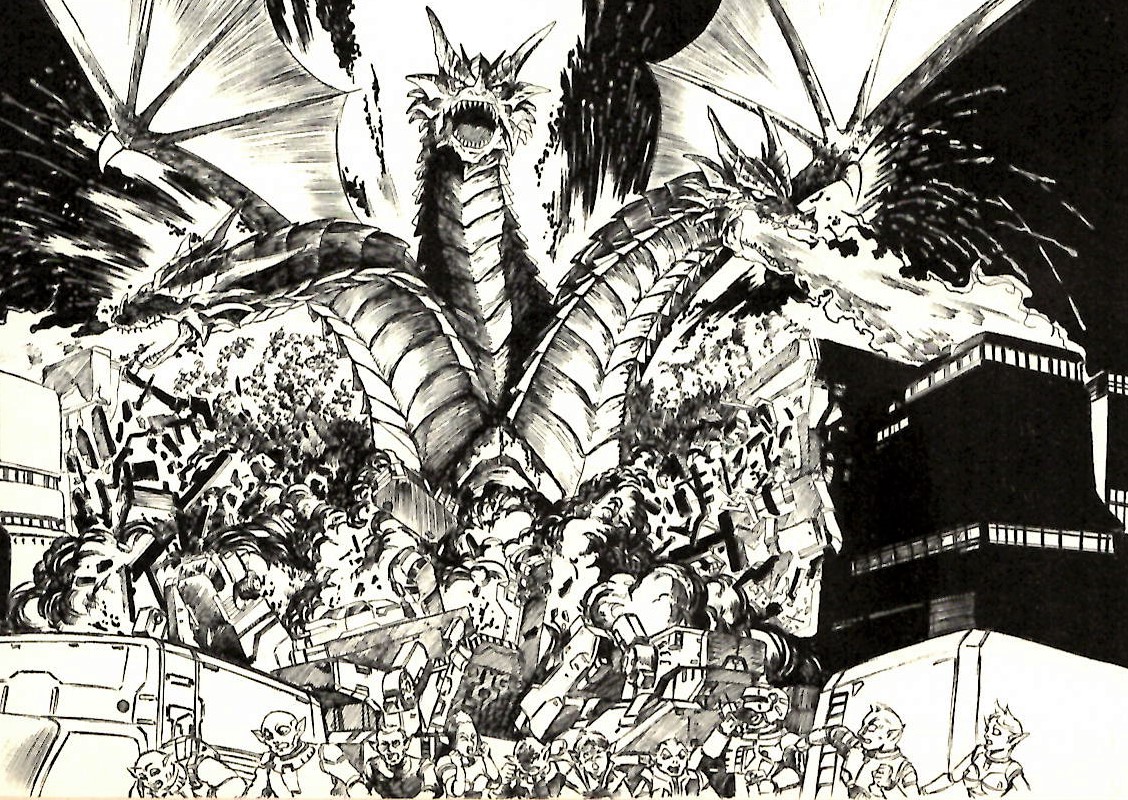
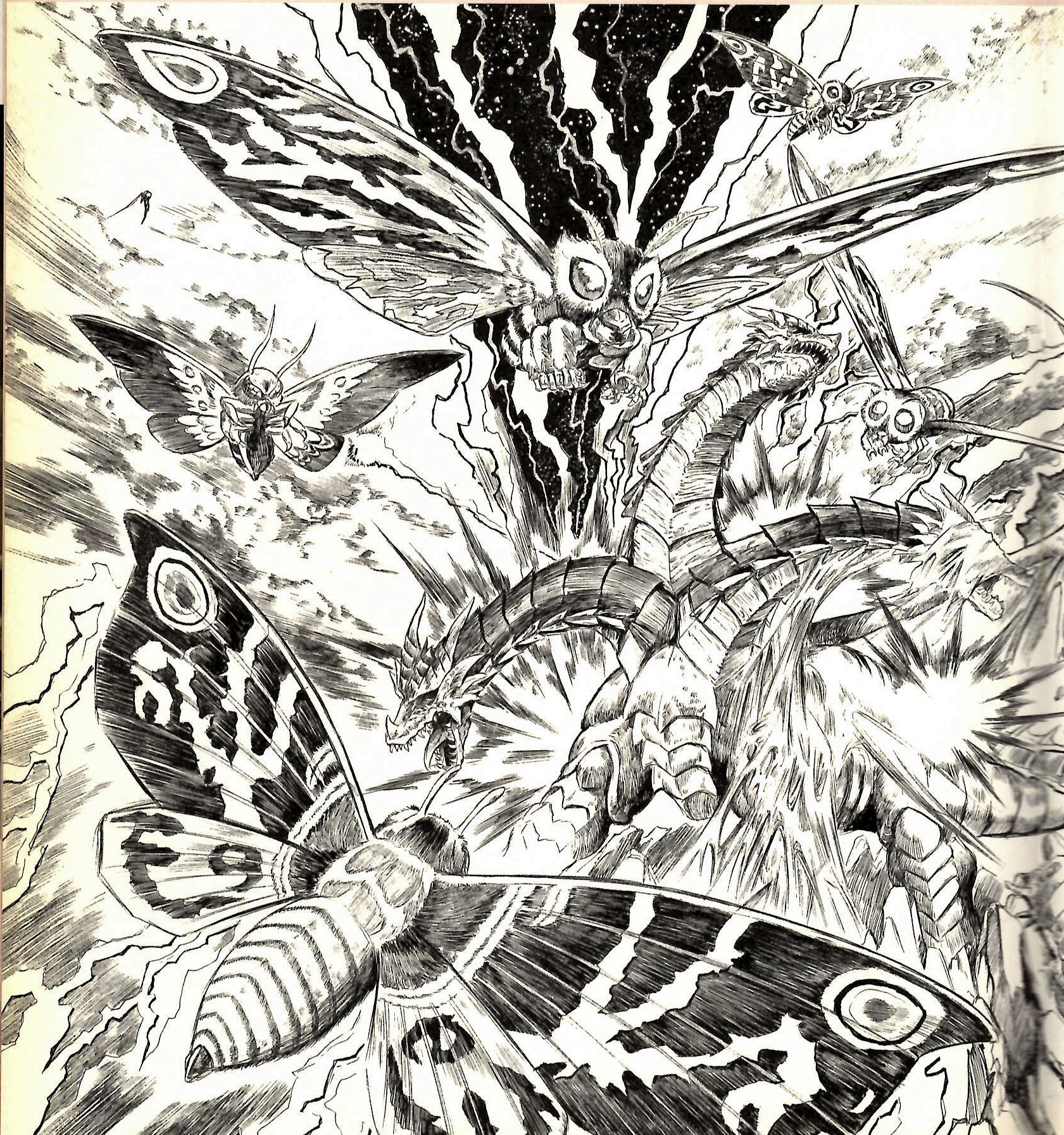
- The three-headed space monster Desghidorah arrives on Earth and begins to absorb the life energy from the planet. The dominant race of the world, small humanoids called the Elias, attempt to fight back alongside a race of giant moths called Mothras. Eventually, Desghidorah is defeated and sealed inside the Earth, but the Elias are left all but extinct, and only one Mothra remains alive. (Rebirth of Mothra)
- The Leviathan Aliens' ship crash-lands on Earth. They keep the Reptilians and Cryptocledius, the former of which were selectively bred from Cretaceous fauna, to aid them before sending out a distress beacon and going dormant. (Godzilla: The Series, "Leviathan")
- A group of highly advanced aliens called Millennians attempt to travel to Earth with their spaceship to establish an empire, but their ship crashes into the ocean. The Millennians remain trapped within, unable to operate the ship without light from the Sun, and eventually combine their biomass into a single body to stay alive, awaiting the day when their ship could be reactivated. (Godzilla 2000: Millennium)
Gallery
-
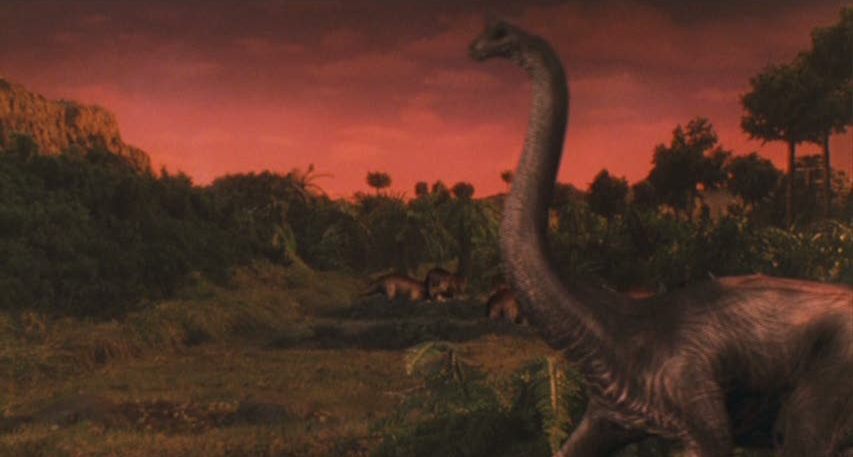
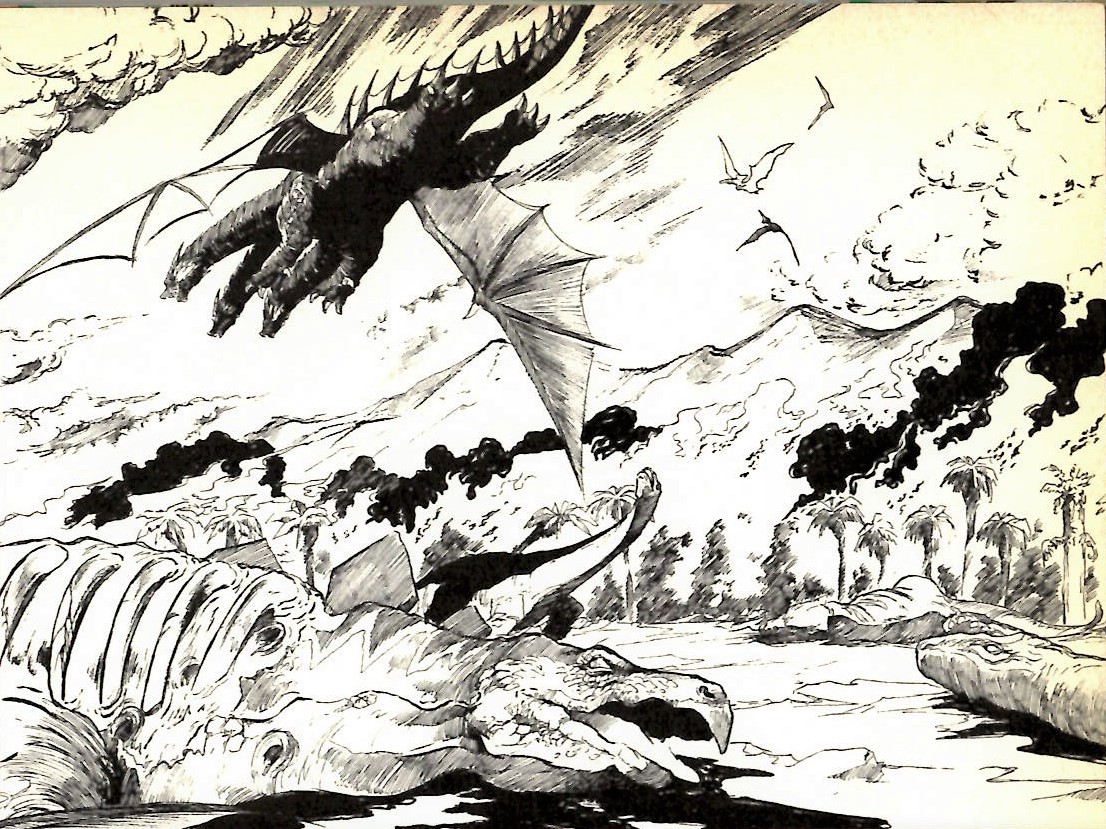
 The Cretaceous environment (Rebirth of Mothra 3)
 -
 The Cretaceous environment
 -
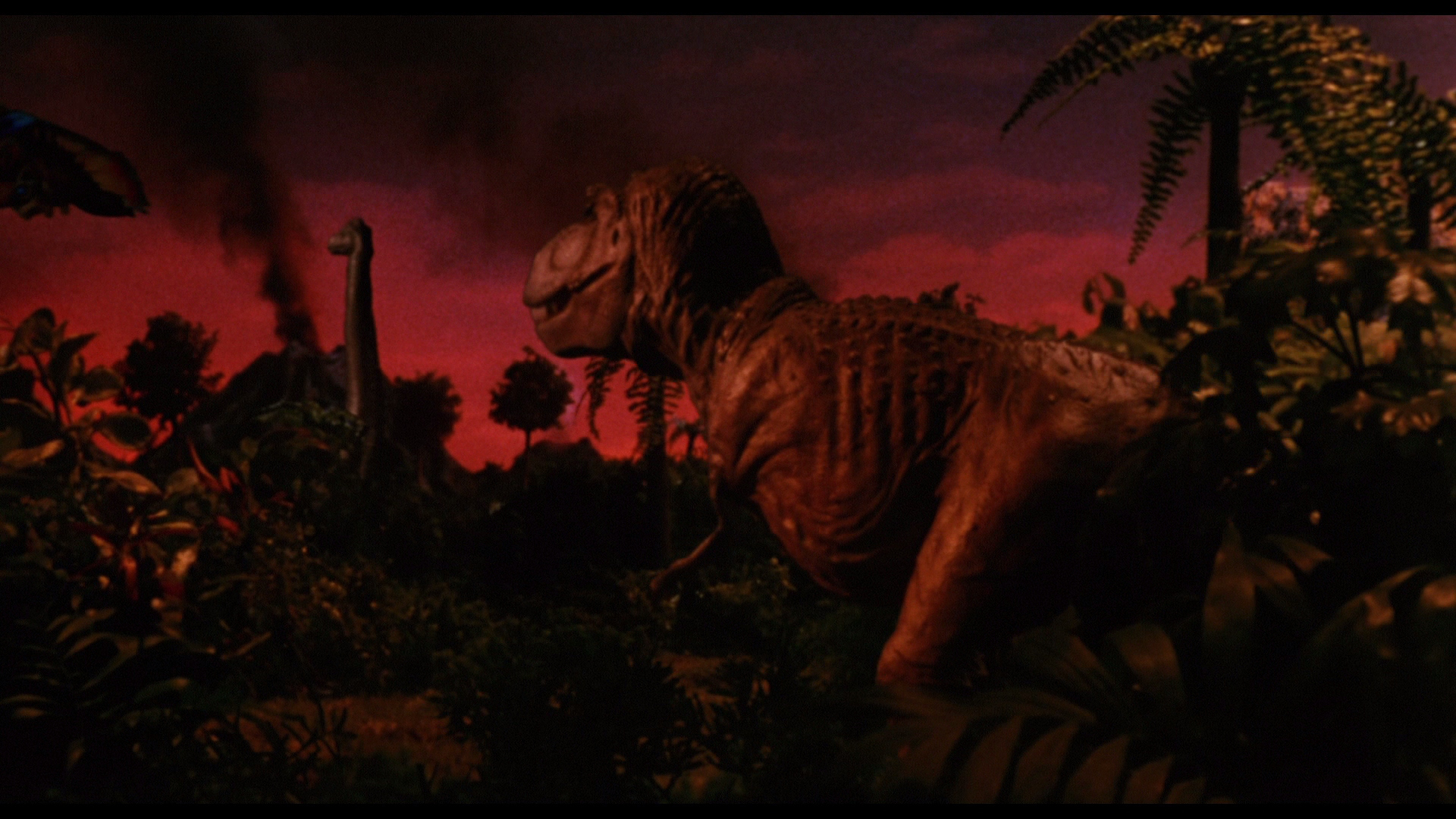
 A T. rex and Triceratops
 -
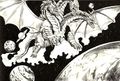 Desghidorah traversing through outer space (Rebirth of Mothra Super Complete Works)
 -
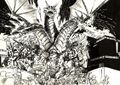 Desghidorah wiping out civilization on Mars
 -
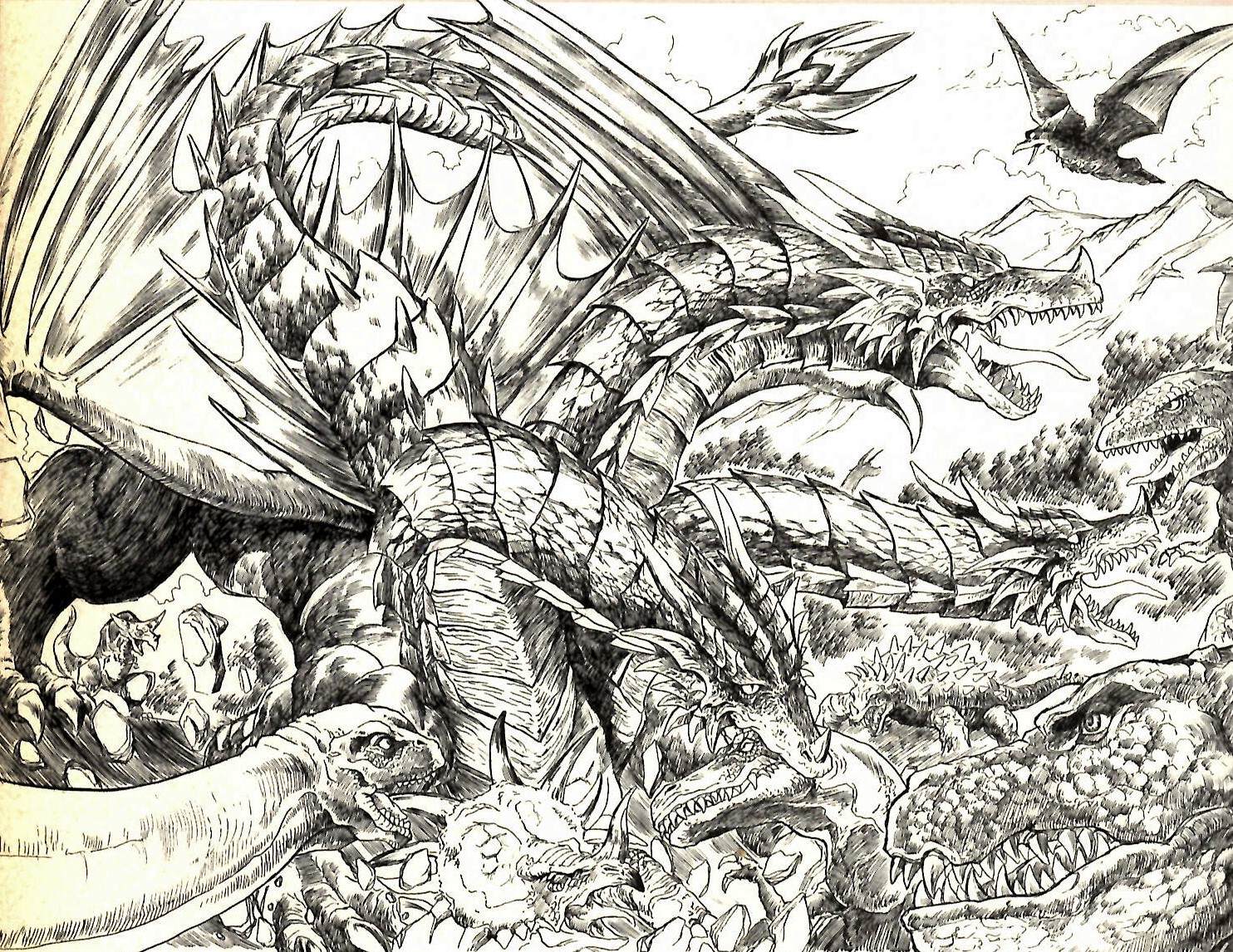
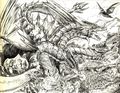 Desghidorah fighting dinosaurs resembling Gorosaurus, Anguirus, Gomora and a Rodan-like pterosaur. A silhouette resembling the head of Kingsaurus III is in the background.
 -
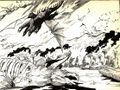 Desghidorah eradicating the dinosaurs
 -
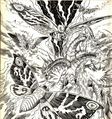 Desghidorah being defeated by Mothras
 -
 Gorosaurus and Megaguirus clash in the Cretaceous in Godzilla: Rulers of Earth

Trivia
- Multiple pieces of fiction place the Cretaceous–Paleogene extinction event at 65 million years ago, which was likely based on estimates prevalent at the time that those media were made. More recent studies indicate that it would have occurred closer to 66 million years ago. Consequently, a setting of 65 million years ago would inadvertently place those events in the Early Paleogene rather than the Late Cretaceous.
References
This is a list of references for Cretaceous. These citations are used to identify the reliable sources on which this article is based. These references appear inside articles in the form of superscript numbers, which look like this: [1]
|
Comments
Showing 13 comments. When commenting, please remain respectful of other users, stay on topic, and avoid role-playing and excessive punctuation. Comments which violate these guidelines may be removed by administrators.

|