

Stegosaurus
| |||||||||||||||||||||||||||||||||||||||||||||||||||||||||||||||||||||||

|
This article or section needs to be cleaned up to meet the standards of Wikizilla. |
|
“
|
An immense beast was emerging from the jungle, a beast with a thick, scaly hide, a huge spiked tail, and a small reptilian head upon a long swaying neck. It walked in an awkward squatting posture upon tremendous hind legs. Its forelegs were carried elevated far up toward the base of the long neck and were more like paws.
|
„
|
— Narration during the encounter of the rescue group and a Stegosaurus in the 1932 King Kong novelization |
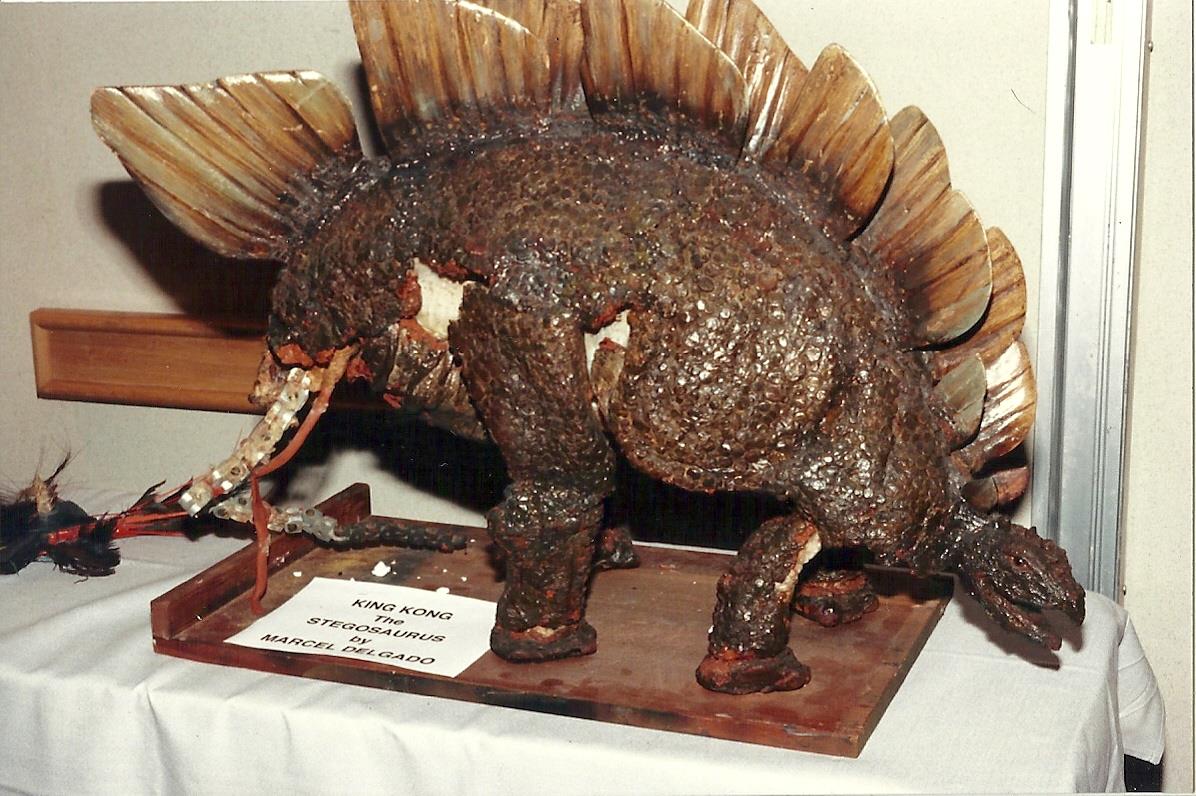
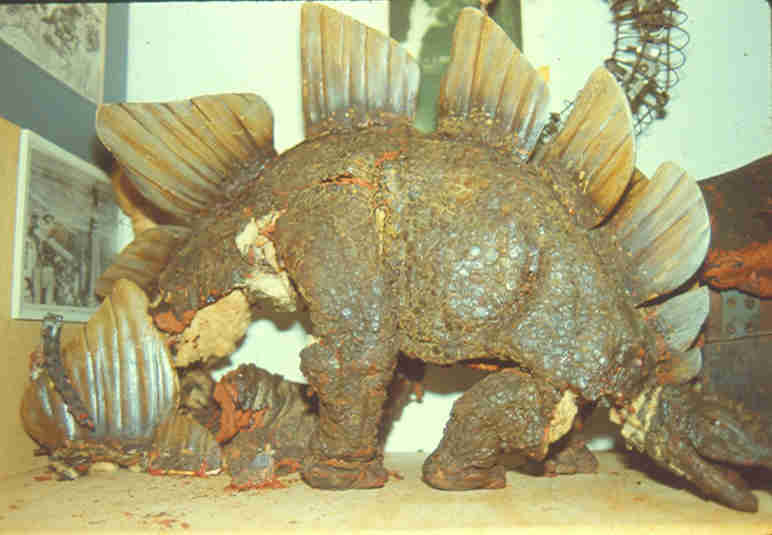
Stegosaurus is a famous genus of extinct large herbivorous dinosaur that lived during the Late Jurassic Period. A Stegosaurus appears in the 1933 film King Kong, as well as various other Kong media, and photos and models of stegosaurs appear in the Godzilla franchise.
Name
The name "Stegosaurus" means "covered lizard" and is a combination of two Greek words — stegein (meaning "cover") and sauros (meaning "lizard"). The name was given due to the armor covering the animal's back.[2]
Appearance
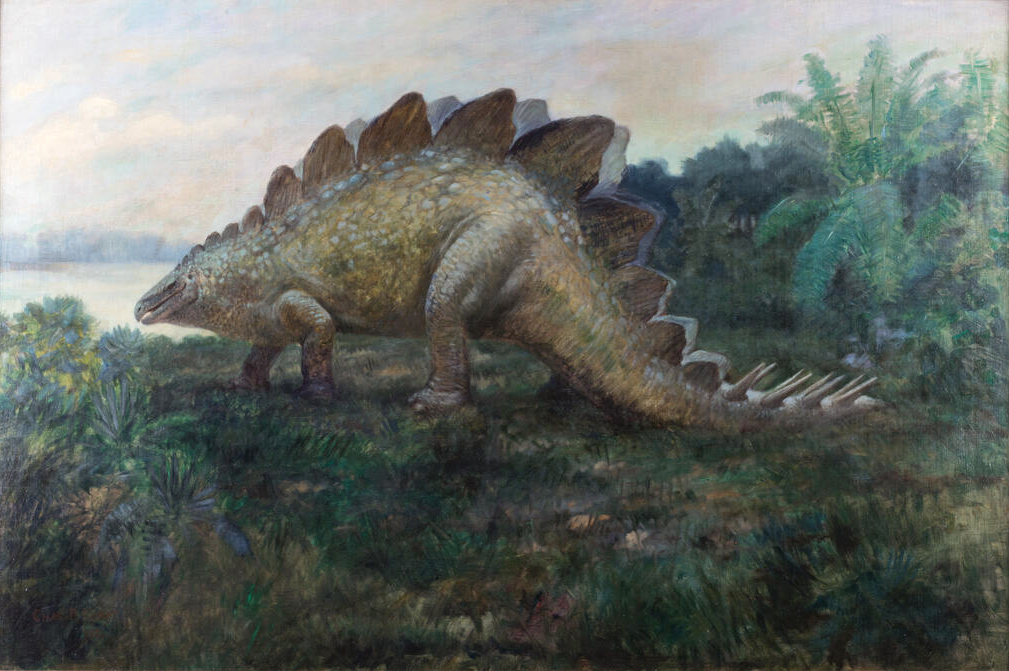
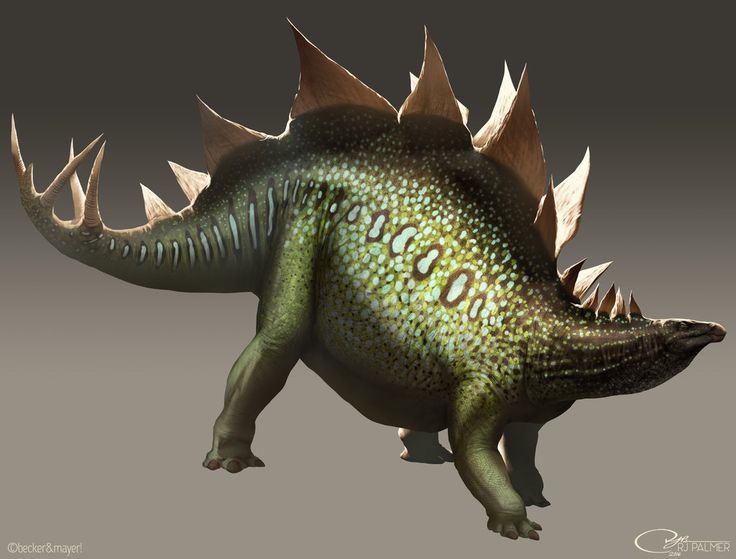
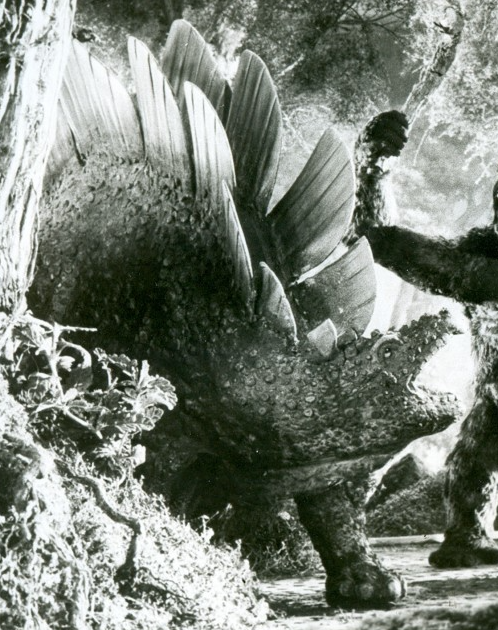
Depictions of Stegosaurus in early films such as 1933 King Kong closely resemble reconstructions by paleontologists of the time.[3] In both films and arts, including pieces by Charles R. Knight, Stegosaurus was depicted as a massive, lumbering animal with thick skin, a humped back, thick legs, and a tail that dragged along the ground. In many reconstructions, the dinosaur has a short neck, where rows of plates begin immediately behind the head, and its front limbs are significantly shorter than its back legs. In addition, the animal was sometimes depicted with a sharp beak.
As new, more complete skeletons were discovered and close relatives of Stegosaurus were studied, details of its appearance were clarified. By the mid-20th century, Stegosaurus was no longer depicted with a large beak, and by the end of the century, the dragging tail gradually disappeared from scientific reconstructions and popular culture. In the 21st century, Stegosaurus is depicted as a more graceful animal, with two pairs of spikes on its tail and asymmetrical plates on its back. The function of these plates remains a matter of debate.
In many films and series, including King Kong and The King Kong Show, Stegosaurus is shown to be significantly larger than the real animal.
Selected history
- The Lost World (1925)
- King Kong (1933)
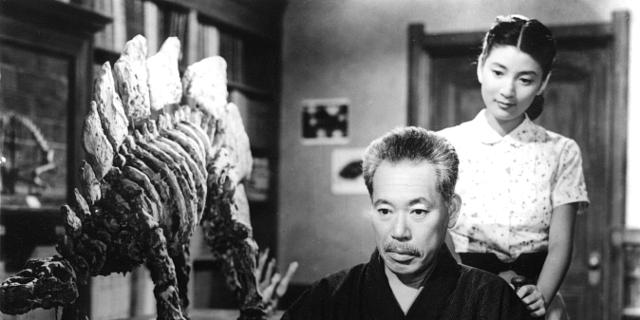
- Godzilla (1954) [skeleton model]
- The King Kong Show (TV 1966-1969) [3 episodes]
- Legend of Dinosaurs and Monster Birds (1977) [skeleton model]
- Koseidon (TV 1978-79)
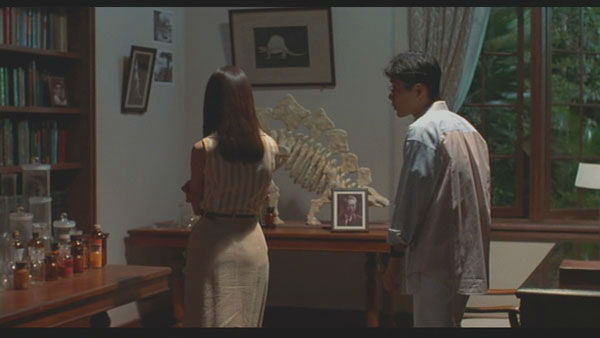
- Godzilla vs. Destoroyah (1995) [skeleton model]
- Kong: Return to the Jungle (2006)
- Godzilla (2014) [diagram, opening credits]
The Lost World
Multiple Stegosauruses are seen fleeing from the erupting volcano and at least some are shown to have survived.
King Kong (1933)
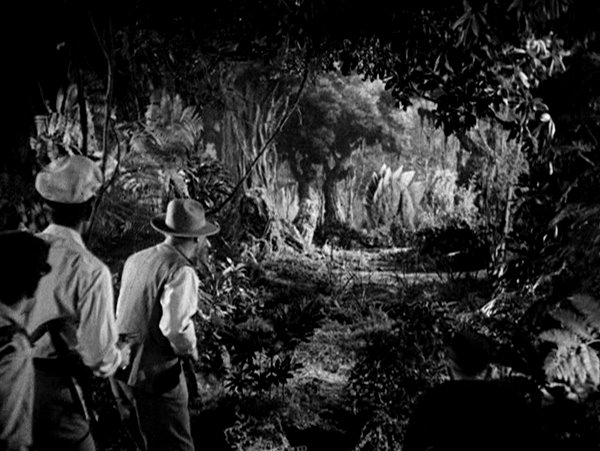
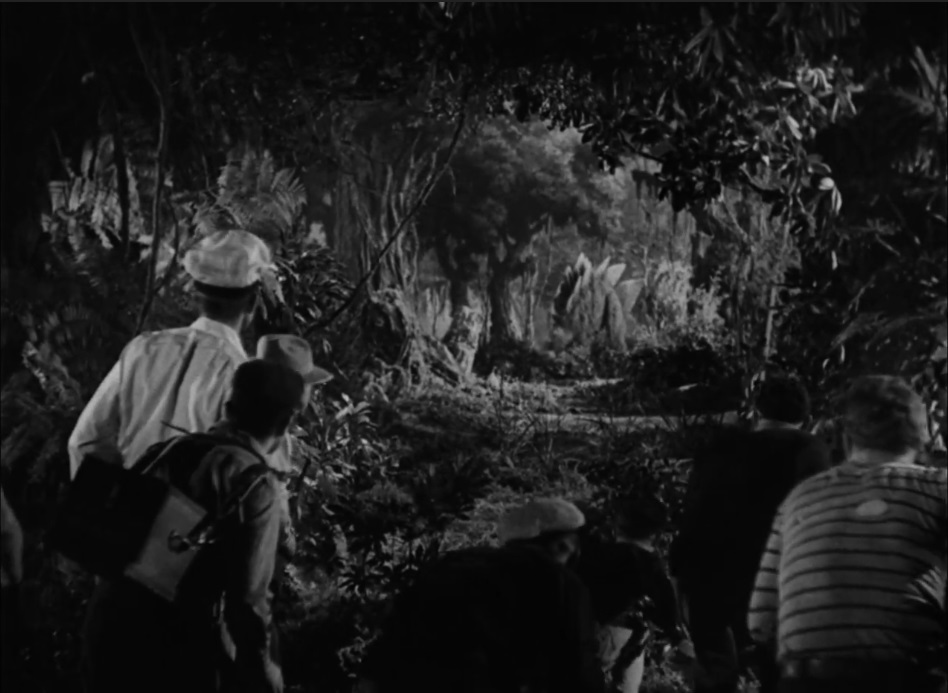
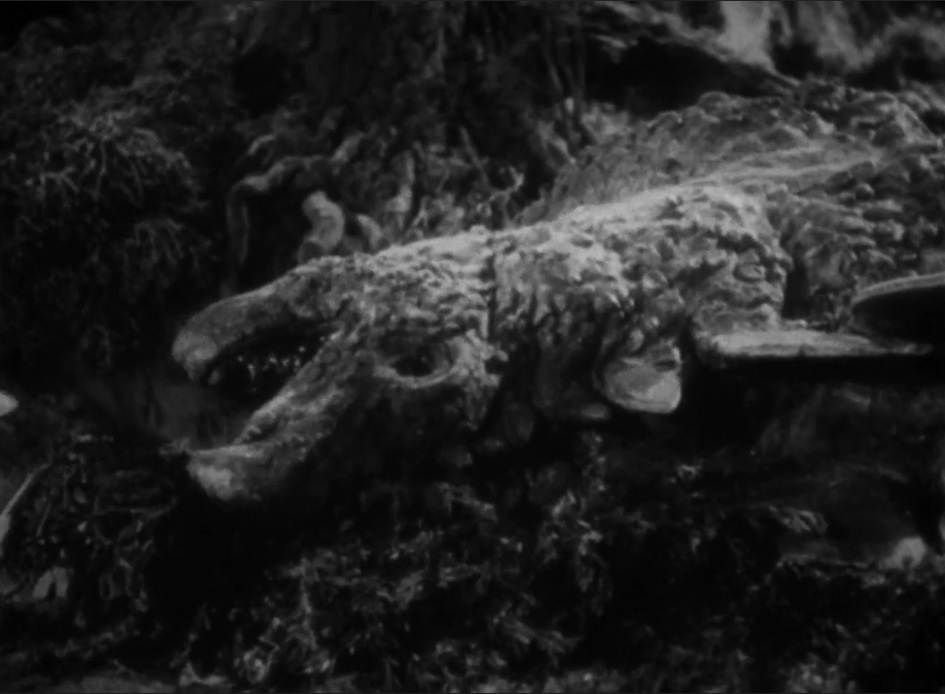
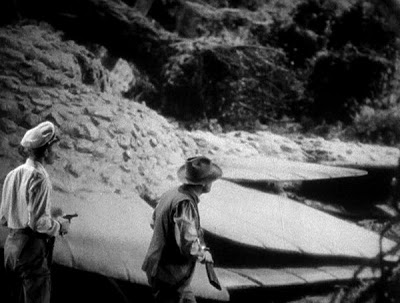
While the crew of the Venture pursued King Kong through the jungles of Skull Island, they came upon a foraging Stegosaurus, which charged at them when it noticed their presence. Before it could draw too close, Carl Denham incapacitated it with a gas bomb. The creature fell over from the impact of the explosion, but later got up and began wagging his tail at the sailors. Without hitting anyone, the dinosaur fell again after several shots and writhed on the ground for a bit before Denham approached and shot the beast in the head. The crew members walked past the fallen animal and cautiously moved away from its twitching tail with four pairs of spikes.
The King Kong Show
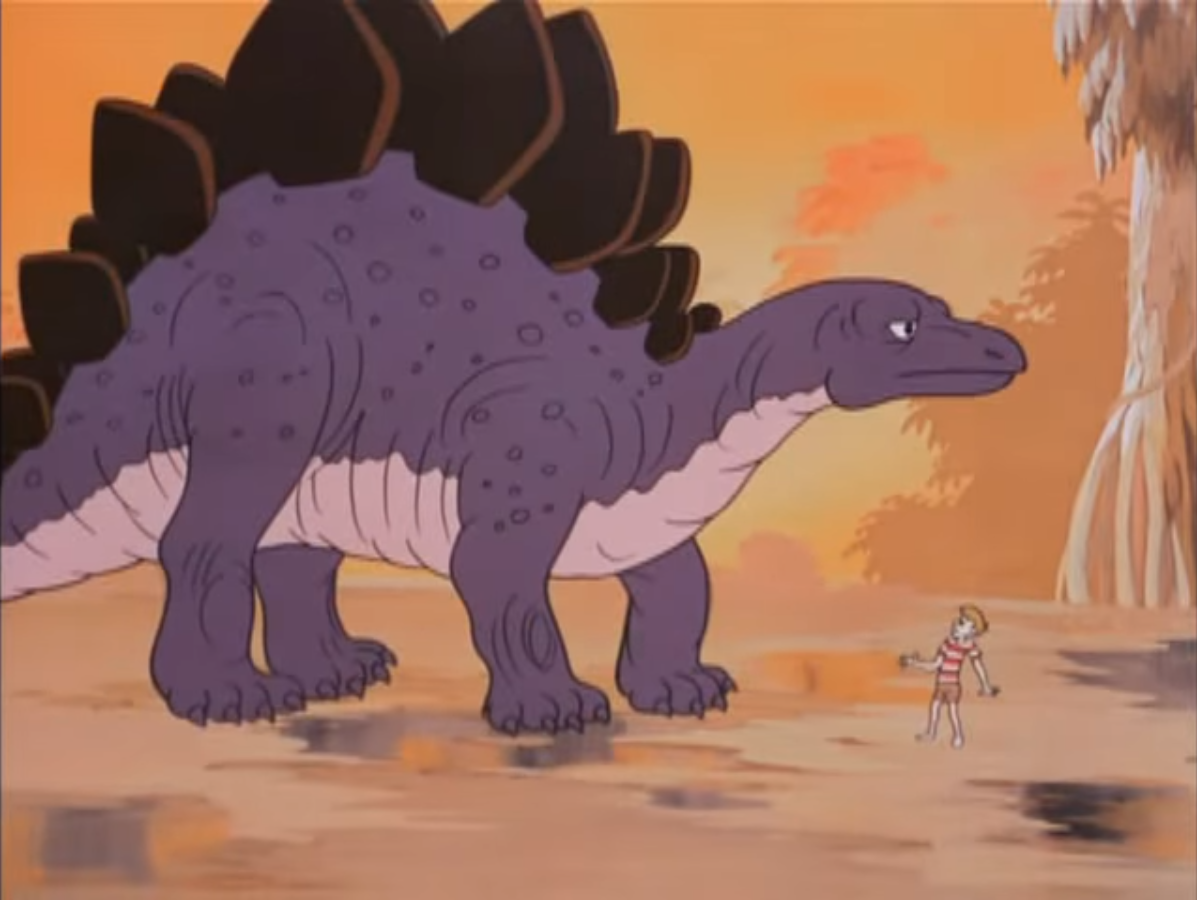
To be added.
Abilities
Physical abilities
Stegosaurus is famously armed with a tail with several spikes called a thagomizer, which is believed to have been used as a defensive weapon.
Smelling
The animal has an excellent sense of smell. In the 1932 King Kong novelization, Stegosaurus rushed to attack the sailors, smelling their scent.
Books
- King Kong (1932)
- Merian C. Cooper's King Kong (2005)
- Kong Reborn (2005)
King Kong (1932 novelization)
While grazing in the jungles, a Stegosaurus was happened upon by a group of sailors from the Wanderer, who were tracking Kong in hopes of rescuing Ann Darrow. Fearful of what the beast might do, they incapacitated it with gas bombs before Carl Denham shot it twice through the heart and once in the head, and left its carcass behind as the party continued their search.
Kong Reborn
At some point after the death of Kong, a Stegosaurus was found by a Meat-Eater while drinking at a popular watering hole. Unfazed, the Stegosaurus warded the beast off by threatening it with its spiked tail.
In the year 2009, the Stegosauruses continued their lives on Skull Island. They came in contact often enough with the island's Giant Gaur for it to become routine for herds to part at a watering hole to allow a Stegosaurus to drink before filling their chaotic ranks back in around it.
Comics
- Konga (1961-1965)
Konga
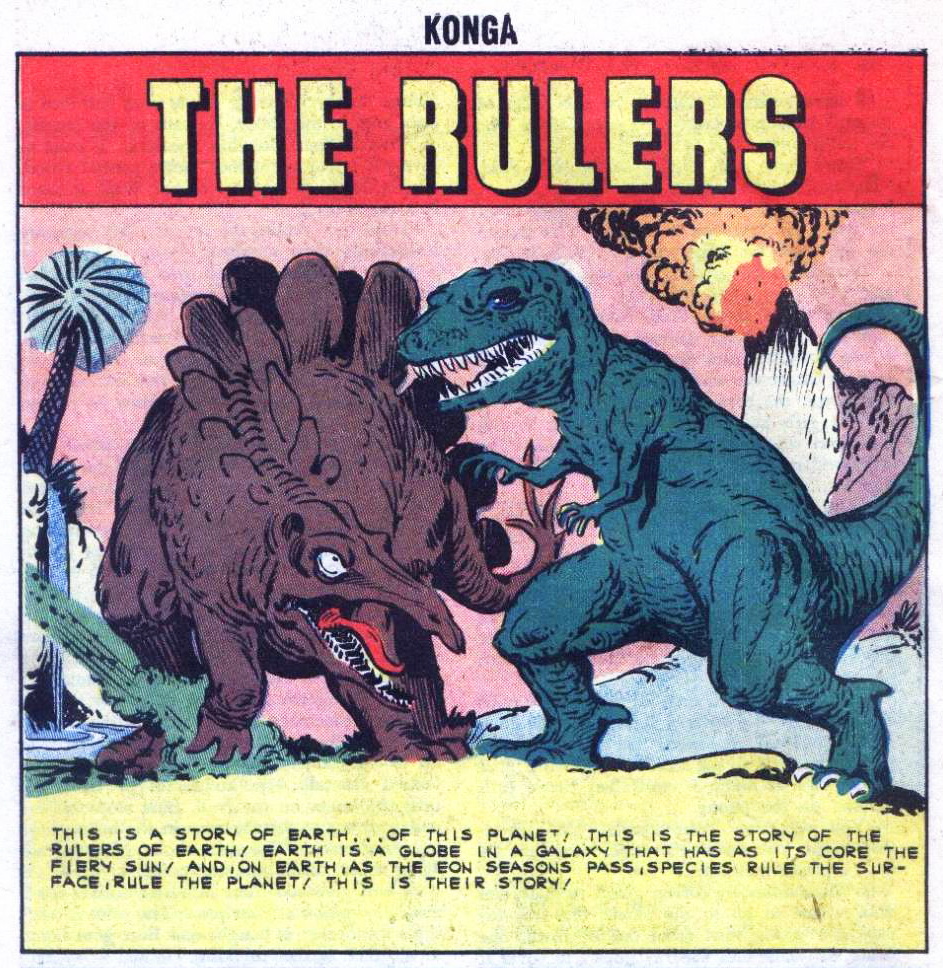
Stegosaurus and Allosaurus are depicted on the cover of "The Rulers" story. Stegosaurus is also shown in the "Monsters of the Past" story along with Diplodocus and other Mesozoic animals.
Gallery
Production
King Kong (1933)
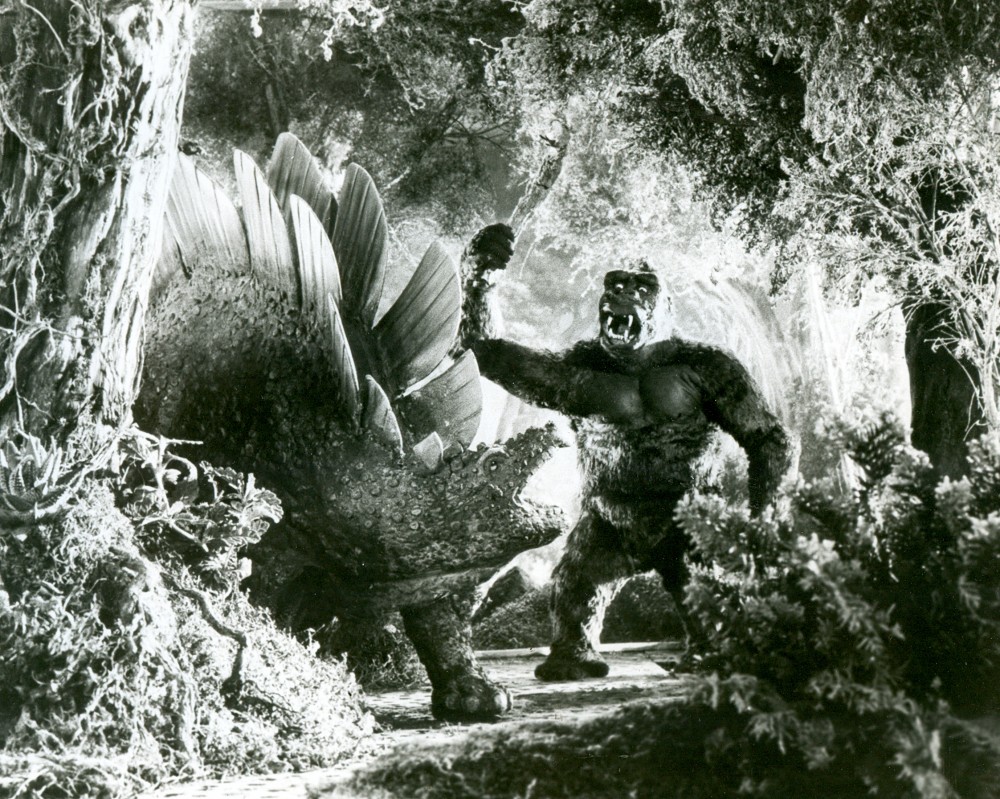
Screenshots
King Kong (1933)
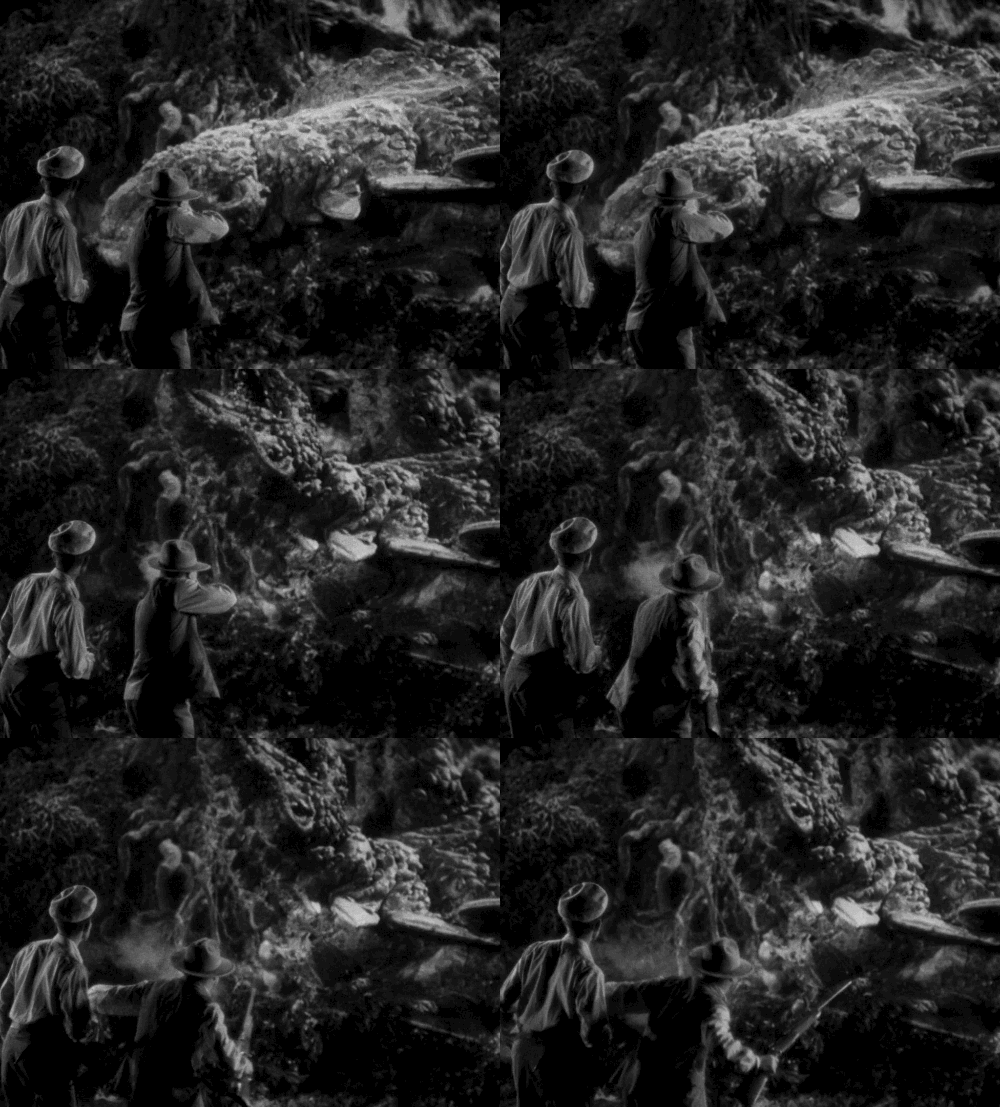
Godzilla (1954)
-
 A model of a Stegosaurus skeleton in Kyohei Yamane's office
Godzilla vs. Destoroyah
-
 A model of a Stegosaurus skeleton in Kyohei Yamane's office
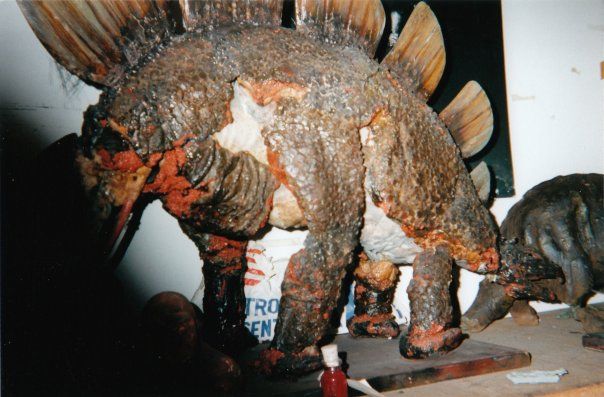
Post-production
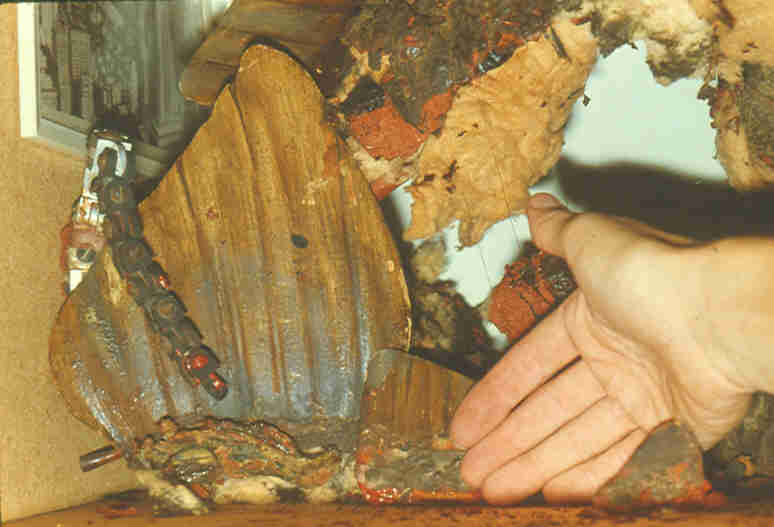
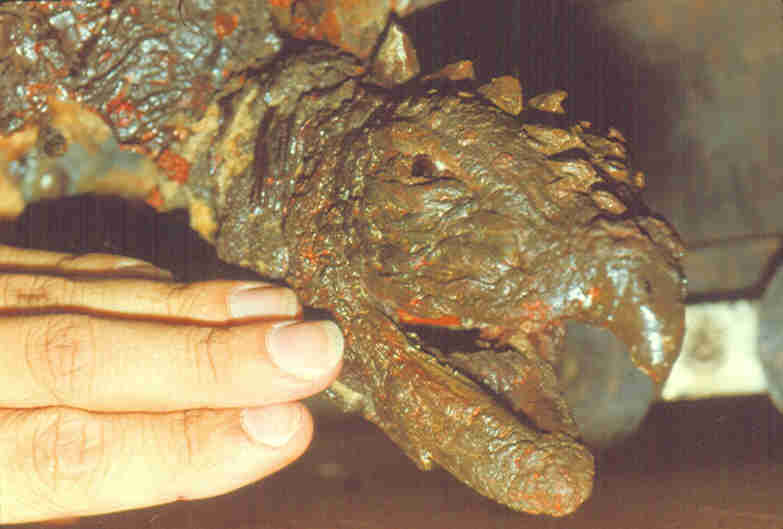
King Kong (1933)
Toys
-
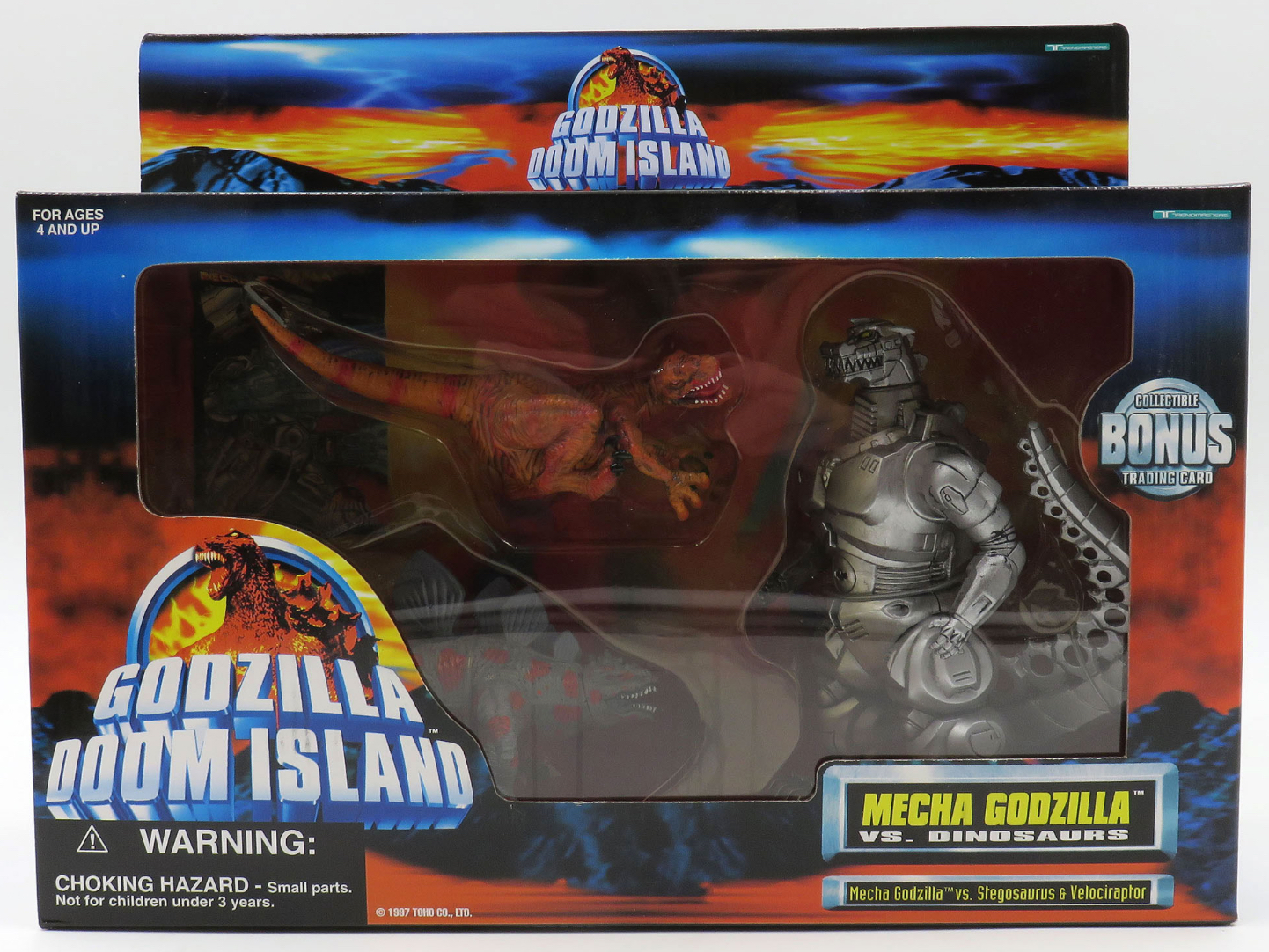
 Trendmasters Mecha Godzilla vs. Stegosaurus & Velociraptor figure set
Trivia
- Godzilla's signature dorsal fins were inspired by the dorsal plates of Stegosaurus. This is referenced in the American version of King Kong vs. Godzilla, where Dr. Arnold Johnson describes Godzilla as a "cross" between the Tyrannosaurus rex and the Stegosaurus.
External links
References
This is a list of references for Stegosaurus. These citations are used to identify the reliable sources on which this article is based. These references appear inside articles in the form of superscript numbers, which look like this: [1]
|
| |||||||||||||||||||||||||||||

| |||||||||||||||||||||||

| |||||||||||||||||

Comments
Showing 10 comments. When commenting, please remain respectful of other users, stay on topic, and avoid role-playing and excessive punctuation. Comments which violate these guidelines may be removed by administrators.

|

|

|