

Woolly mammoth
| |||||||||||||||||||||||||||||||||||||||||||||||||||||||||||
“
|
Extraordinary, dinosaurs and prehistoric mammals together. Impossible, yet here it is.
|
„
|
— Ramone De La Porta (Kong: The Animated Series episode 1, "The Return: Part 1") |
The woolly mammoth (Mammuthus primigenius) is an extinct species of mammoth that lived during the Pleistocene until its extinction in the Holocene Epoch. One of the most prominent prehistoric mammals in popular culture, its appearances in fiction include multiple episodes of the 2000 animated TV series Kong: The Animated Series and its 2006 direct-to-DVD sequel Kong: Return to the Jungle.
Name
The word "mammoth" is thought to be derived from the Russian word mamant. The exact origins of the name are murky, but two possible influences for this word have been proposed. It is likely derived from a word in the Mansi languages, mēmoŋt, which roughly means "earth-horn"; another basis for the name could be the word "behemoth", the name of the biblical beast which was thought by some to be an elephant. The "n" in mamant is inexplicably lost in modern Western European languages, while the "th" existed in pronunciation of the word, and through translations of Dutch and German sources, was adapted into the spelling of the English word.[1]
The common name "woolly mammoth" references the species' heavy coat of fur. As the woolly mammoth is the most iconic mammoth species, "mammoth" is often used as a shorthand for them. Its scientific name, Mammuthus primigenius, is comprised of the generic name Mammuthus, which Joshua Brookes coined in his museum's 1828 collection catalog,[2] and its specific name primigenius, a combination of the Latin words primus (meaning "first") and genus (meaning "birth" or "born"), which together means "first born".
Development
The woolly mammoth was planned to appear in the scrapped 1931 Willis O'Brien film Creation.
Appearance
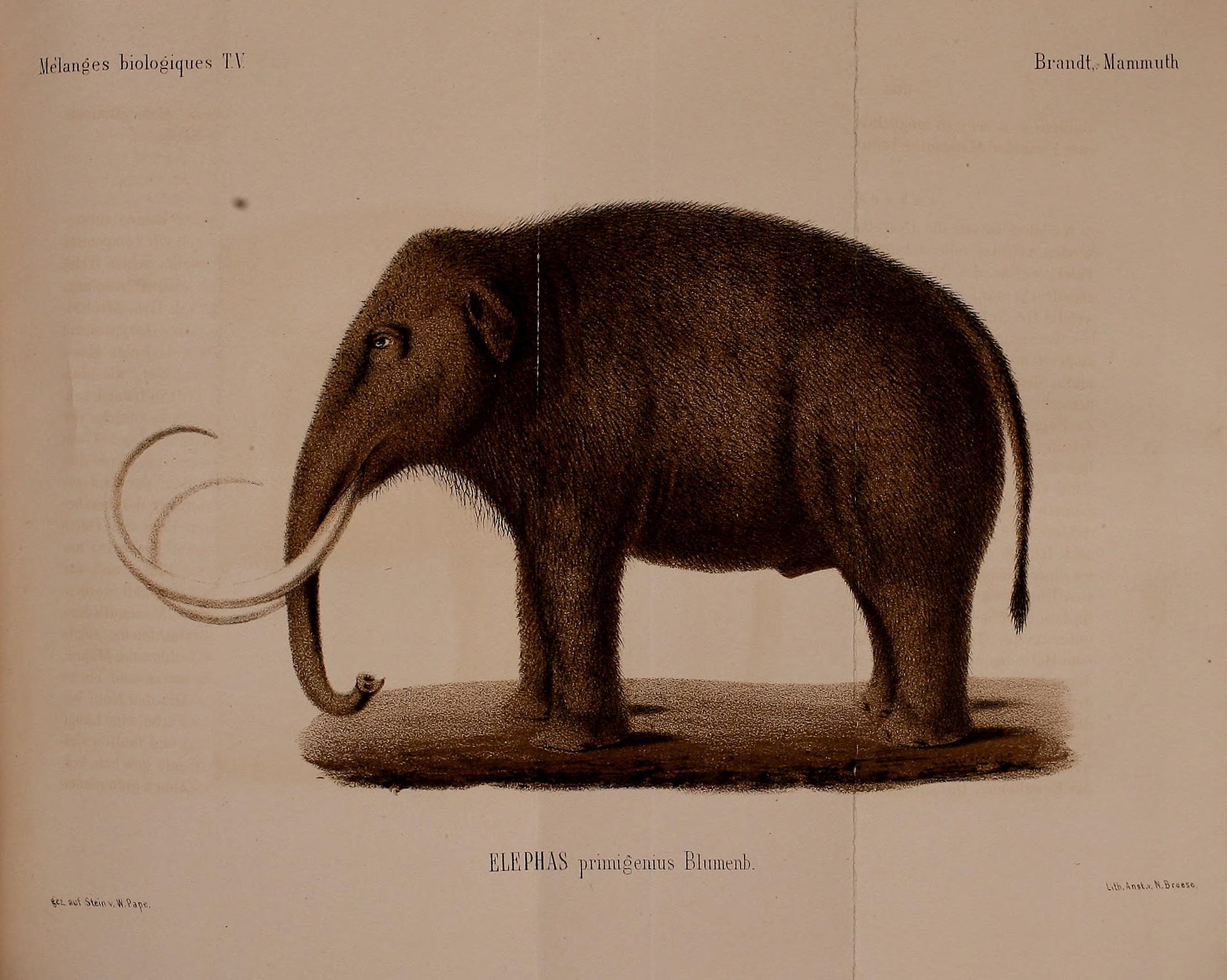
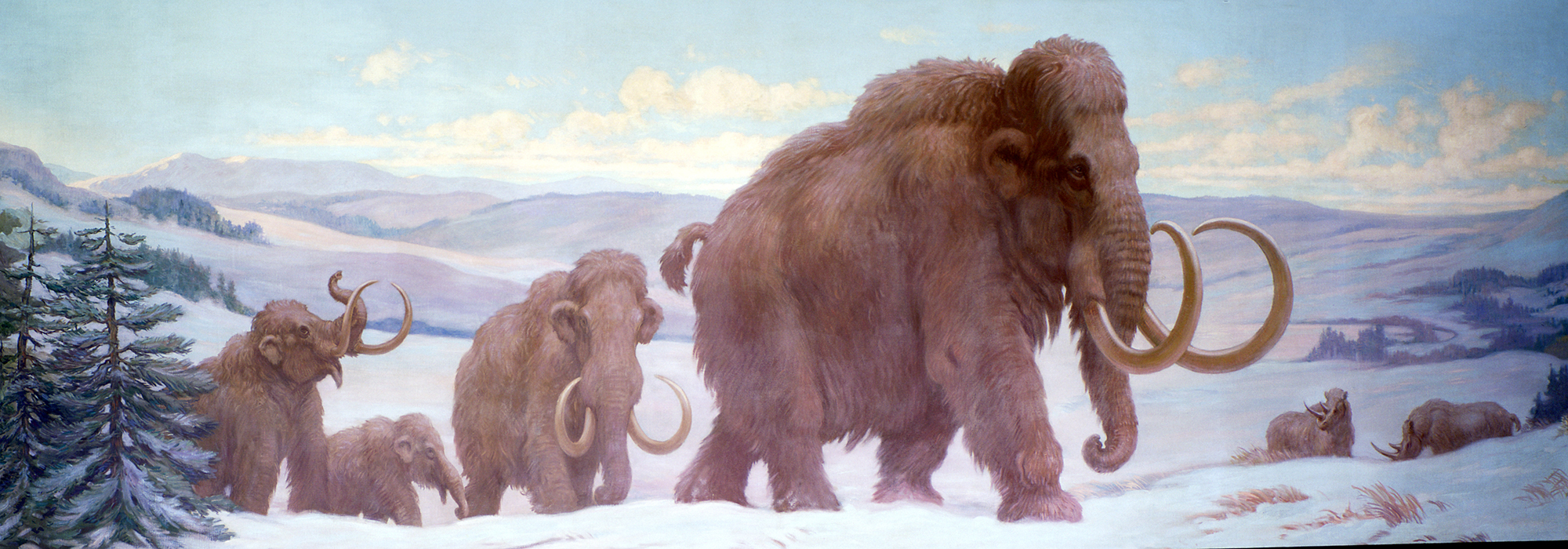
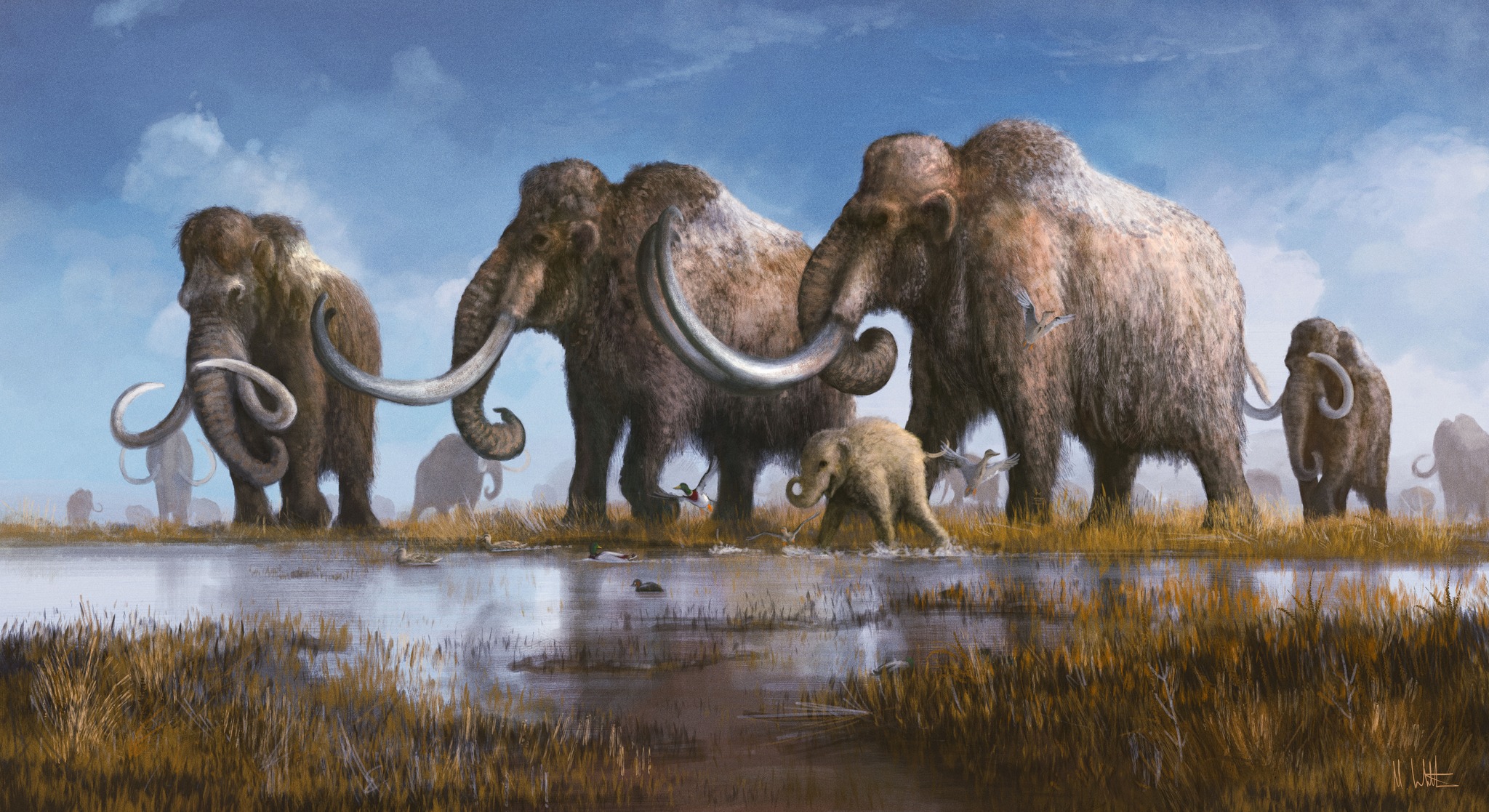
Woolly mammoths closely resemble modern day elephants such as the Asian elephant, their closest living relative.[3] Their most iconic trait is their shaggy fur coat, which covers almost their entire bodies. Another famous trait is their prominent twisted tusks, which curve inward instead of outward, contrary to past erroneous reconstructions.[4] Their ears are small relative to their body size, a trait that helps reduce body heat loss in cooler climates.
As they lived recently compared to many other prehistoric animals, a substantial amount of evidence collected over time―from art created by Paleolithic humans to frozen remains of the animals themselves―paints a rather clear picture of how they looked, including their coloration. Often, based on the mummified corpses of woolly mammoths, they had been depicted with a uniform orangish-red color, but a 2013 study found that their coloration was much more variable. Under hairs and over hairs were colorless, while the guard hairs in between were a mixture of colorless and red or brown, and could be uniformly colored or bicolored. The orangish-red color is instead likely the result of chemical degradation of keratin and fungal growth.[5]
-
![A copy of 1804-1806[4] art of the "Adams mammoth" by Roman Bolutunov](https://wikizilla-images.s3.us-east-va.perf.cloud.ovh.us/thumb/d/dd/Boltunov_mammoth.jpg/160px-Boltunov_mammoth.jpg)
-
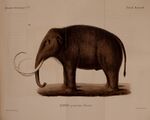 1866 art of a woolly mammoth by Johann Friedrich von Brandt
 -
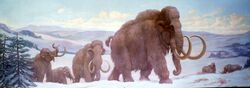 Charles R. Knight's 1929 Woolly Mammoths and Rhinoceros Cenozoic reconstruction artwork featuring a herd of Woolly mammoths
 -
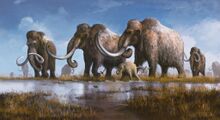 A 2025 Woolly Mammoth reconstructive painting by paleontological artist and author Mark P. Witton
![A copy of 1804-1806[4] art of the "Adams mammoth" by Roman Bolutunov](https://wikizilla-images.s3.us-east-va.perf.cloud.ovh.us/d/dd/Boltunov_mammoth.jpg)
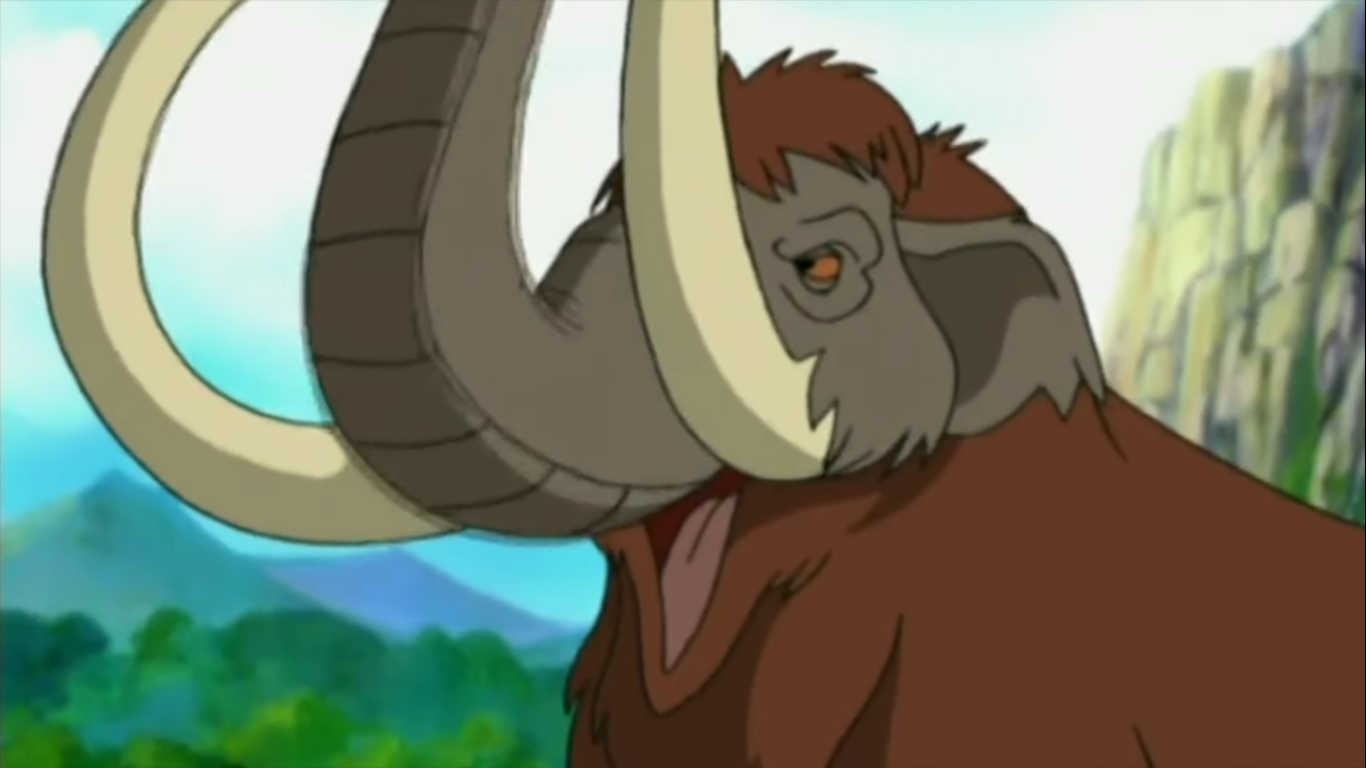
In Kong: The Animated Series, woolly mammoths closely resemble typical recreations of the animal. They possess long dark brown fur on their bodies and on the tops of their heads, shorter dull brown fur near their tusks and on their ears, and dull brown skin showing on their faces, trunks, and shins. Their eyes are a lighter brown. Mammoth calves resemble the adults, but are smaller, have duller fur, and their tusks are short and stubby.
History
- Kong: The Animated Series (TV 2000–2001) [episodes 1, 3, and 6]
- Kong: Return to the Jungle (DVD 2006)
Kong: The Animated Series
"The Return: Part 1"
After escaping a Tyrannosaurus rex on Kong Island, Eric Tannenbaum IV and Ramone De La Porta observed a woolly mammoth alongside two Brontosaurus and a Styracosaurus.
"Primal Power"
Amid seismic and volcanic activity caused by the removal of the Primal Stones, a woolly mammoth mother and her calf were separated, with the calf trapped at the bottom of a ravine. The mother remained near the ravine's edge, calling to her calf, and the calf called back. Lava flowed across the bottom of the ravine towards the calf, but Kong rescued it just in time. He carried the calf as he climbed the ravine walls before returning it to its mother.
"Dragon Fire"
Two woolly mammoth parents and their calf were trapped on a small cliff on the verge of collapse. Kong arrived on the scene and placed down a slab of rock, creating a bridge for the three mammoths to cross. The last of the two adults crossed onto the other side just as the edge of the smaller cliff crumbled away and the rock bridge fell.
Kong: Return to the Jungle
As Kong traveled across Kong Island, a herd of woolly mammoths crossed a plain. A calf trumpeted to him as he leapt over them.
A short time later, amid Ramone De La Porta and Hunter Stag III's raid on Kong Island, a mammoth herd attempted to flee, but were captured by a net launcher operated by Stag's Cyber-Hunters. They were then put into crates and loaded into a tanker along with other Kong Island fauna, and were transported to Stag's zoo in New York City. Shortly after their arrival, they and the other animals from Kong Island broke out of the zoo and ran rampant, as Stag had planned. After Stag was defeated, they and the other prehistoric animals were gathered up and brought back to Kong Island.
Comics
- King Kong (1967)
- Monsterverse Declassified (2024) ["Tiamat"]
Monsterverse Declassified
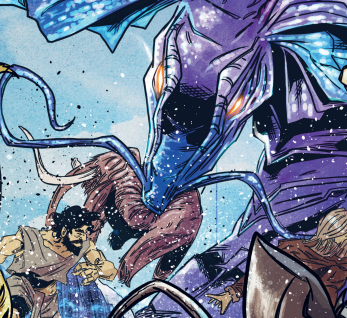
In the past, Tiamat snatched up a woolly mammoth during one of her rampages in a human settlement.
-
 Tiamat seizing a mammoth in prehistoric times
Gallery
-
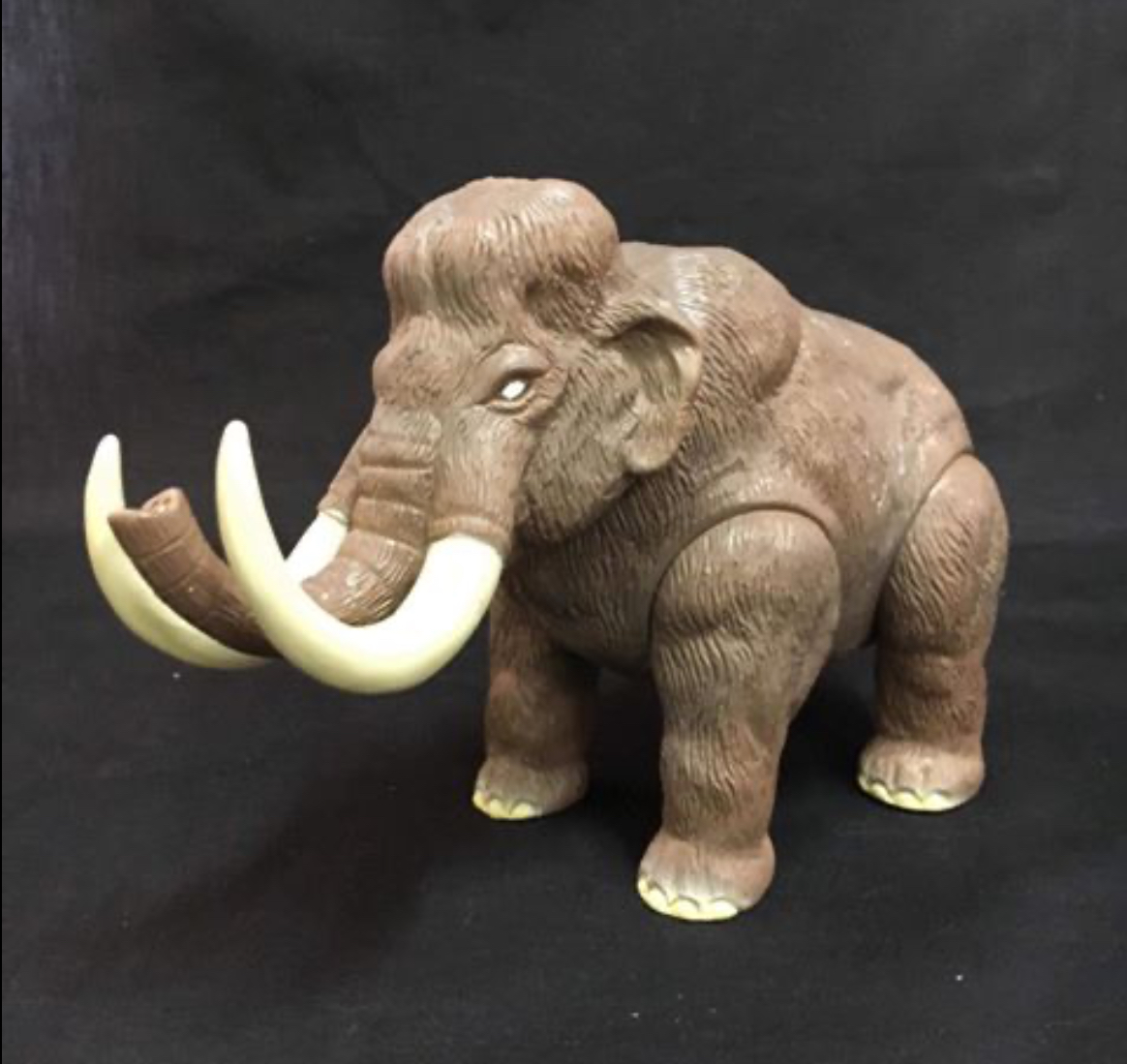
 Y-MSF woolly mammoth
Trivia
- Behemoth, a Titan in the Monsterverse, strongly resembles woolly mammoths.
External links
References
This is a list of references for Woolly mammoth. These citations are used to identify the reliable sources on which this article is based. These references appear inside articles in the form of superscript numbers, which look like this: [1]
|

| ||||||||||||||||||||||||||
Comments
Showing 31 comments. When commenting, please remain respectful of other users, stay on topic, and avoid role-playing and excessive punctuation. Comments which violate these guidelines may be removed by administrators.