

Two-Legged Lizard
| This article is a work in progress. Please help in the creation of this article by expanding or improving it. |

| |||||||||||||||||||||||||||||||||||||||||
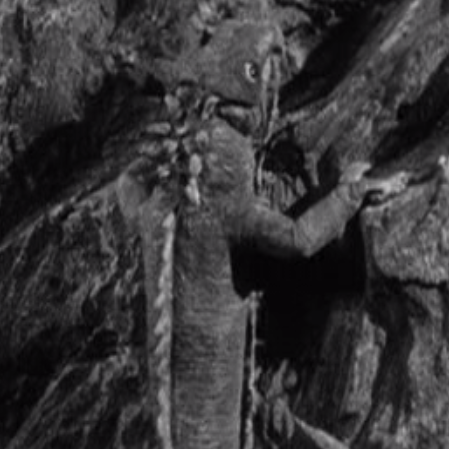
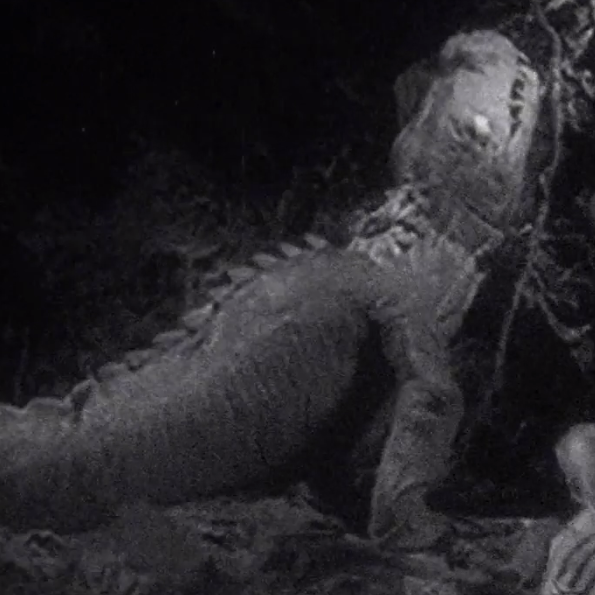
The Two-Legged Lizard is a giant lizard monster that makes a brief appearance in the 1933 film King Kong.
Name
This creature's name is never spoken onscreen, but in the script for King Kong it is acknowledged as the giant lizard. The name "two-legged lizard" refers to the creature's distinctive trait of only possessing two limbs, although the film's script and novelization never indicate that the creature possesses only two legs.
In a 1933 short story adaptation of the film for Boys' Magazine, author Draycott Dell gave it its only official name to date: Polysauro, which derives from the Greek word "poly" and the Latin "saur," essentially translating to "many reptile."
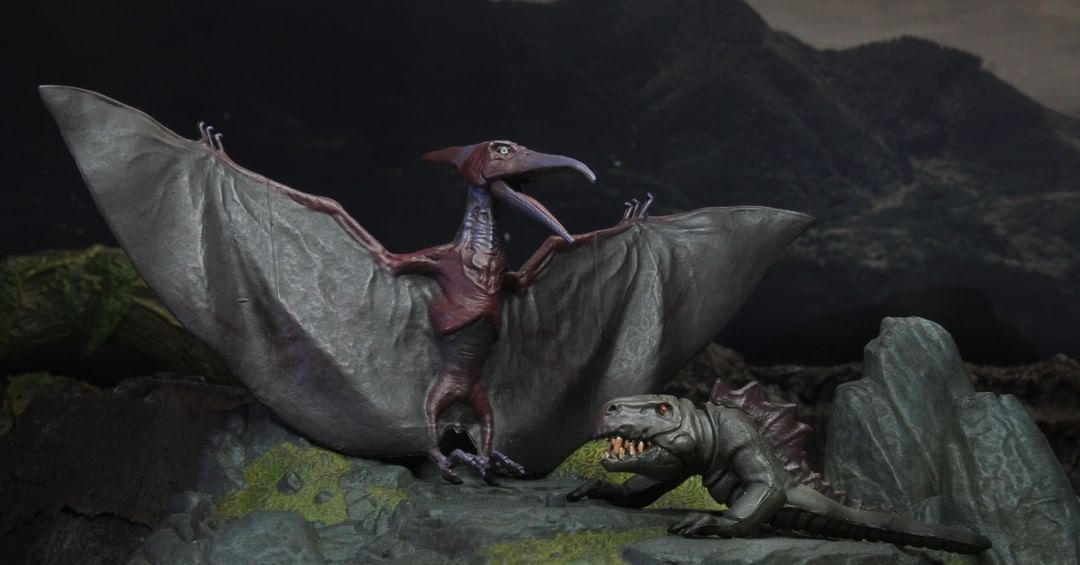
The Art and Making of Kong: Skull Island refers to it as the two legged lizard when discussing its influence on the Skullcrawlers' design. The box for NECA's King Kong figure that also includes a figure of this creature refers to it as the Pit Monster.
Design
The lizard has an elongated body with two forelimbs and a tail, but no hind legs. It only has two digits on each hand, Its neck bears a mane-like collection of spikes that creates a break in the crest that runs from its head to its tail. In the 1933 short story adaptation by Walter F. Ripperger, it is described as moving in a slithering motion, and is physically regarded as an indescribable abomination one might imagine in Dante Alighieri's epic poem Inferno.
History
- King Kong (1933)
- The Lost Spider Pit Sequence (2005)
King Kong (1933)
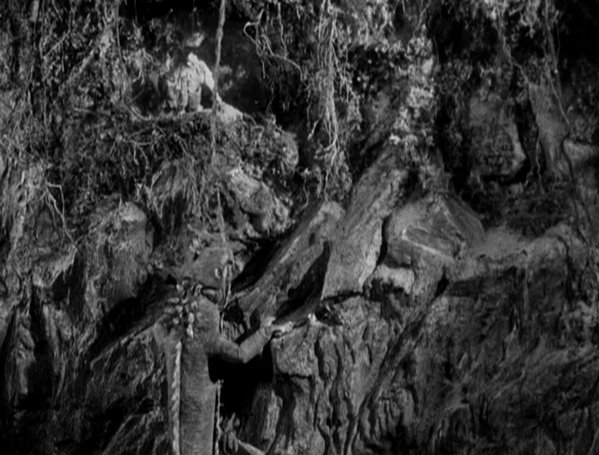
After King Kong destroyed the log bridge and sent most of the Venture crew to their deaths in the chasm below, Jack Driscoll hid in a small crevice in the rock wall. Jack looked down and saw a giant two-legged lizard slowly scaling up a vine to his position. Jack quickly grabbed a dagger and cut the vine, sending the lizard plummeting into the chasm.
The Lost Spider Pit Sequence
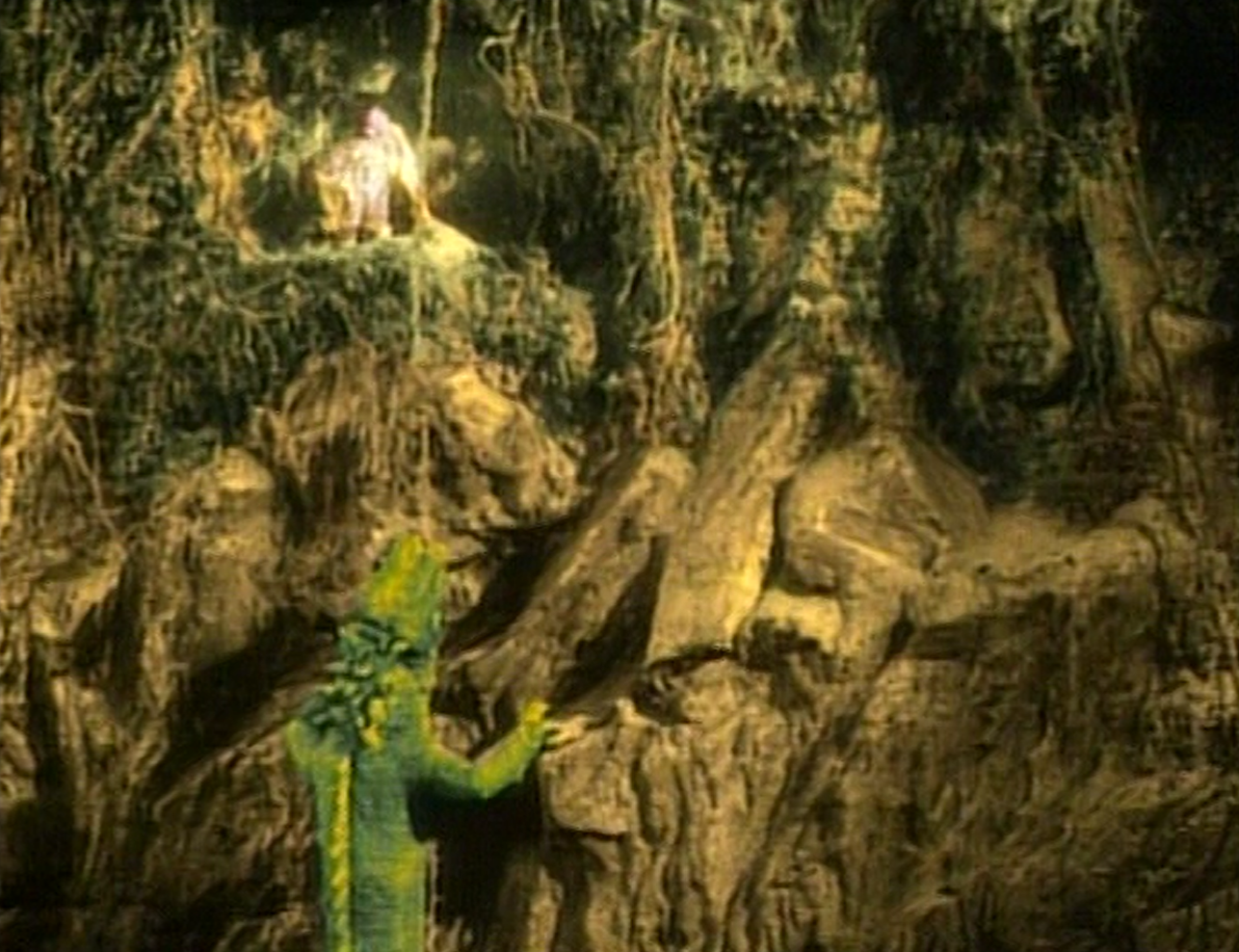
In a recreation of the cut and subsequently lost spider pit scene from the original King Kong, the two-legged lizard is seen crossing the pit bottom before climbing the wall to menace Jack using stock footage.
Abilities
Climbing
The Two-Legged Lizard climbs well along the steep walls of the chasm, clinging with its claws and teeth.
Books & Short stories
King Kong (Boys' Magazine short story)
After many sailors fell into a deep crevice on Skull Island, a lone Polysauro began to climb a vine on the wall toward a man named Jack Driscoll, who was being menaced from above by Kong. Driscoll dodged the ape's hand for long enough to cut the vine and send the Polysauro crashing to the ravine's floor.
Gallery
King Kong (1933)
The Lost Spider Pit Sequence
-

-
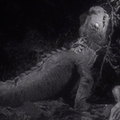 The Two-Legged Lizard in Peter Jackson's recreation of the lost spider pit sequence from the 1933 film
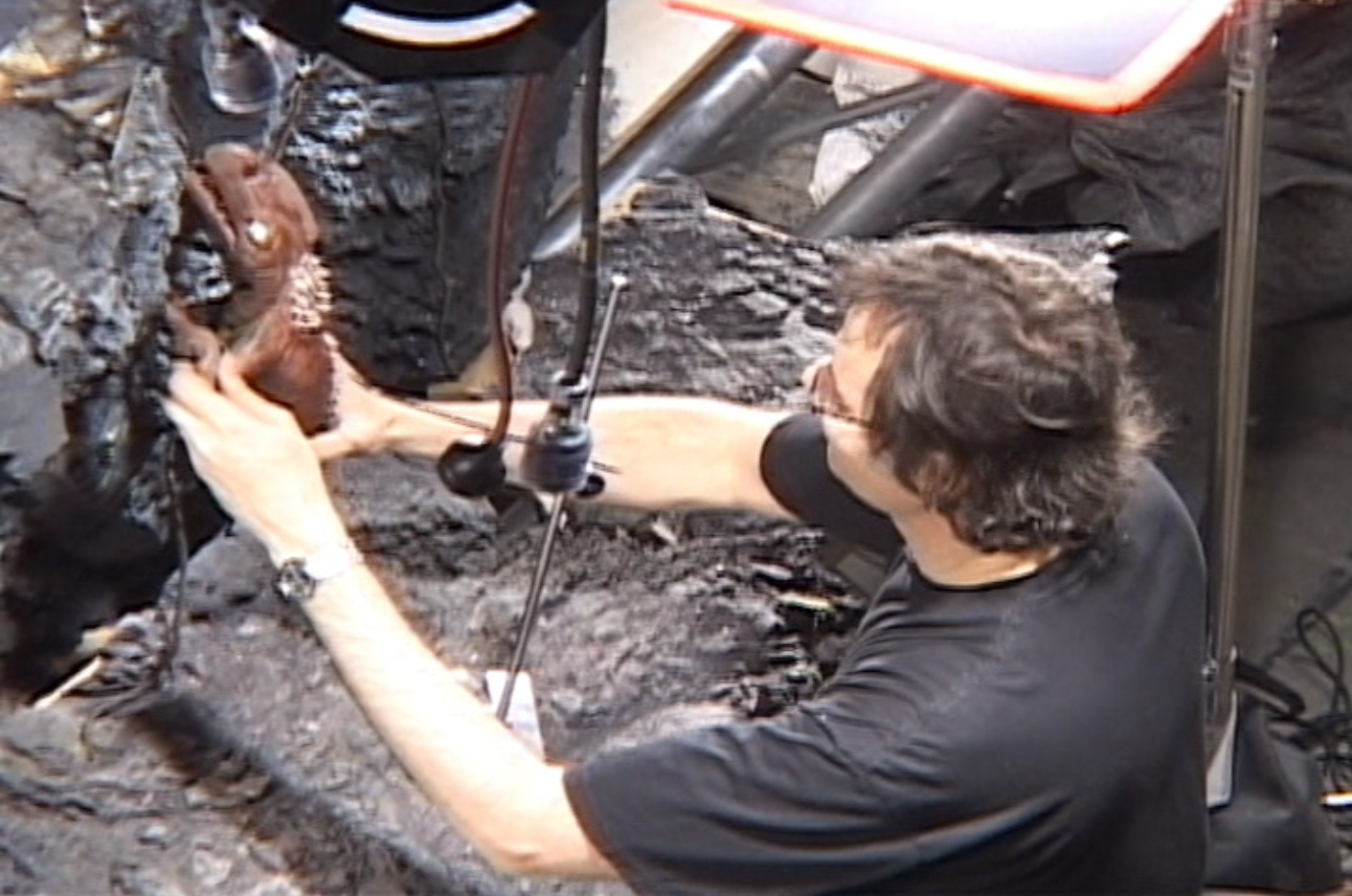
Merchandise
-
 NECA's Two-Legged Lizard figure
Trivia
- The Two-Legged Lizard influenced the design of the Skullcrawlers from the 2017 movie Kong: Skull Island.[1]
- The lizard's role in the film is filled by a giant spider in the film's script, the 1932 novelization, and Merian C. Cooper's King Kong, with the giant lizards remaining in the chasm. In the 1932 novelization, they are simply described as looking like regular lizards except for their size.[2] In both novels, however, there is a scene where a reptilian scavenger crawls out of a ravine, smelling the scent of a dead Meat-Eater. In Merian C. Cooper's King Kong, it is said that this creature is over six feet long.
- In the third episode of Kong: The Animated Series, titled "Primal Power," Ramone De La Porta uses his Cyber-Link Computer to merge with a giant snake that was attacking Kong in order to gain an advantage while fighting him. When De La Porta merges with the snake, they become a two-legged lizard.
References
This is a list of references for Two-Legged Lizard. These citations are used to identify the reliable sources on which this article is based. These references appear inside articles in the form of superscript numbers, which look like this: [1]
|
| |||||||||||||||||||||||||||||

Comments
Showing 42 comments. When commenting, please remain respectful of other users, stay on topic, and avoid role-playing and excessive punctuation. Comments which violate these guidelines may be removed by administrators. Loading comments...
|

|

|