

Rhamphorhynchus
| |||||||||||||||||||||||||||||||||||||||||||||||||||||
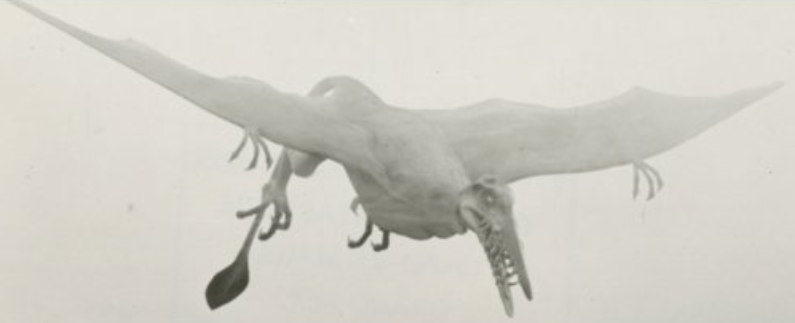
Rhamphorhynchus is an extinct genus of pterosaur known from the late Jurassic Period.
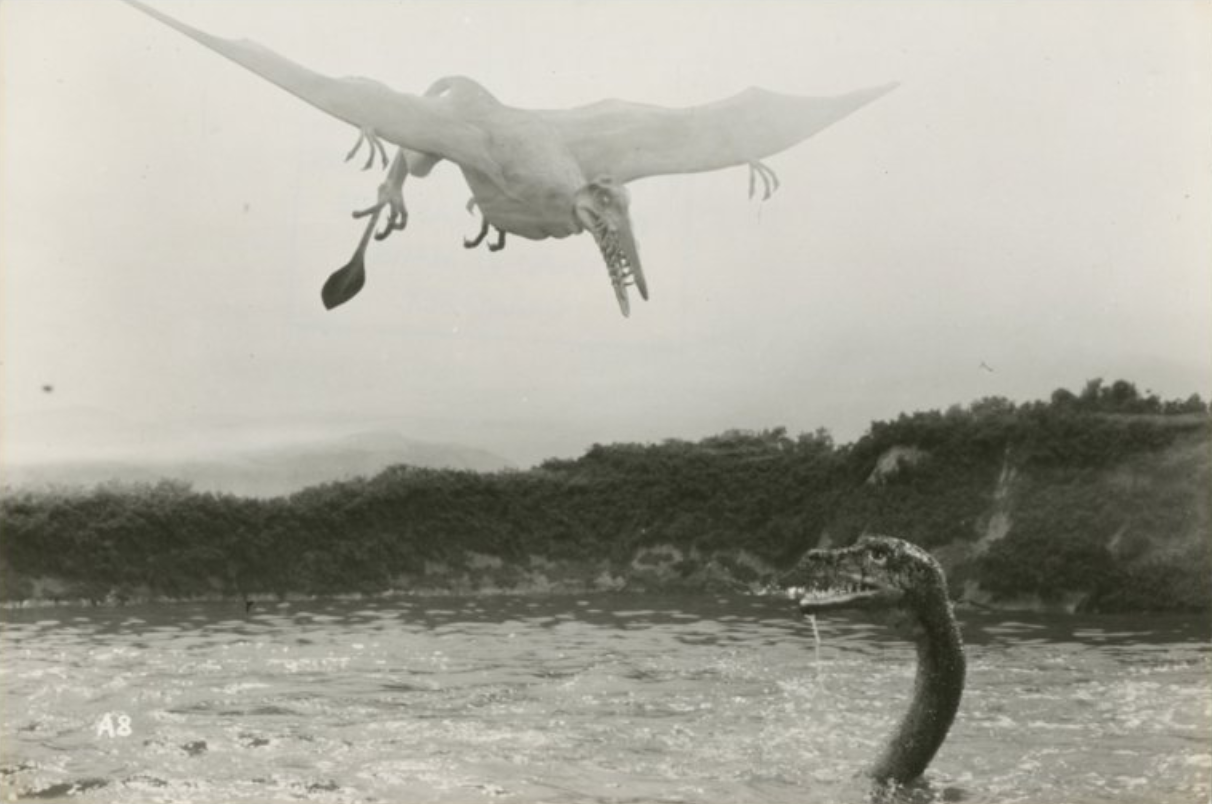
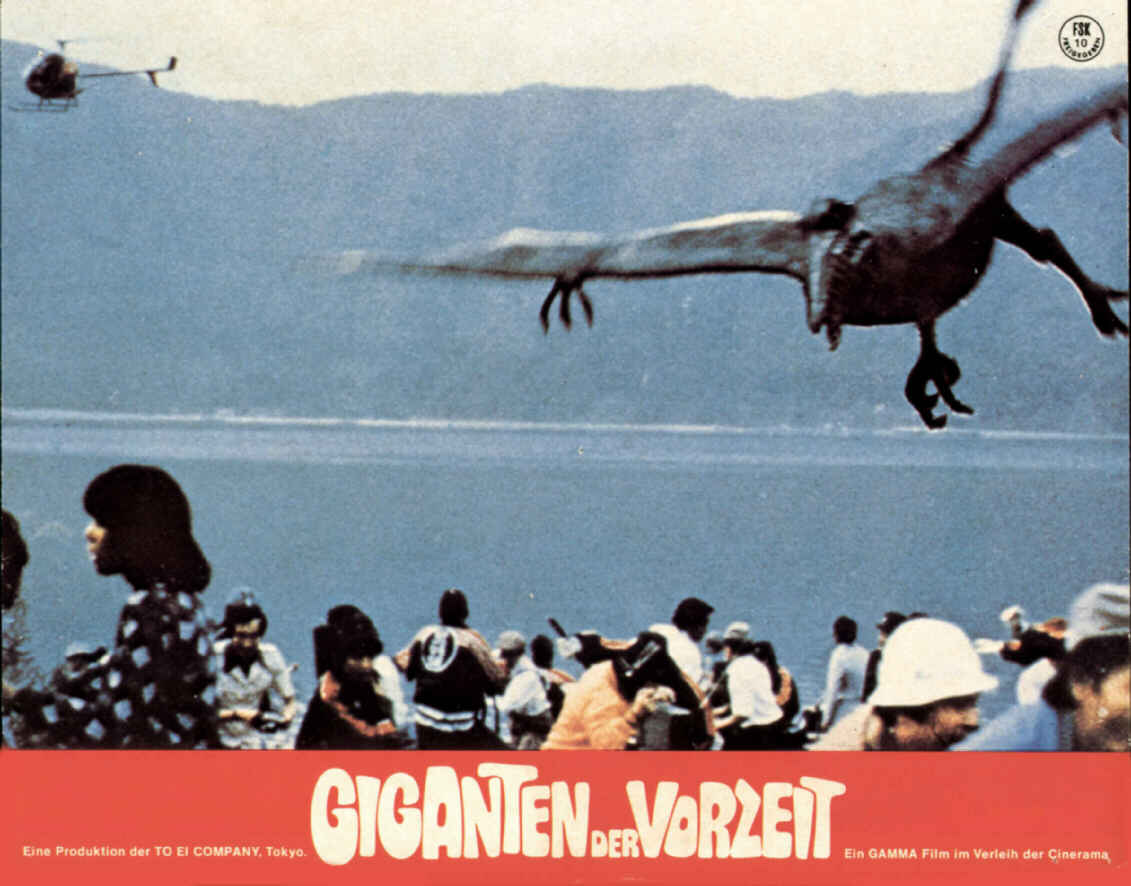
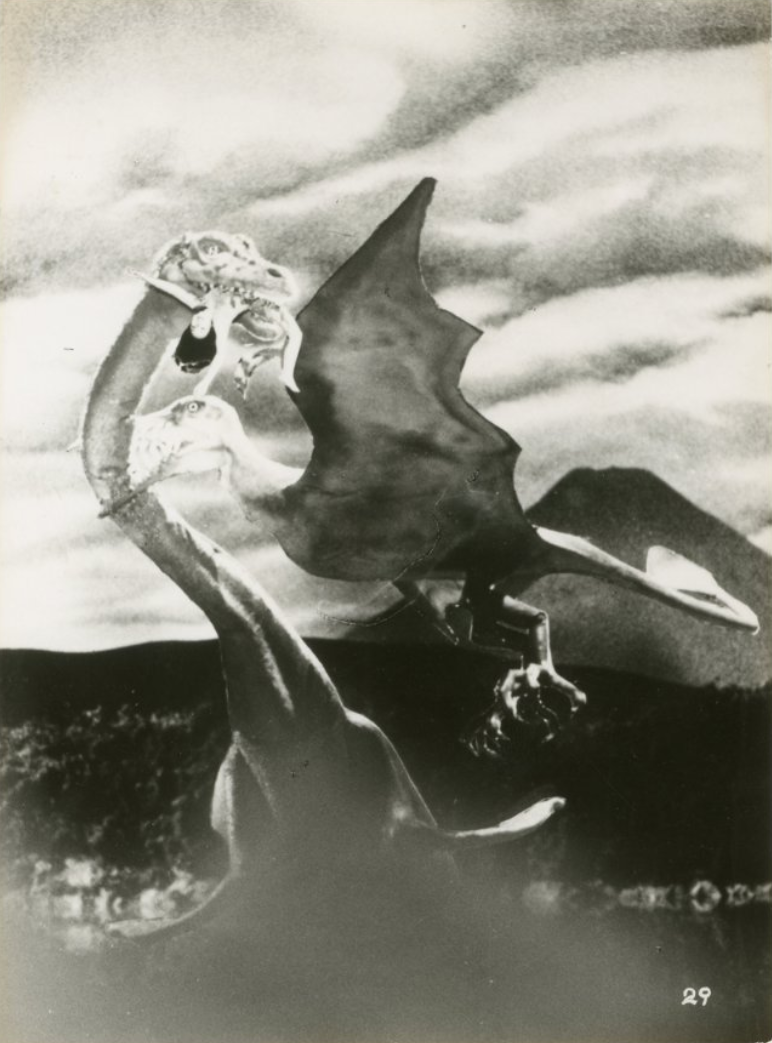
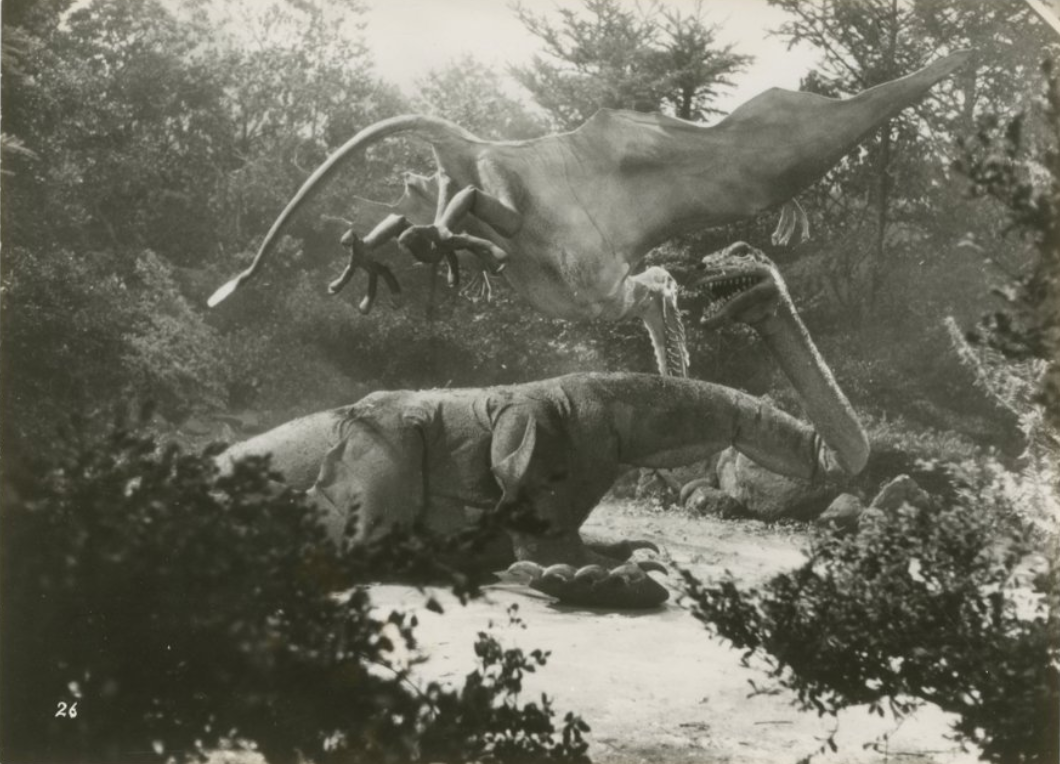
A giant Rhamphorhynchus appears in the 1977 film Legend of Dinosaurs and Monster Birds. It initially appeared as a giant egg within a cave in Aokigahara, until it was disturbed by a woman falling into it. Eventually, the egg hatched, releasing a Rhamphorhynchus, who began eating people and attacked the village of Ashiwada. Attempts to kill the creature proved unsuccessful and it flew away shortly thereafter. The Rhamphorhynchus then encountered a Plesiosaurus, battling it near Mount Fuji, before both fell into a fissure generated by the volcano erupting.
Name
Rhamphorhynchus' name comes from the Greek words ῥάμϕος (rhamphos- meaning "beak") and ῥύγχος (rhynchus- meaning "snout").[1]
In Frontier Enterprise's[2] English dub of Legend of Dinosaurs and Monster Birds, Rhamphorhynchus is not referred to by name, and instead is just called a "pterodactyl".
Appearance
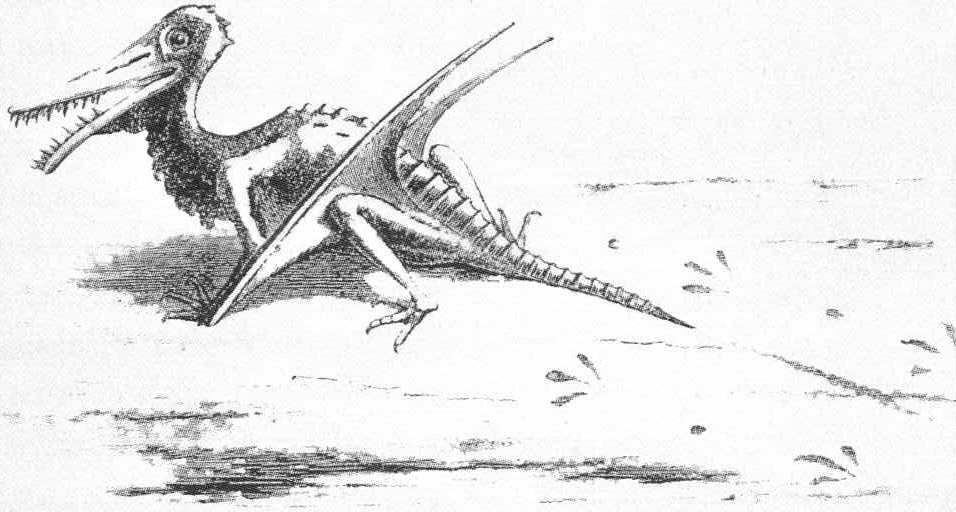
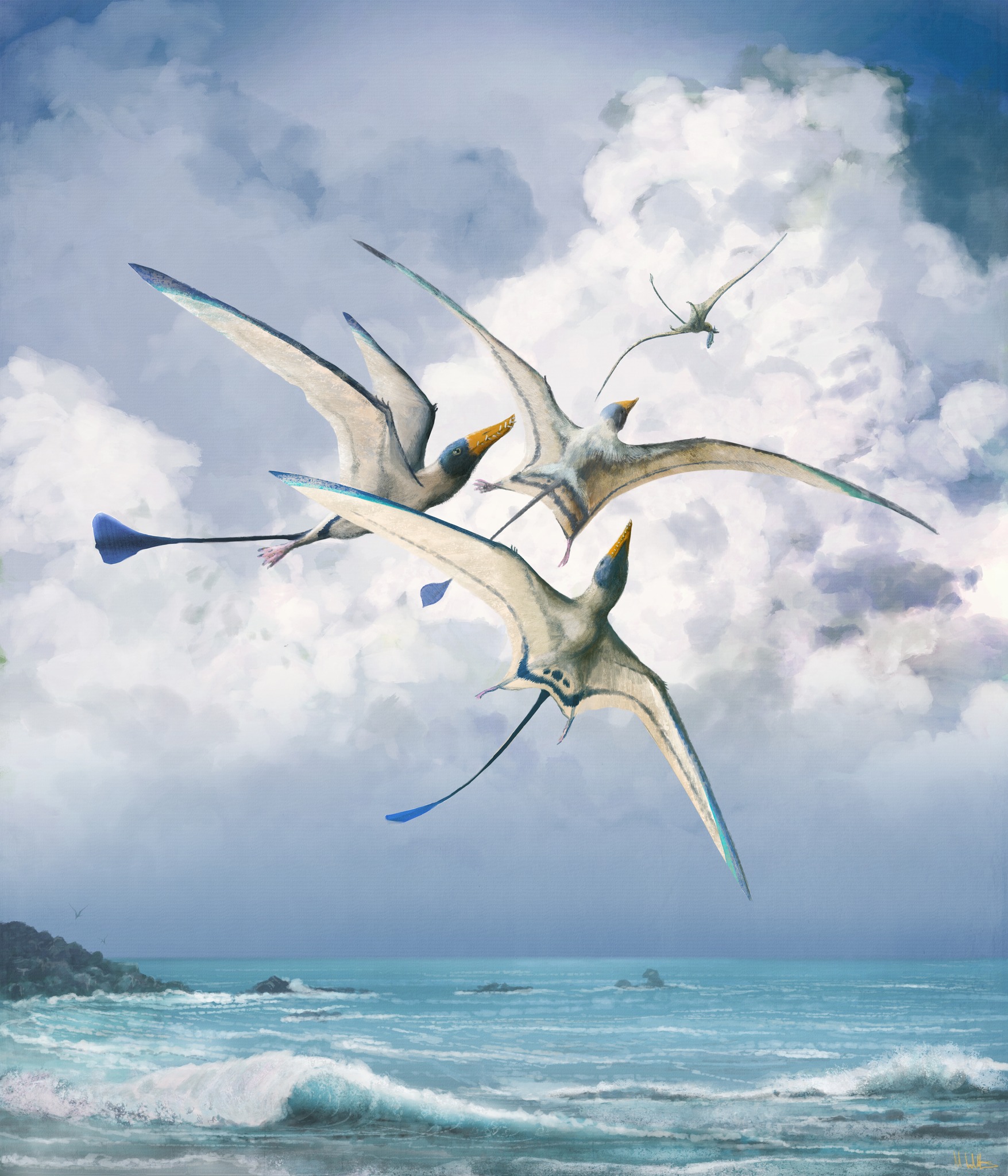
Rhamphorhynchus has generally been depicted as a small pterosaur with a long tail tipped by a tail-vane, and a toothy mouth. Their snouts are pointed and beak-like, lacking teeth at the very front of it, and curve upwards towards the tip. The teeth splay forwards and interlock when the animal's mouth is closed, an adaptation suitable for a diet of small marine organisms like fish. The tail-vane changes shape as the animal grows and matures, with juveniles possessing "lancet-shaped" vanes, which broaden and develop into more rhomboidal to trapezoidal shapes, and further into roughly triangular shapes.[3] As recent studies show that pterosaurs had feathers and that feathers may be an ancestral trait in avemetetatarsalians,[4] it is possible that Rhamphorhynchus had feathers.
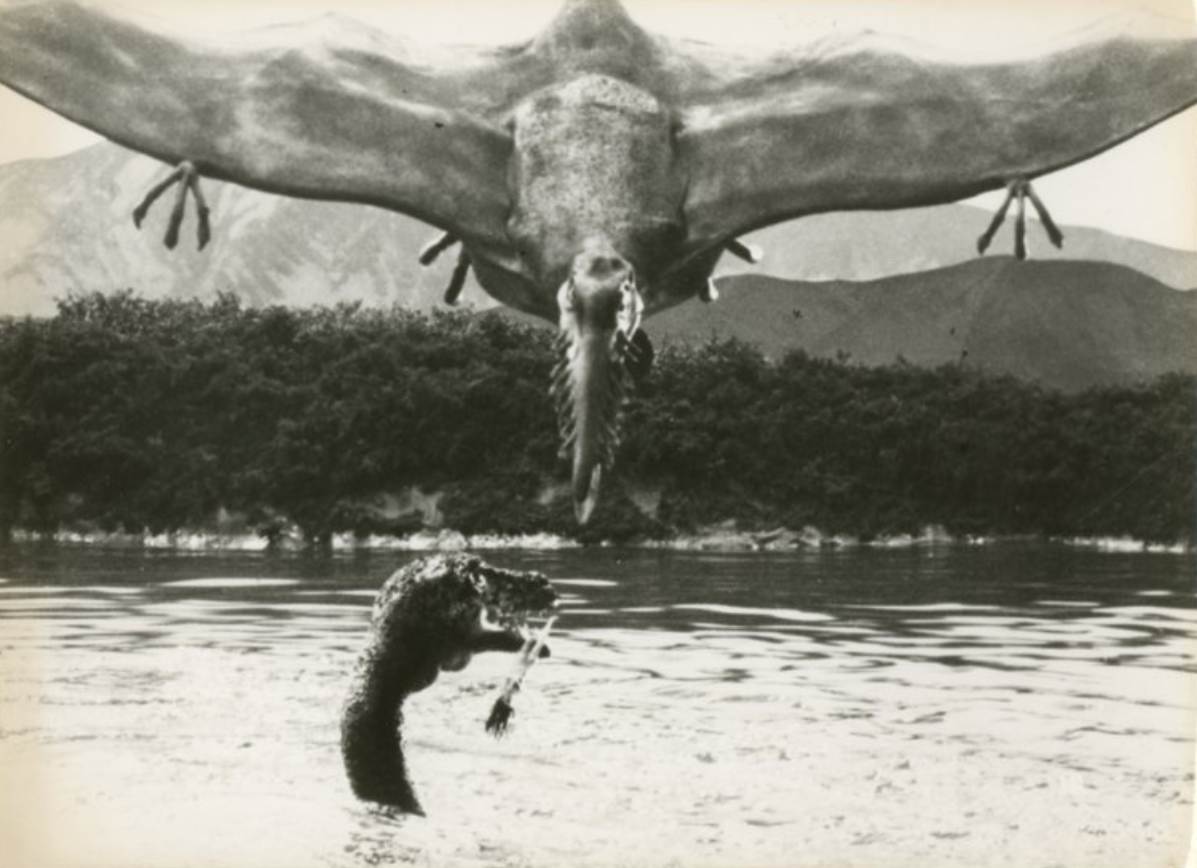
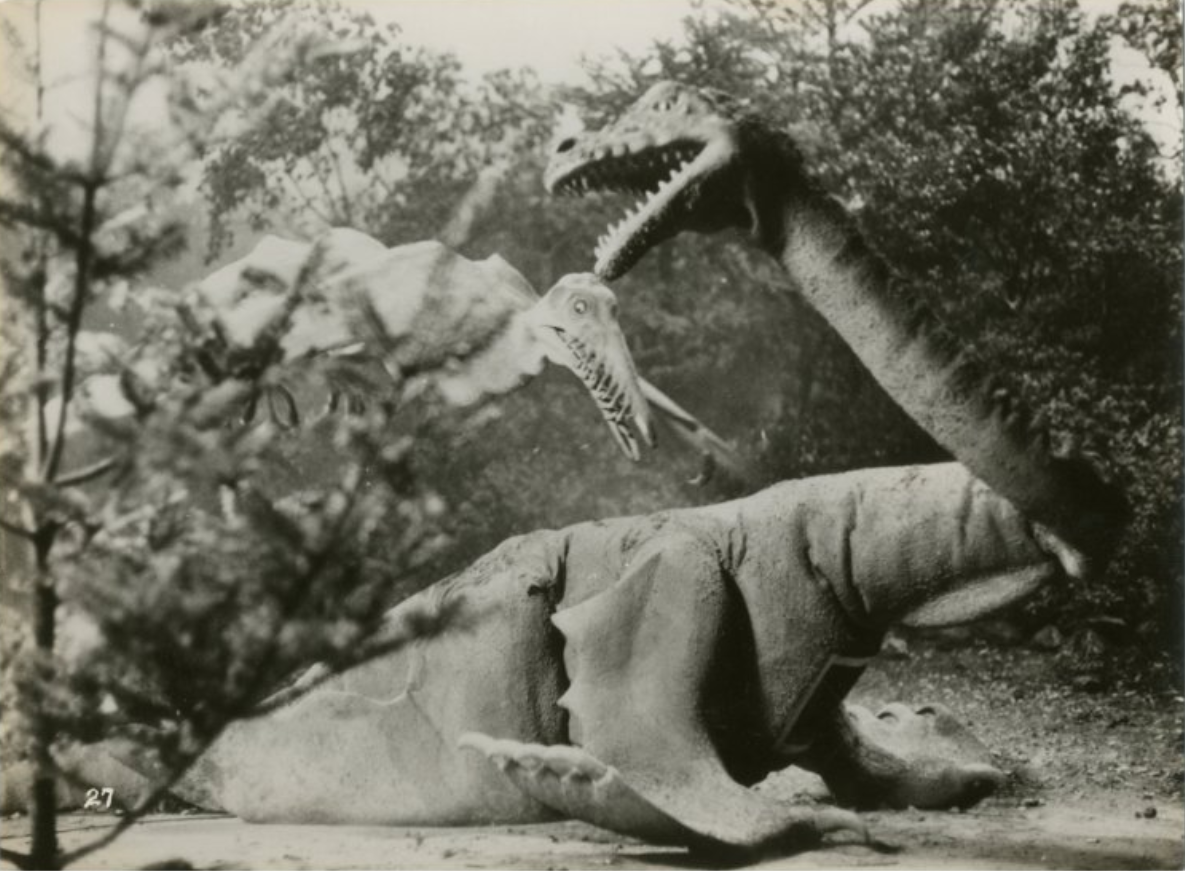
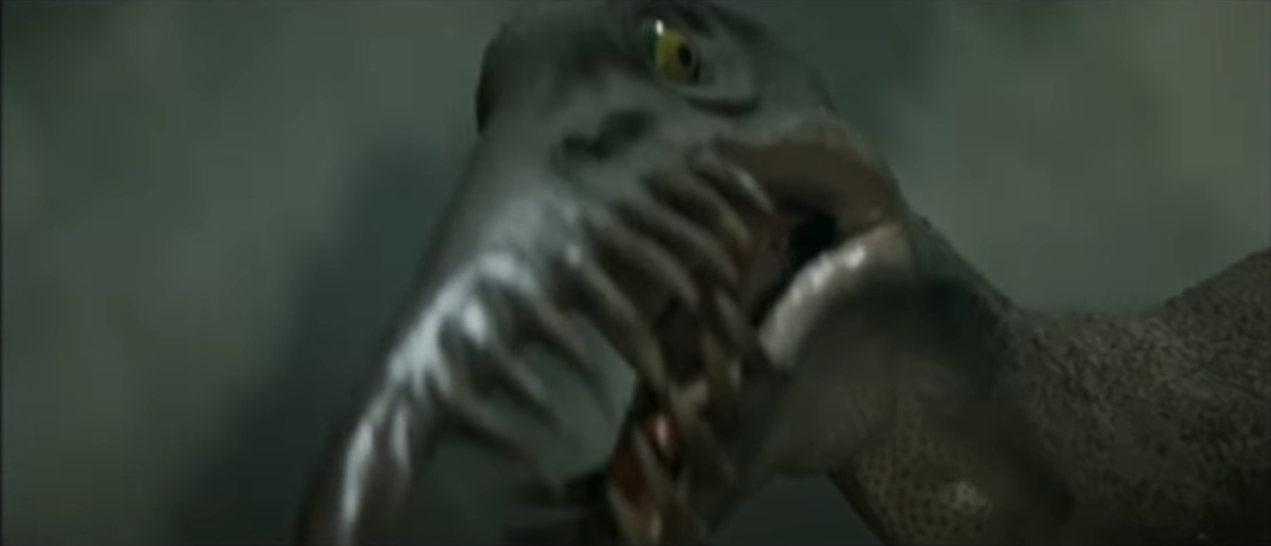
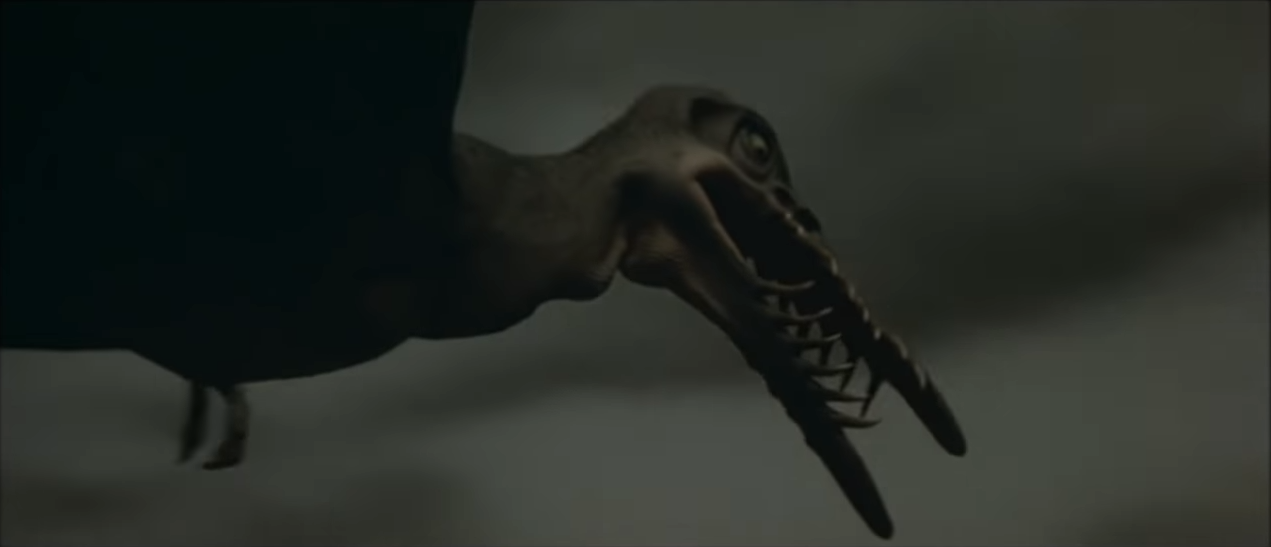
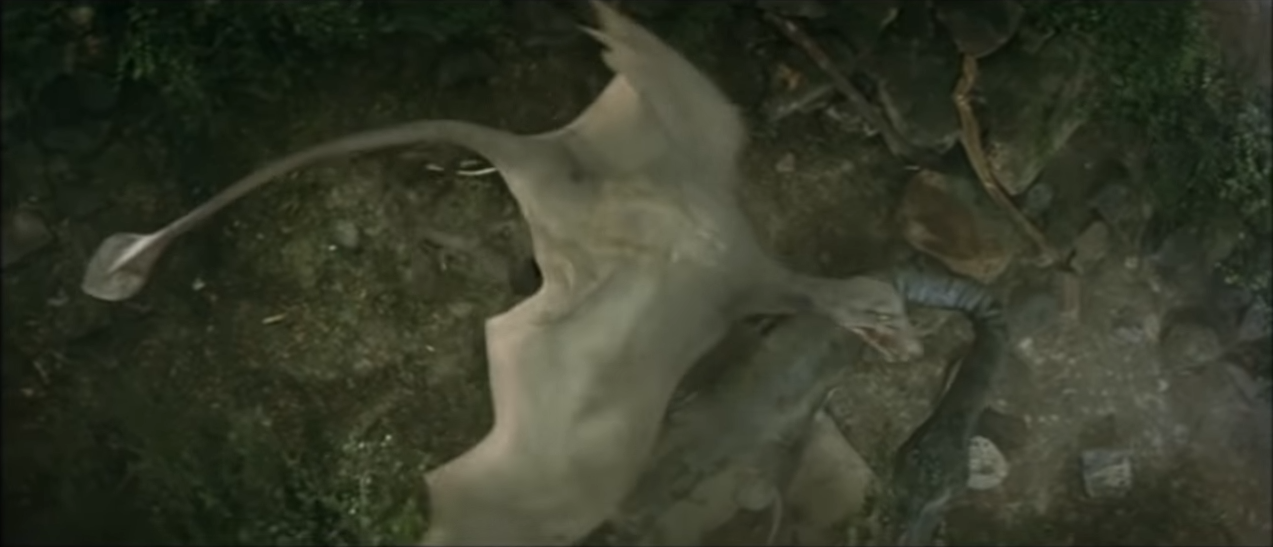
In Legend of Dinosaurs and Monster Birds, Rhamphorhynchus is much larger than it would have been in real life. It has numerous long, forward-facing teeth, and a toothless tip to its mouth, much like its real-life counterpart; however, the mouth lacks the upward-curving shape seen in the real animal. The tail-vane is lancet-shaped, more consistent with reconstructions of immature Rhamphorhynchus. Its wings are bat-like, but with three functional fingers on their hands similar to a typical pterosaur.
History
Legend of Dinosaurs and Monster Birds
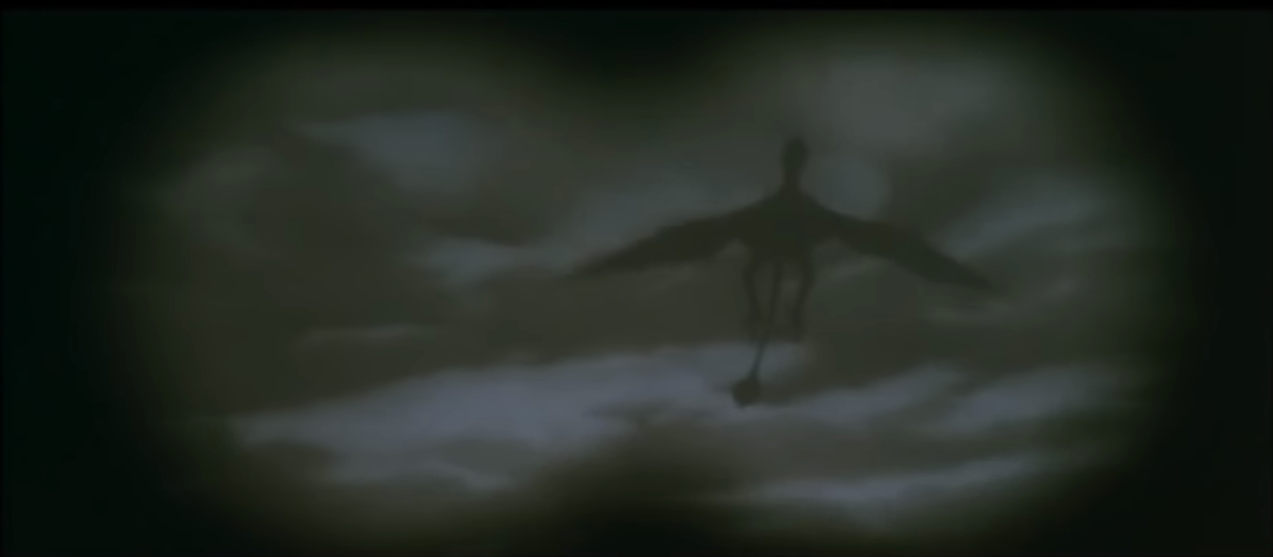
In an icy cave in Aokigahara, the petrified egg of a giant Rhamphorhynchus lay dormant along with several others, until it began to hatch in the present day. This was observed by a woman who fell in, and told people of it. Several days later, the Rhamphorhynchus within the egg killed two men exploring the cave as it hatched. The pterosaur took to the skies and flew to Lake Sai. There it attacked to residents of the nearby village Ashiwada, grabbing one man in its talons before dropping him to his death. Some of the people grabbed rifles to try and shoot the Rhamphorhynchus down, but accidentally shot a set of depth charges, causing the depth charges to detonate, and the ensuing explosion killed themselves and the people gathered as the Rhamphorhynchus flew away, unharmed. The Rhamphorhynchus then flew back over Akigahara, where it happened upon the Plesiosaurus, and attacked the marine reptile. The two prehistoric reptiles fought with each other as Mount Fuji began to erupt, with the Rhamphorynchus pecking the Plesiosaurus' eye out. But their battle was ended as violent tremors from the eruption opened up fissures around the two prehistoric reptiles, and they fell into the fiery depths of the fissures and perished.
Abilities
Physical abilities
Rhamphorhynchus' teeth―which were long, pointed, and forward-facing―were well suited to catching fish.
In Legend of Dinosaurs and Monster Birds, the Rhamphorhynchus was able to grab humans in its clawed feet and fly with them. During its battle with the Plesiosaurus, the pointed tips of its beak-like mouth were capable of stabbing out the marine reptile's right eye.
Flight
Like its real-world counterparts, the Rhamphorhynchus in Legend of Dinosaurs and Monster Birds was capable of flight.
Amphibiousness
In the real world, Rhamphorhynchus often foraged while swimming.
Weaknesses
In Legend of Dinosaurs and Monster Birds, the Rhamphorhynchus was killed after an eruption rippled through Mount Fuji and swallowed it whole along with the Plesiosaur which it was distracted by during its fight.
Comics
- Mothra: Queen of the Monsters #1 (2025)
Mothra: Queen of the Monsters
Mothra: Queen of the Monsters #1
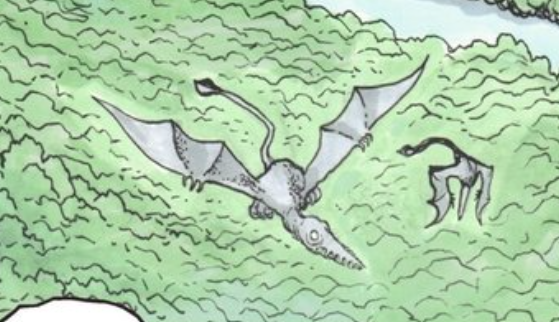
Multiple Rhamphorhynchus were visible flying beyond the cliff Emi and Mira emerged onto after time traveling to the Prehistoric Era.
Books
Gallery
Production
Legend of Dinosaurs and Monster Birds
Screenshots
Legend of Dinosaurs and Monster Birds
External links
See also
Notes
- ↑ A 2021 study titled "Die Spur einer Spur – ein möglicher erster Flugsaurier aus Ettling (Trace of a trace – a putative first pterosaur from the Ettling locality)", published in Archaeopteryx, found that a Rhamphorhynchid specimen possibly referrable to Rhamphorhynchus would have had a wingspan of up to 3.3 meters.
References
This is a list of references for Rhamphorhynchus. These citations are used to identify the reliable sources on which this article is based. These references appear inside articles in the form of superscript numbers, which look like this: [1]
|
Comments
Showing 8 comments. When commenting, please remain respectful of other users, stay on topic, and avoid role-playing and excessive punctuation. Comments which violate these guidelines may be removed by administrators.

|

|

|