The Monsterverse, originally stylized as MonsterVerse and known in Japan as the Monsterverse series(「モンスター・ヴァース」シリーズ, "Monsutā Vāsu" shirīzu),[1] is a multimedia franchise based around a series of giant monster films featuring Godzilla and King Kong produced by Legendary Pictures and co-funded and distributed by Warner Bros. It is the second adaptation of the Godzilla franchise by a Hollywood studio, following TriStar Pictures' GODZILLA in 1998. Legendary acquired the rights to produce an American Godzilla film in 2010 after being approached by producer Brian Rogers, who was attempting to secure funding for Yoshimitsu Banno's new Godzilla project Godzilla 3-D during the current hiatus in Toho's Godzilla series. Legendary opted to produce its own feature-length American Godzilla film rather than Banno's short IMAX film and negotiated with Toho to acquire the rights. Warner Bros., Legendary's then-current distribution partner, co-financed and theatrically released the film worldwide with the exception of Japan, where it was distributed by Toho.
The Monsterverse includes various non-film tie-in media, including several graphic novels published by Legendary Comics, as well as the television series Skull Island (2023) and Monarch: Legacy of Monsters (2023-2024) produced by Legendary Television. The latter series has already been renewed for a second season, and other Monsterverse spin-off series are also in the works.[4]
On April 11, 2024, it was announced that Monarch: Legacy of Monsters was renewed for a second season as part of a new deal between Legendary and Apple TV+. The deal also includes "multiple spin-off series" based on the Monsterverse.[4] On September 4, Deadline reported that Chris Black, co-developer of Monarch: Legacy of Monsters, signed a two-year deal with Legendary Television which included writing the pilot for one of the planned spin-offs.[9]Deadline reported further details on one of the planned spinoffs on December 17, 2025, revealing that it would take place during the Cold War and centered around a young Lee Shaw.[10]
Other media
In addition to the films, Legendary and Warner Bros. have licensed Monsterverse-related media, including books and video games.
All of the films in Legendary's Monsterverse have been distributed by Warner Bros. (except in Japan, where Toho has distributed the Godzilla films), despite Legendary's distribution partners varying during that span.
All of the Monsterverse films have been released in either March or May, with the three films starring Kong in March and the two films not starring him in May.
The Monsterverse is the first series of Godzilla films in which Godzilla does not deliberately cause destruction in its first entry. While Godzilla was portrayed as the more heroic/anti-heroic monster in the first film of the Millennium series, Godzilla 2000: Millennium, he still caused destruction and attacked humans, while the Godzilla in Legendary Pictures' Godzilla never intentionally causes destruction or threatens human characters, and all death and destruction he produces is simply a byproduct of his size.
Although Pacific Rim and Pacific Rim Uprising are also kaiju films produced by Legendary Pictures, they do not share continuity with the Monsterverse.
All five of Toho's "Big Five" monsters - Godzilla, Rodan, Mothra, King Ghidorah, and Mechagodzilla - appear in the Monsterverse, a distinction it shares with the Showa, Heisei, and Polygon Pictures anime trilogy continuities.
It is also the second film series to feature a meeting between Godzilla and King Kong, as well as the first in which Kong interacts with members of the "Big Five" besides Godzilla.
This is a list of references for Monsterverse. These citations are used to identify the reliable sources on which this article is based. These references appear inside articles in the form of superscript numbers, which look like this: [1]
Showing 1237 comments. When commenting, please remain respectful of other users, stay on topic, and avoid role-playing and excessive punctuation. Comments which violate these guidelines may be removed by administrators.


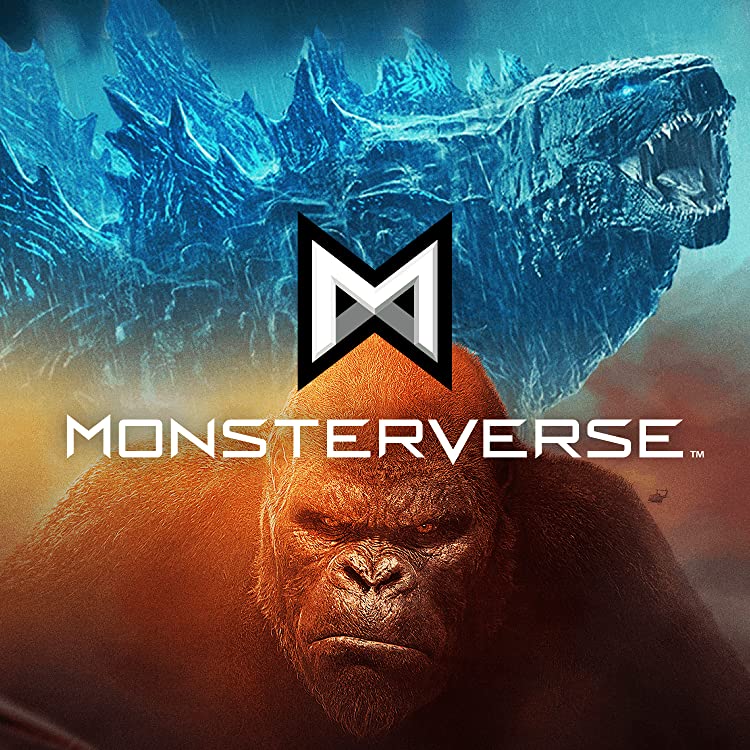
 Monsterverse logo
 Transparent logo
 Transparent logo
 Logo used in conjunction with Skull Island: The Birth of Kong
 2023 Twitter profile picture
 Monsterverse logo with a handprint as part of the Godzilla x Kong: The New Empire marketing
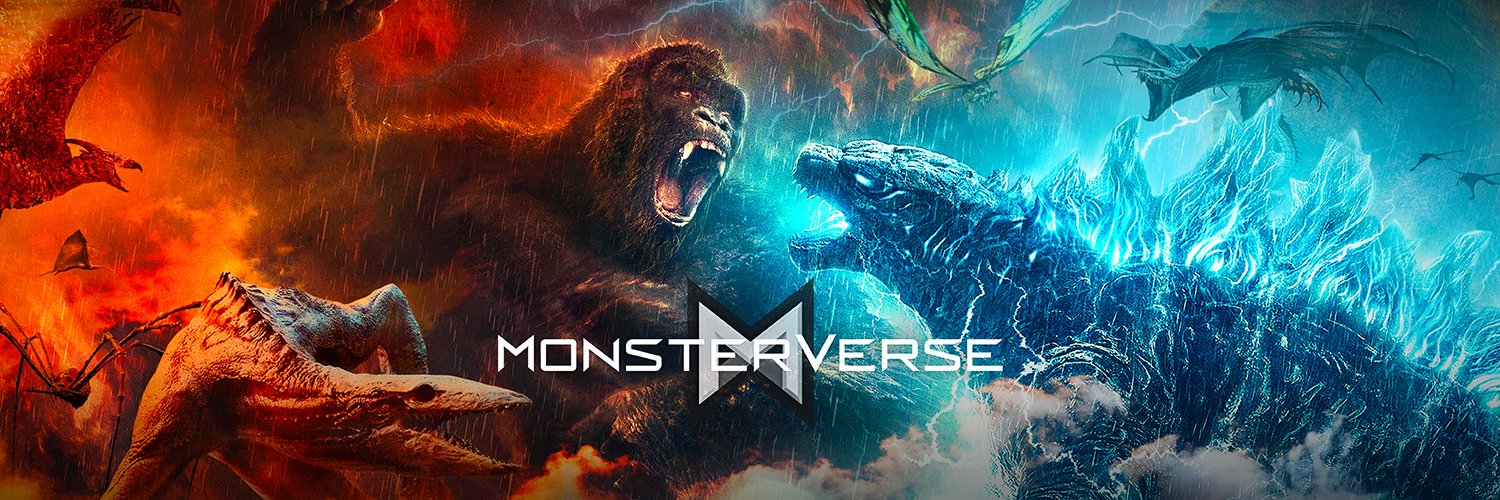
 2023 Twitter banner
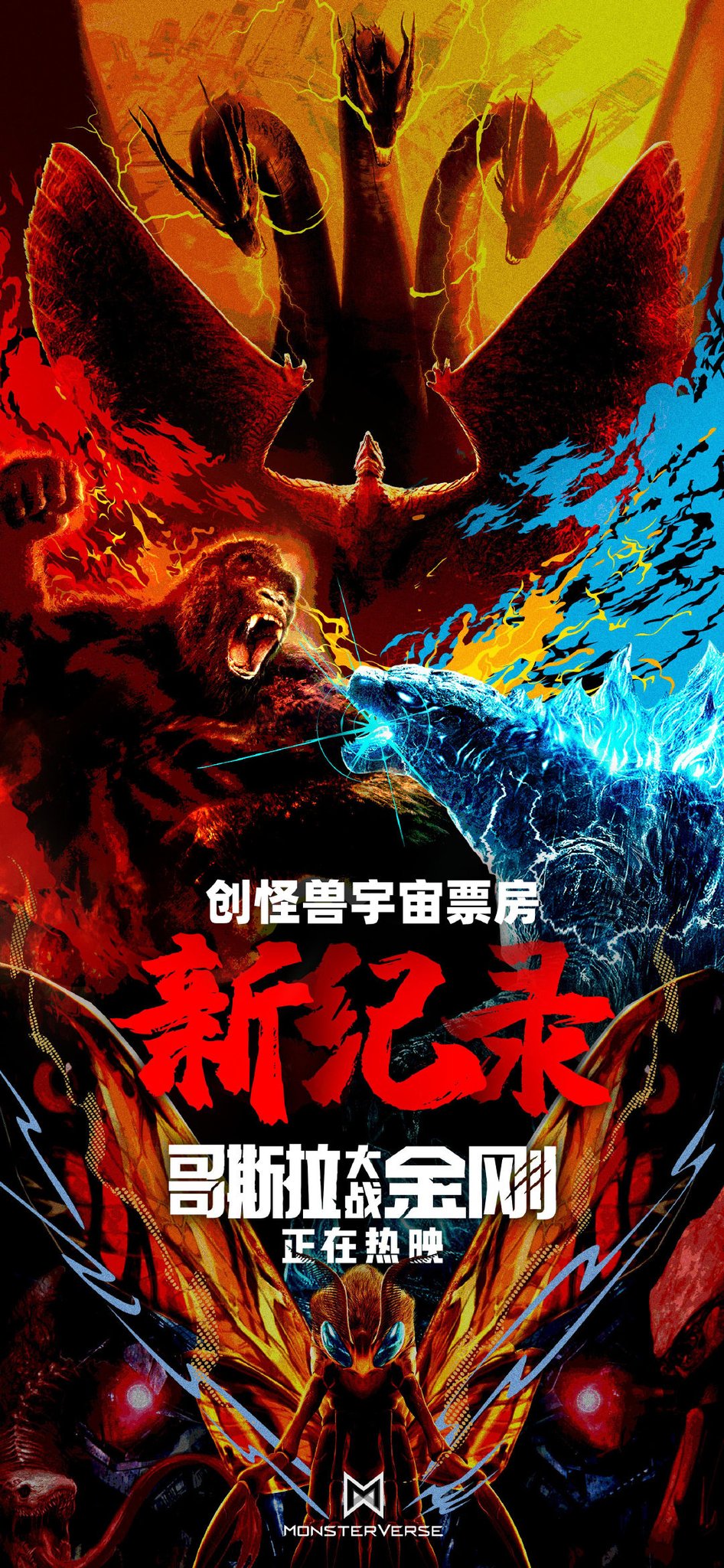
 Chinese Monsterverse celebration poster using Skullcrawler fan art by Twitter user @endorosu
 Monsterverse banner at Licensing Expo 2022
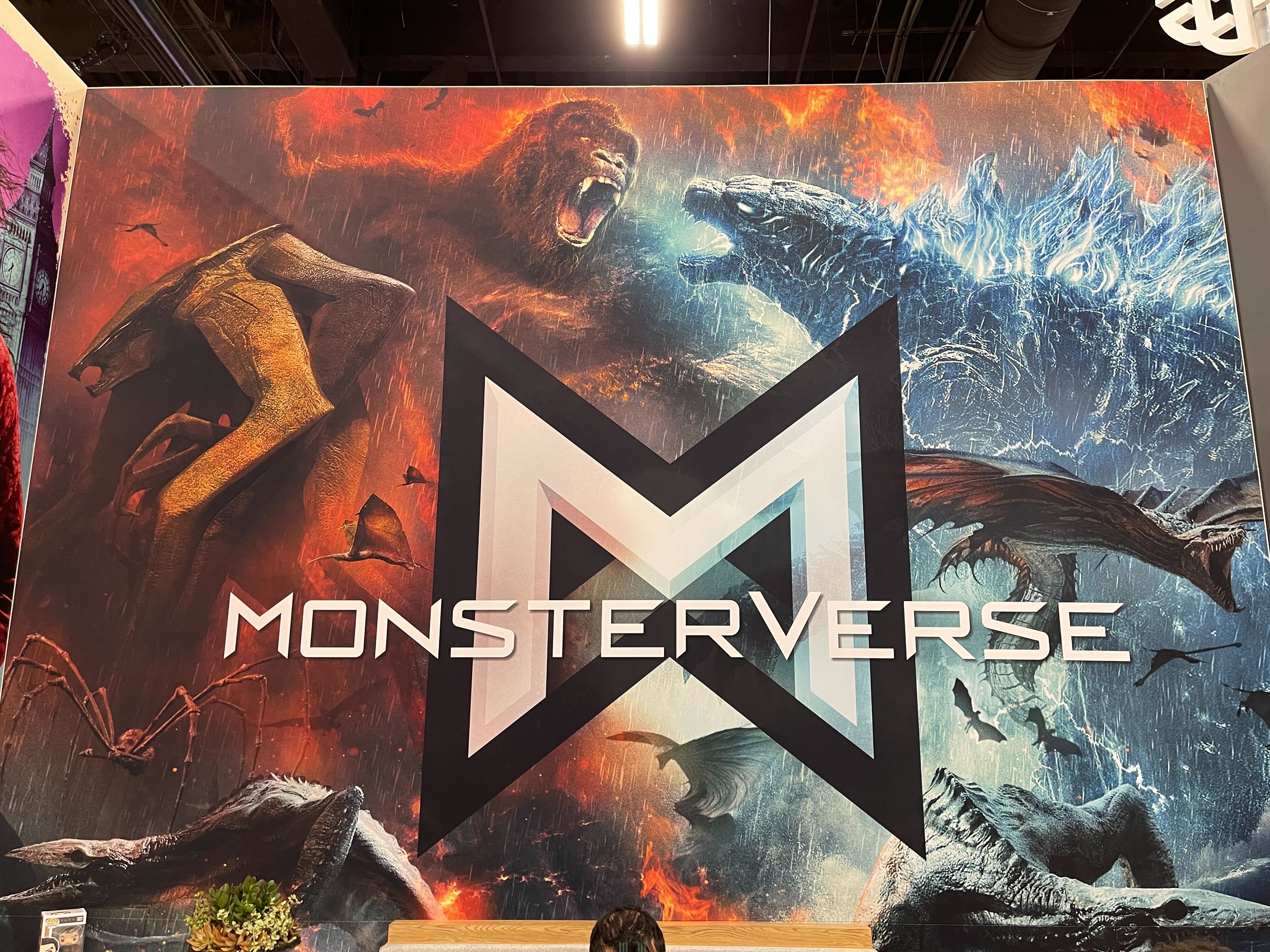
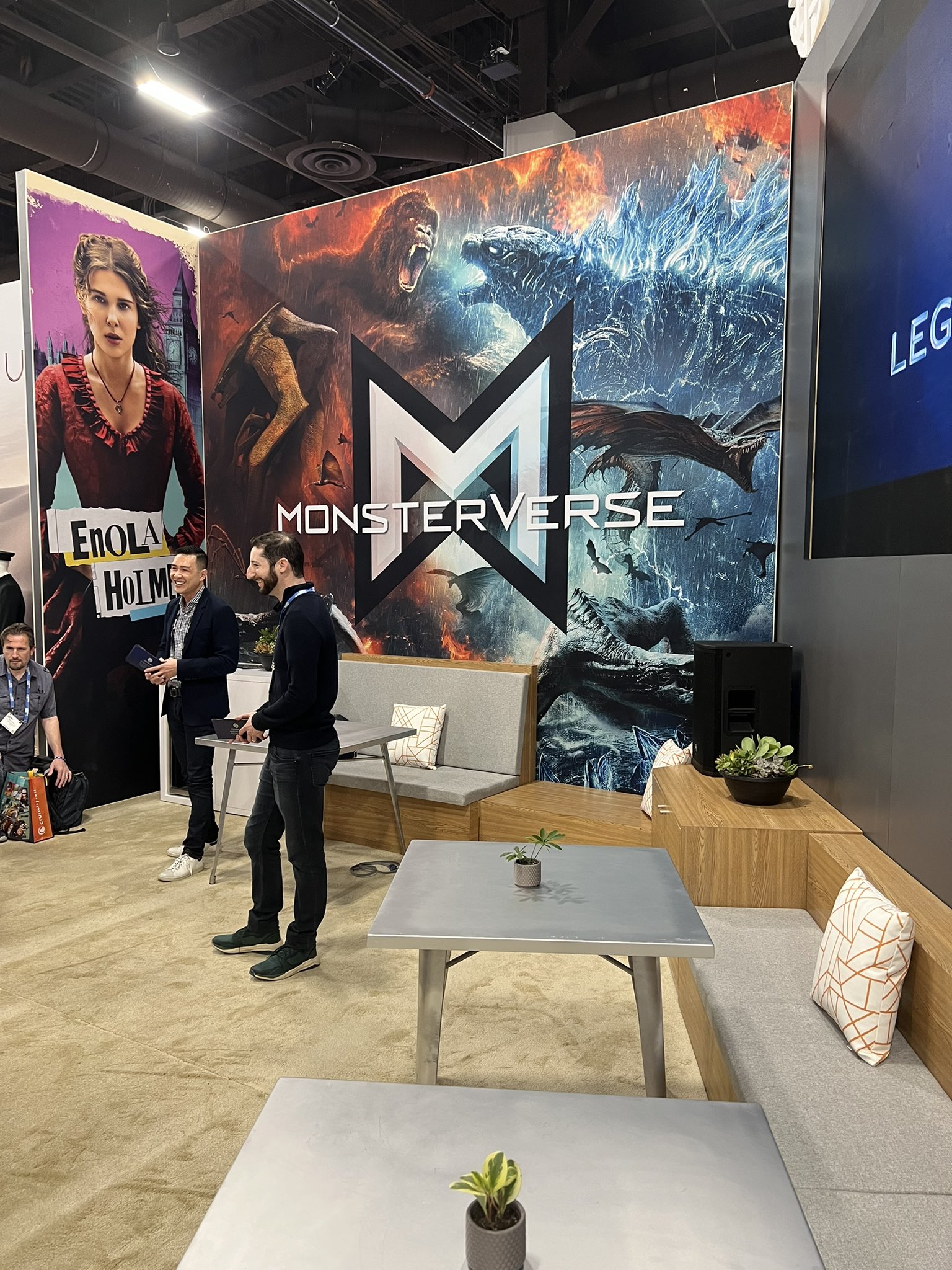
 Monsterverse booth at Licensing Expo 2022
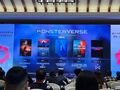
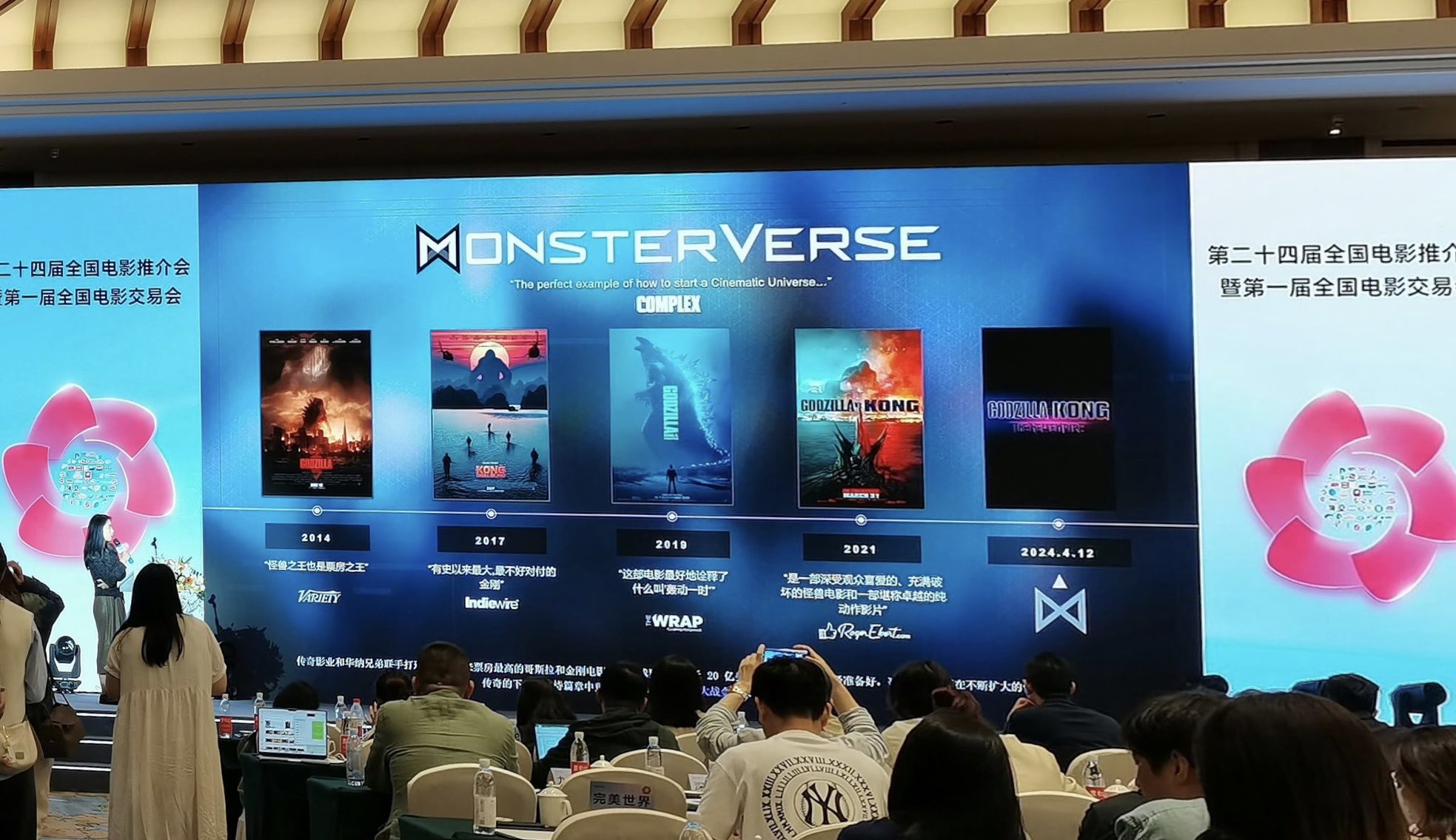
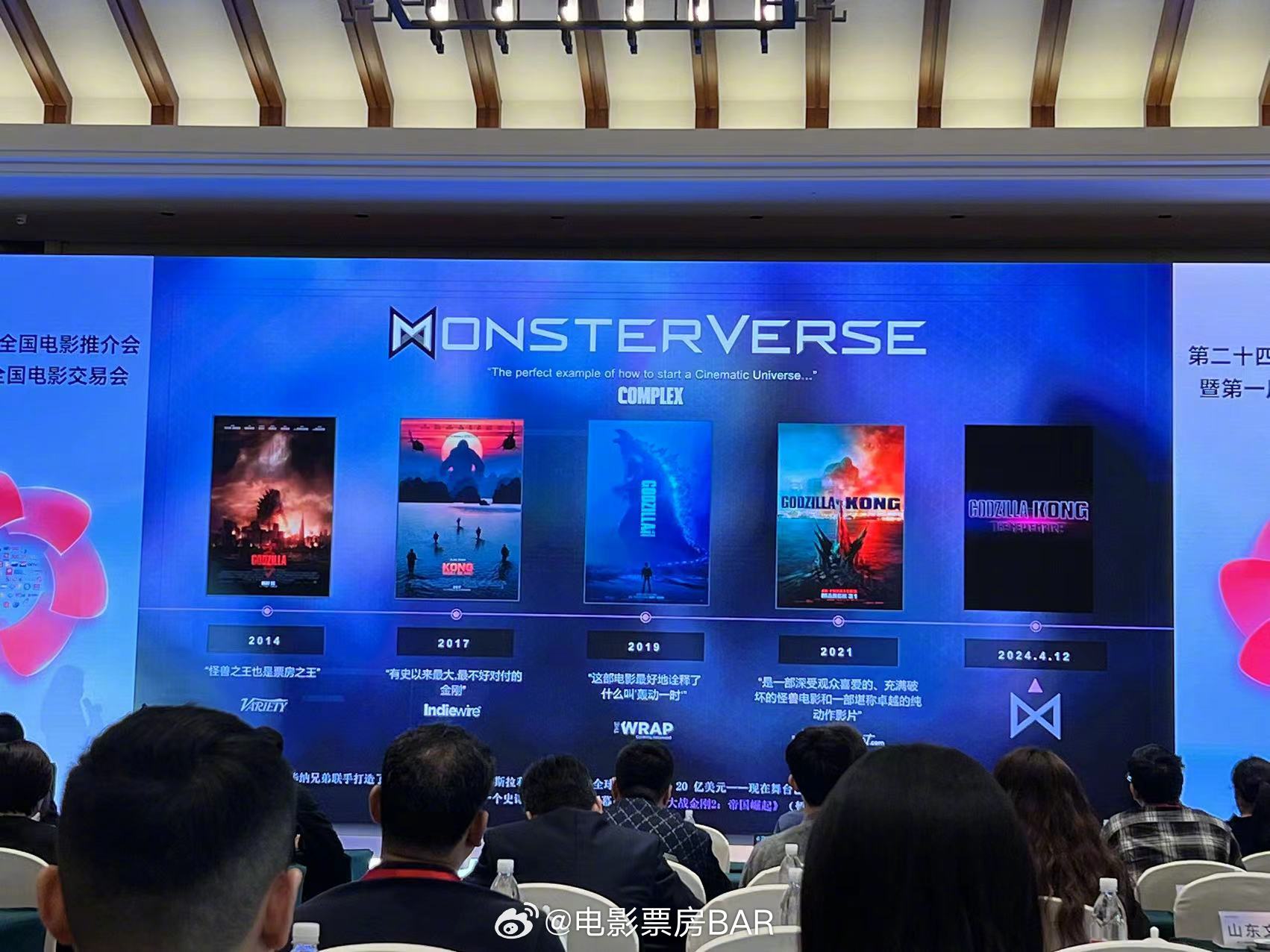
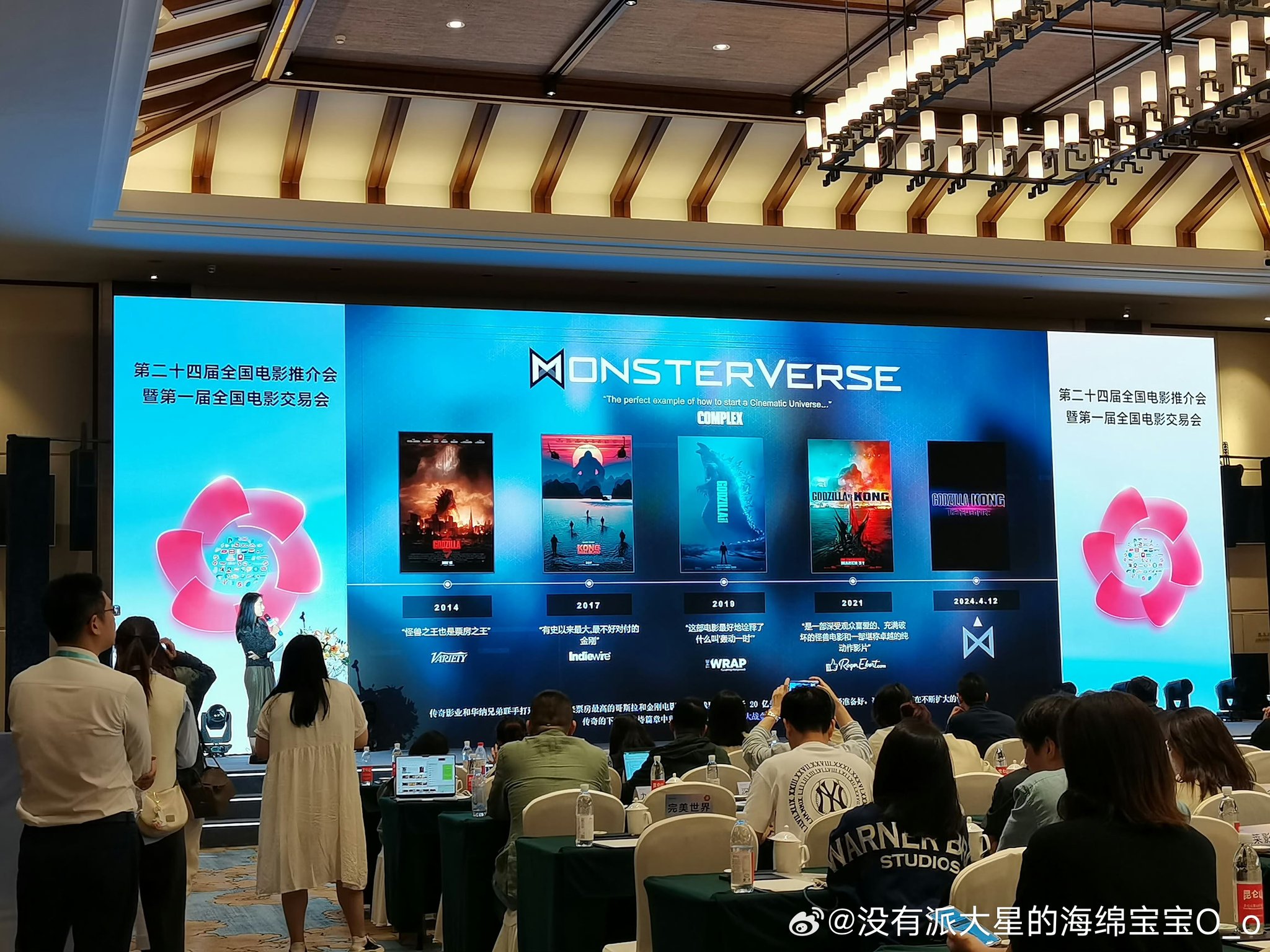
 Presentation for Godzilla x Kong: The New Empire at the 24th China Film Promotion Conference / The First China Film Fair