

Pulgasari
| |||||||||||||||||||||||||||||||||||||||||||||||||||||||||||||||||||||||||||||
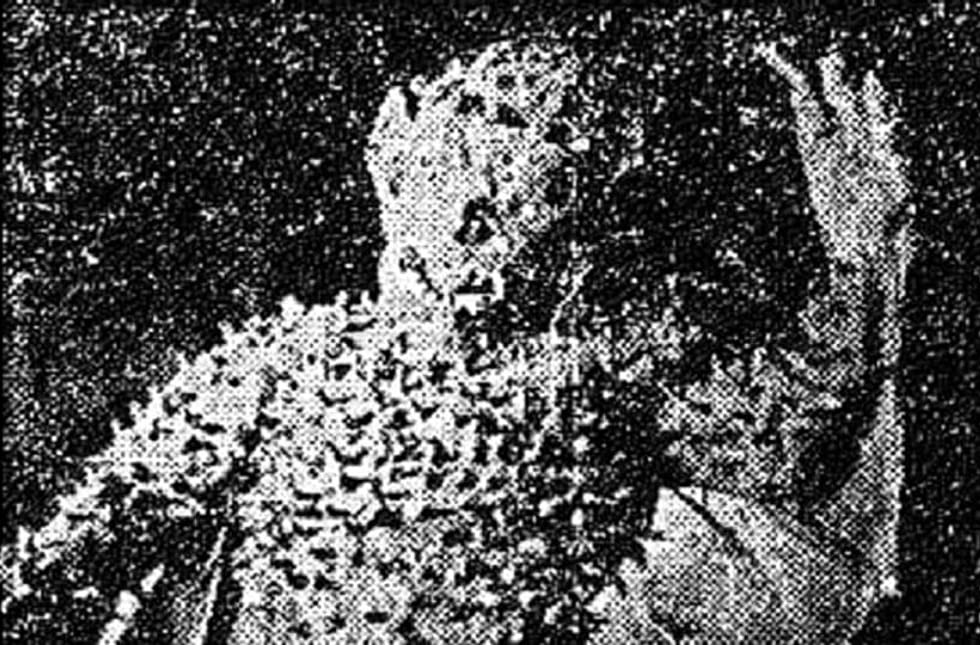
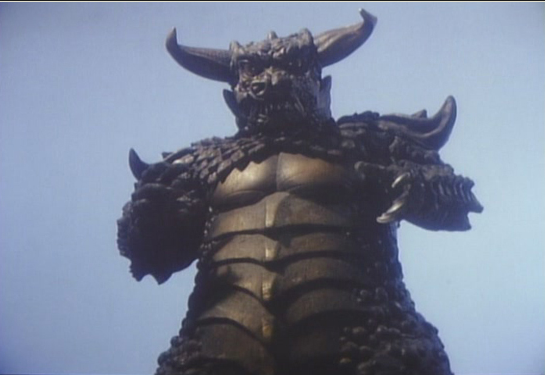
Pulgasari, also spelled Bulgasari (불가사리 Bulgasali), is a legendary creature from Korean mythology. There have been at least two films interpreting the character as a giant monster: the 1962 South Korean film Bulgasari, and the 1985 North Korean film Pulgasari, the former now lost.
Name
"Bulgasari" or "Pulgasari" (불가사리 Bulgasali) is the name of a legendary creature, originating from the Sino-Korean Bulgasal, meaning "Impossible-to-Kill" (
Design
Bulgasari's appearance, as seen from a few publicity photos, resembles a large humanoid creature with grey and bumpy skin.
In Pulgasari, Pulgasari resembles a bull. He is exceedingly tall, and has a muscular body reminiscent of the Minotaur. He has long horns, and dark, bumpy skin. His belly also appears to be protected by plates of gold-colored armor.
Origins
In Pulgasari, Pulgasari was created when a small monster figurine created by a blacksmith came in contact with the blood of the blacksmith's daughter, giving rise to the horned monster.
History
- Bulgasari (1962)
- Pulgasari (1985)
- Monarch: Legacy of Monsters (TV 2026) [mentioned in episode 11]
Bulgasari
After being murdered by traitors during the Goryeo dynasty, a skilled martial artist is resurrected as Bulgasari, a fearsome monster who consumes iron.
Pulgasari
In feudal Korea during the Goryeo dynasty, an evil emperor rules the land with an iron fist. He sends the villagers into misery and poverty. All seems hopeless, until an old blacksmith was sent to prison for an unspecified reason. During his time at the jailhouse, he builds a small figure of a monster. When the small figure is splashed by the blood of the blacksmith's daughter Ami, it creates Pulgasari. Pulgasari starts eating metal, becoming bigger and stronger. Eventually, he becomes powerful enough to try to take on the emperor. The emperor's guards attempt to stop Pulgasari, but the creature is unaffected and kills them all. Pulgasari finally kills the emperor and ends his wrath. Unfortunately, Pulgasari's appetite for iron begins to hurt the villagers he once protected, as he must continue to feast on whatever iron they can find or else he'll die. Ami, unwilling to let her friend and people suffer any further, tricks Pulgasari into eating her, causing Pulgasari to dissolve, killing them both.
Monarch: Legacy of Monsters
"Cause and Effect"
While sailing to Santa Soledad in 1957, Lee Shaw and Billy and Keiko Randa reminisced about reports of the mythological Pulgasari and Billy's unsuccessful attempt to find it.
Gallery
- Main article: Pulgasari/Gallery.
In other languages
| ||||||||

Trivia
- Pulgasari's overall role and backstory in Pulgasari strongly resembles Daimajin:
- Both kaiju are spirits that can take a physical form.
- Both Daimajin and Pulgasari appear in a medieval setting, and are prized by the common people.
- Both Daimajin and Pulgasari attack the bourgeoisie of said medieval setting.
- After their work is done, both Daimajin and Pulgasari disappear, but not before threatening to cause chaos that affects the people who previously released them.
- Another giant Bulgasari appeared in an episode of the South Korean televised puppet show Once Upon a Time.[4]
See also
References
This is a list of references for Pulgasari. These citations are used to identify the reliable sources on which this article is based. These references appear inside articles in the form of superscript numbers, which look like this: [1]
|
Comments
Showing 87 comments. When commenting, please remain respectful of other users, stay on topic, and avoid role-playing and excessive punctuation. Comments which violate these guidelines may be removed by administrators. Loading comments...
|

|