

K-550 Alexander Nevsky
| ||||||||||||||||||||||||||||||||||||||||||||||||||||||||||||||||
|
This page is a sandbox. Sandboxed pages are unfinished and not yet approved. Information found here may be unpolished or unverified. |
|---|
“
|
In theory, the submarine housed a crew of 130 officers and men.
|
„
|
— Captain Bill Cozzone (Godzilla: The Official Movie Novelization)[3] |
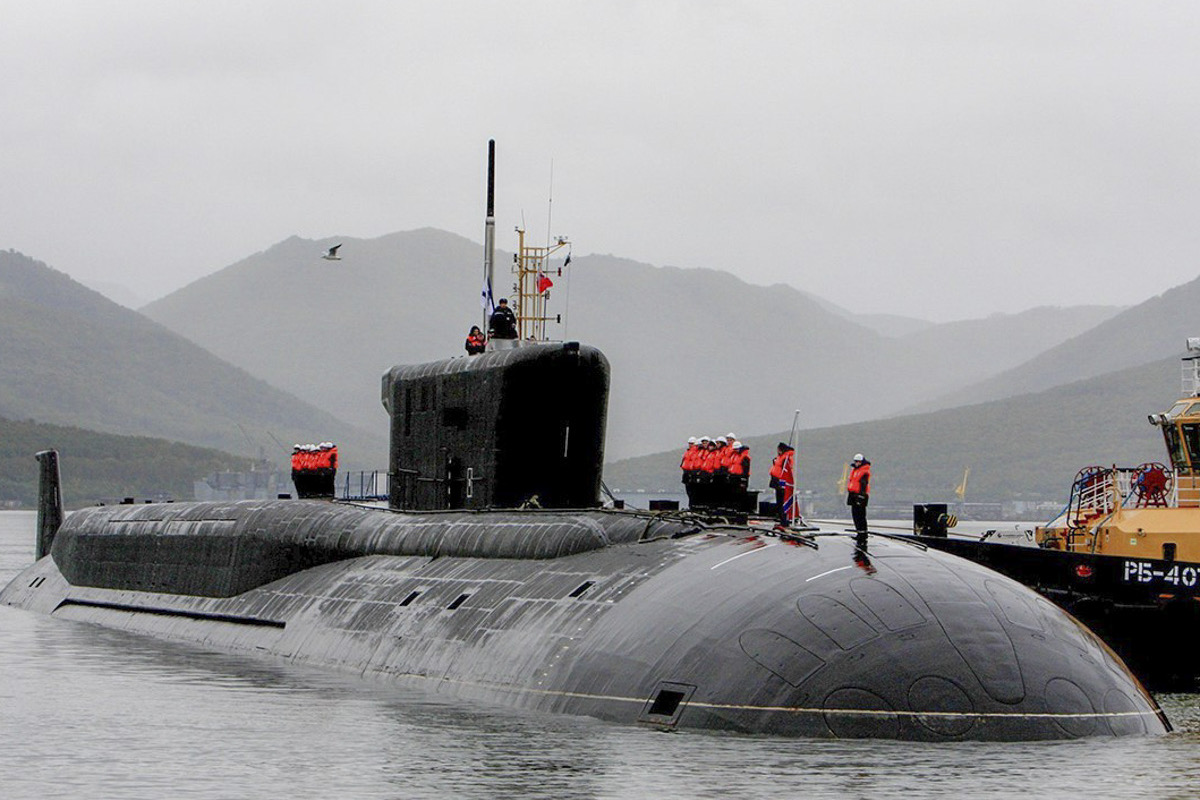
The K-550 Alexander Nevsky (Александр Невский, Aleksandr Nevskij) is the second of the fourth-generation, Borei-class nuclear ballistic missile submarines of the Russian Navy, having entered service in 2013. It appears in Godzilla: The Official Movie Novelization, the novelization of Legendary Pictures' 2014 film Godzilla, filling in for the role that an unnamed Akula-class sub does in the film.
Name
The Alexander Nevsky is named after the Russian saint of the same name.
Appearance

- Main article: Wikipedia:Borei-class submarine.
History
Godzilla: The Official Movie Novelization
In 2014, around the time the male MUTO escaped its containment facility at the Janjira nuclear power plant, the Alexander Nevsky was stationed somewhere in the north Pacific Ocean northwest of Hawaii.
50 nautical miles northwest of Hawaii, the male MUTO intercepted and attacked the submarine, which was immediately reported to the USS Saratoga in an intel report. Captain Russell Hampton attributed the incident to the male MUTO upon reporting it to Admiral William Stenz, who in turn told Dr. Ishiro Serizawa to emphasize the value of information regarding the creature. Meanwhile, a U.S. Navy Special Forces team picked up the Alexander Nevsky's distress signal in the jungle northwest of Diamond Head on the island of Oahu. Setting foot on the island in search of the source of the beacon, some of the soldiers questioned the necessity of having to traverse the jungle to look for the submarine, using pings provided by the Russians to locate their target. Eventually, they reached the source of the beacon only to find a pile of emptied nuclear missiles covered in a white viscous secretion. Noticing more of the secretion dripping down from above, the soldiers looked up to see a massive propeller doused in the secretion. Helicopter searchlights lit up the The Alexander Nevsky as it laid perched atop the surrounding vegetation pointing towards the sky, its damaged hull covered in vines and a four slash mark appearing towards the back of the submarine on its rear trim tank. Beside the submarine, the male MUTO was discovered, plucking out the vessel's nuclear missiles from a hole in its side and gulping them down. Following this, a fighter jet was sent to attack the creature, aggravating it into dropping a missile to the ground close to the nearby soldiers and unleashing an electromagnetic pulse. Following the jet's subsequent crash and the blackout caused by the MUTO, the Alexander Nevsky was left without further damage as the creature neared the Honolulu International Airport.
Capabilities
OK-650 reactor propulsion
The Alexander Nevsky is powered by a single OK-650B reactor, which can generate 190 megawatts of power from 21-45% enriched uranium.[4]
Speed
The Alexander Nevsky can reach speeds of up to 28 knots, converting to about 52 km/h or 32mph.[1]
Armament
The Alexander Nevsky is armed with 16 Bulava SLBMs and six RPK-2 Viyuga cruise missiles (21-in/533-mm torpedo tubes).[1]
External links
References
This is a list of references for K-550 Alexander Nevsky. These citations are used to identify the reliable sources on which this article is based. These references appear inside articles in the form of superscript numbers, which look like this: [1]
|
Comments
Showing 1 comments. When commenting, please remain respectful of other users, stay on topic, and avoid role-playing and excessive punctuation. Comments which violate these guidelines may be removed by administrators.

|

|