

Godzilla Generations (1998)
| Dreamcast Godzilla games | |||||||
|
|
| |||||
| |||||||||||||||||||||||||||||||||||||||||||||||

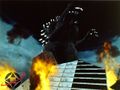
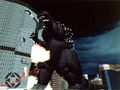
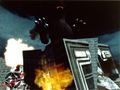
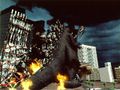
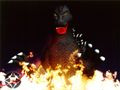
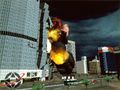
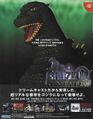
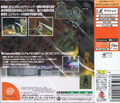
Godzilla Generations (ゴジラ・ジェネレーションズ Gojira Jenerēshonzu) is a game for the Sega Dreamcast developed by General Entertainment and released on November 28, 1998. It was followed by a sequel, Godzilla Generations: Maximum Impact, the next year.
Modes
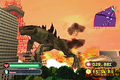
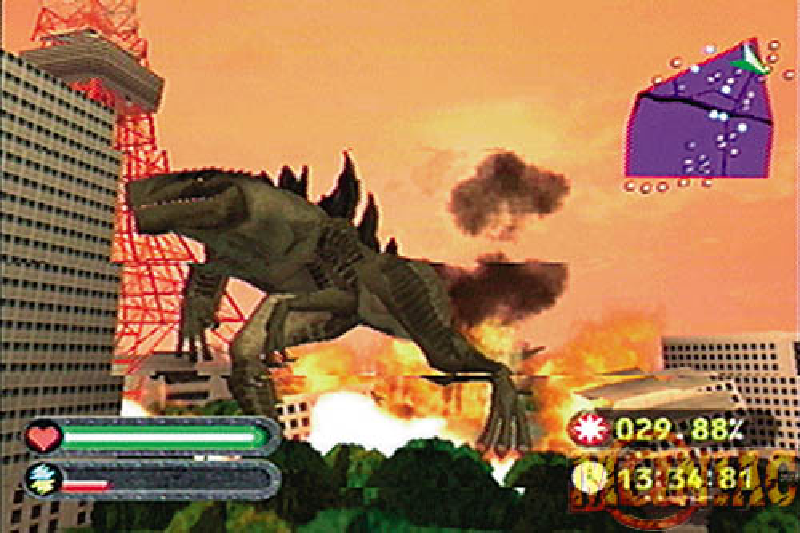
- Normal - Players destroy everything in 11 stages as quickly as possible.
- Time Attack - Players cause as much damage as possible in a limited amount of time.
- Collected Coliseum - Through playing a mini game in a Visual Memory Unit (VMU) that was sold separately from the game, players can obtain monsters and pit them against each other.
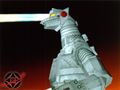
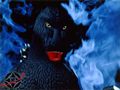
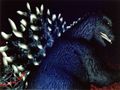
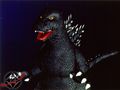
- Generations Theater - Has various clips spanning Godzilla's history from 1954 to 1998.
Monsters
Main game
Coliseum


Areas
There are five areas with eleven subsections in the game. They are:
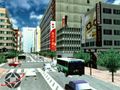
- Fukuoka - The first area in the game. It has two subsections.
- Osaka - The second stage in the game which also has two subsections
- Nagoya - The third area that, like the others, has two subsections
- Yokohama - The fourth area that is also the last to have two subsections
- Tokyo - The last section which fittingly is the largest of all with three subsections
JSDF
The JSDF will attack the player using its 11 different attack vehicles.
- Super X - Flying
- Super X2 - Flying
- Super X3 - Flying
- MBT-MB92 - Ground
- MBAW-93 - Ground
- CLT-95 - Ground
- MBAW-93 (Upgrade) - Ground
- ASTOL-MB93 - Flying
- Mitsubishi Type 89 IFV - Ground
- Mitsubishi F-15J - Flying
- AH-1S Cobra - Flying
Reviews
Godzilla Generations received extremely negative reviews, at least in the west. IGN's review, which was one of the first Dreamcast game reviews by a western source, slammed the game for being tedious and simple. The graphics were also harshly criticized. GameSpot gave the game a 3.2/10, saying that the inability to block and the fact all the kaiju could heal made the game boring.[1]
Fans have generally been much kinder to the game, since it is one of the few that features Minilla and Godzilla 1998 as playable characters, and also one of the few games that allows free-roaming destruction.
Gallery
-
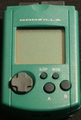 A Virtual Memory Unit (VMU) compatible with the game, required to play the Coliseum mode
 -
-
-
-
-
-
-
-
-
-
-
-
-
-
-
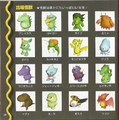 From the manual, chibi monsters that can be used in the Coliseum mode
 -
-



Videos
|
Trivia
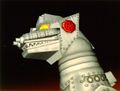
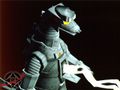
- In the game, Mechagodzilla possesses the Heisei Mechagodzilla's roar, despite being the Showa version of the character.
- Likewise, Minilla has BabyGodzilla's roar.
- Interestingly, Godzilla USA is listed as weighing 60,000 metric tons in the manual, a much greater number than his official weight of 500 tons and the exact same weight given to the Godzilla from Godzilla: The Series.
External links
References
This is a list of references for Godzilla Generations. These citations are used to identify the reliable sources on which this article is based. These references appear inside articles in the form of superscript numbers, which look like this: [1]
Comments
Showing 30 comments. When commenting, please remain respectful of other users, stay on topic, and avoid role-playing and excessive punctuation. Comments which violate these guidelines may be removed by administrators.

|

|

|

|

|

|

|

|

|

|

|

|

|

|

|

|

|

|

|

|

|

|

|