

Arsinoitherium
| |||||||||||||||||||||||||||||||||||||||||||||||||||||
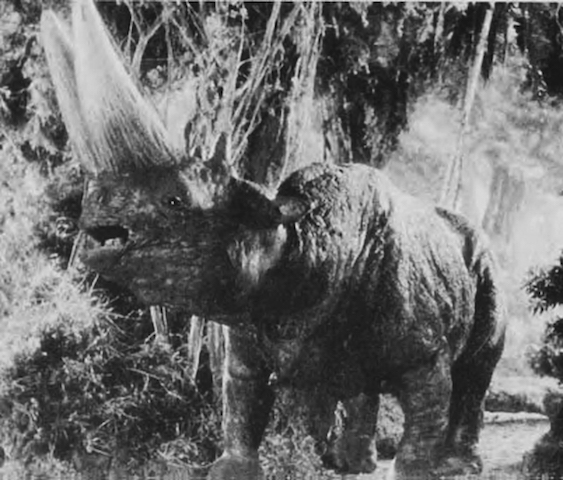
Arsinoitherium is an extinct genus of prehistoric mammal from the Late Eocene and the Early Oligocene. It was planned to appear in the original King Kong using a stop-motion puppet originally created for Willis O'Brien's Creation, before being replaced by Styracosaurus. Arsinoitherium was later considered for the 2005 remake directed by Peter Jackson, but was scrapped once again.
Name
Arsinoitherium's name comes from the Ptolemaic name for the Faiyum Oasis, "Arsinoe" (named after Queen Arsinoe II),[1] and the Greek word θηρίον (thēríon, meaning "beast").
Arsinoitherium was nicknamed "Rhino" for pre-production concept art of the 2005 King Kong film,[2] which is presumably referring to the creature's superficial resemblance to rhinoceroses, although it is instead more closely related to elephants and sirenians.
Appearance
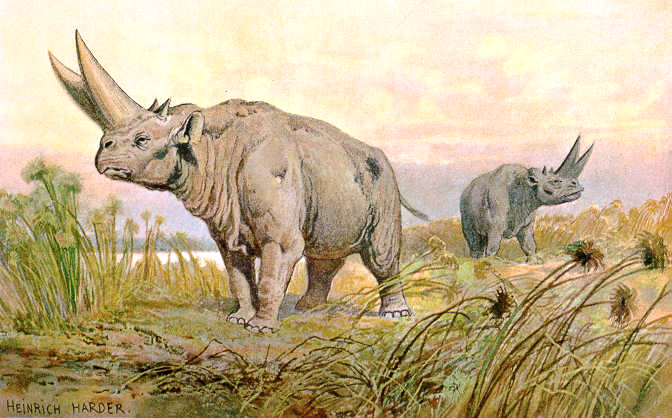
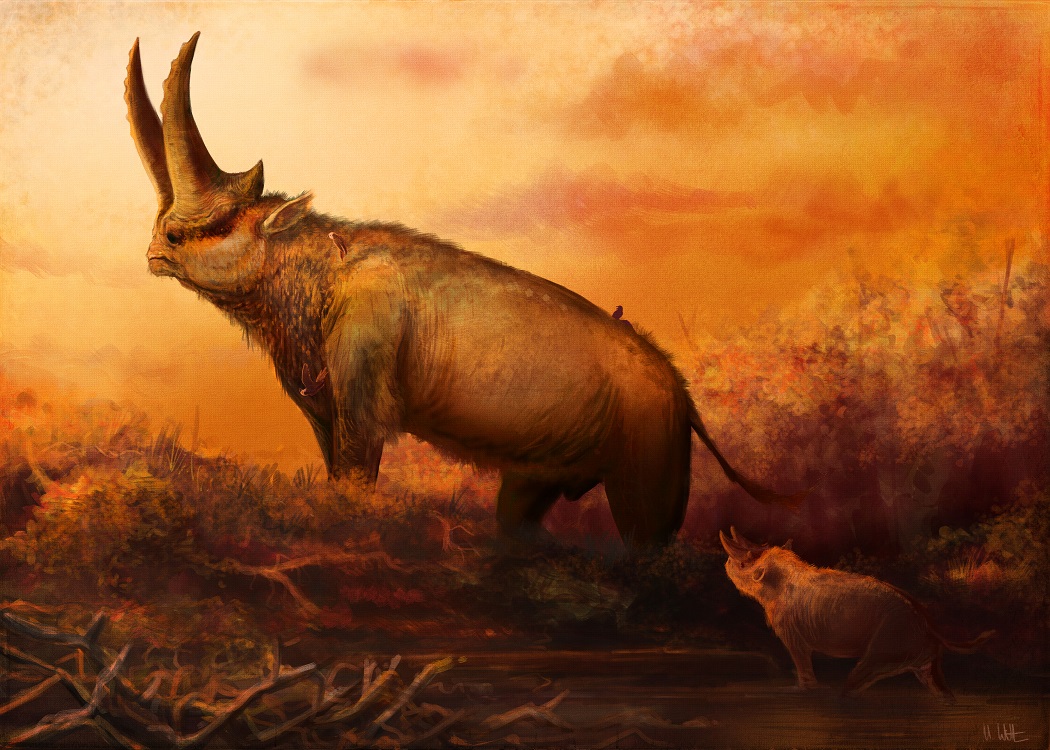
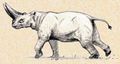
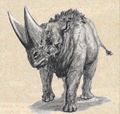
Since its discovery, Arsinoitherium has been depicted as a large, quadrupedal mammal famously resembling a rhinoceros. It had four pairs of horns on its head, a pair of long horns extending over its nose, and a pair of small horns positioned over its eyes. These horns were growths of bone and are thought to have been covered in hard keratin sheaths similar to those of bovines. It has massive, sturdy limbs with five toes on each foot, and are quite similar in structure to proboscideans.[3]
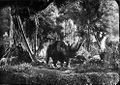
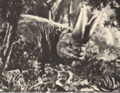
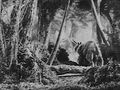
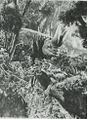
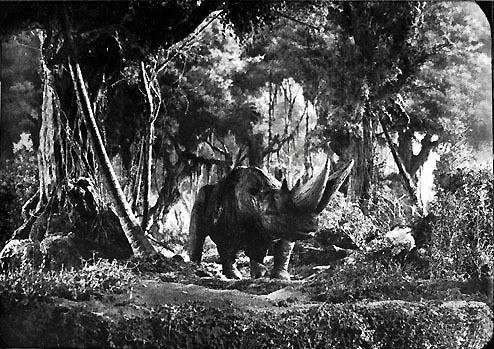
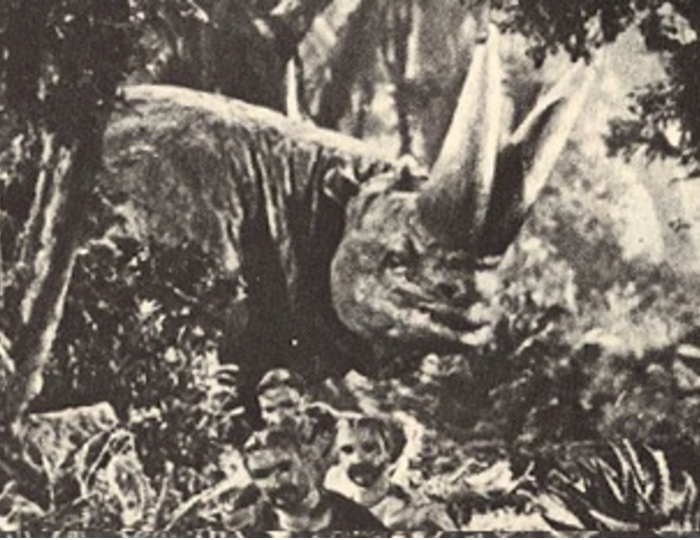
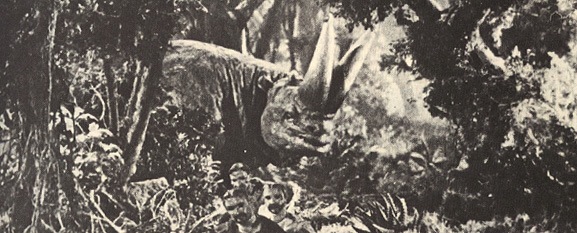
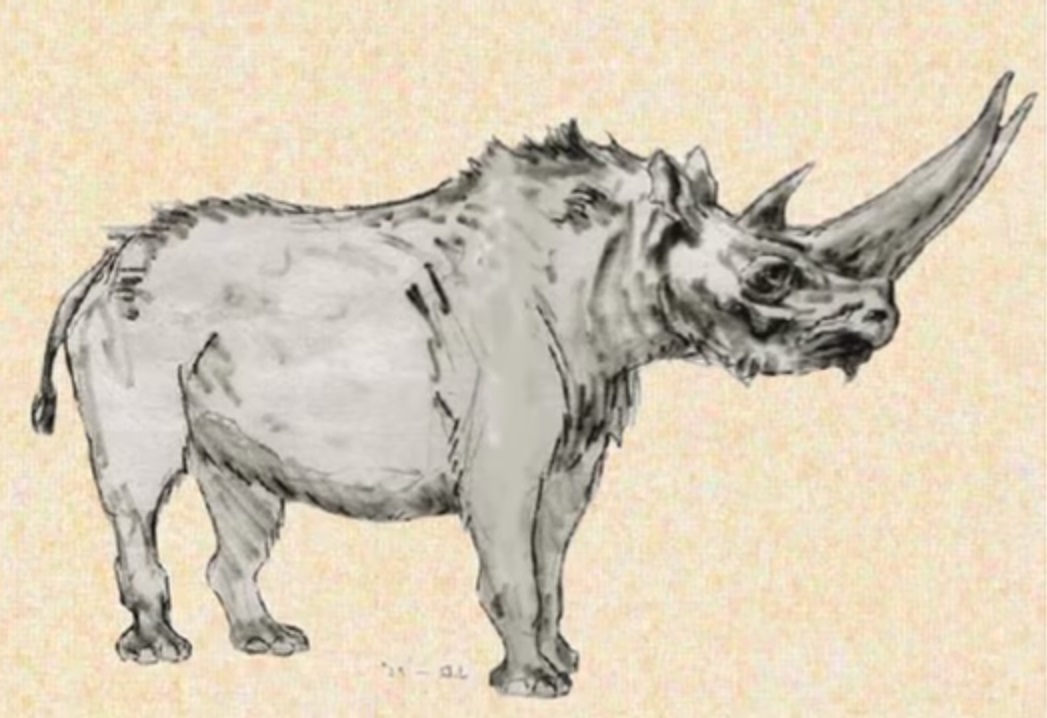
For Arsinoitherium's planned appearance in the 1933 King Kong film, its design is fairly consistent with the understanding of the creature at the time. It is a bulkily built animal with short, sturdy limbs. It has rough skin much like a rhino or elephant and no visible hair. Its neck is rather thin, and it has a hunch to its back.
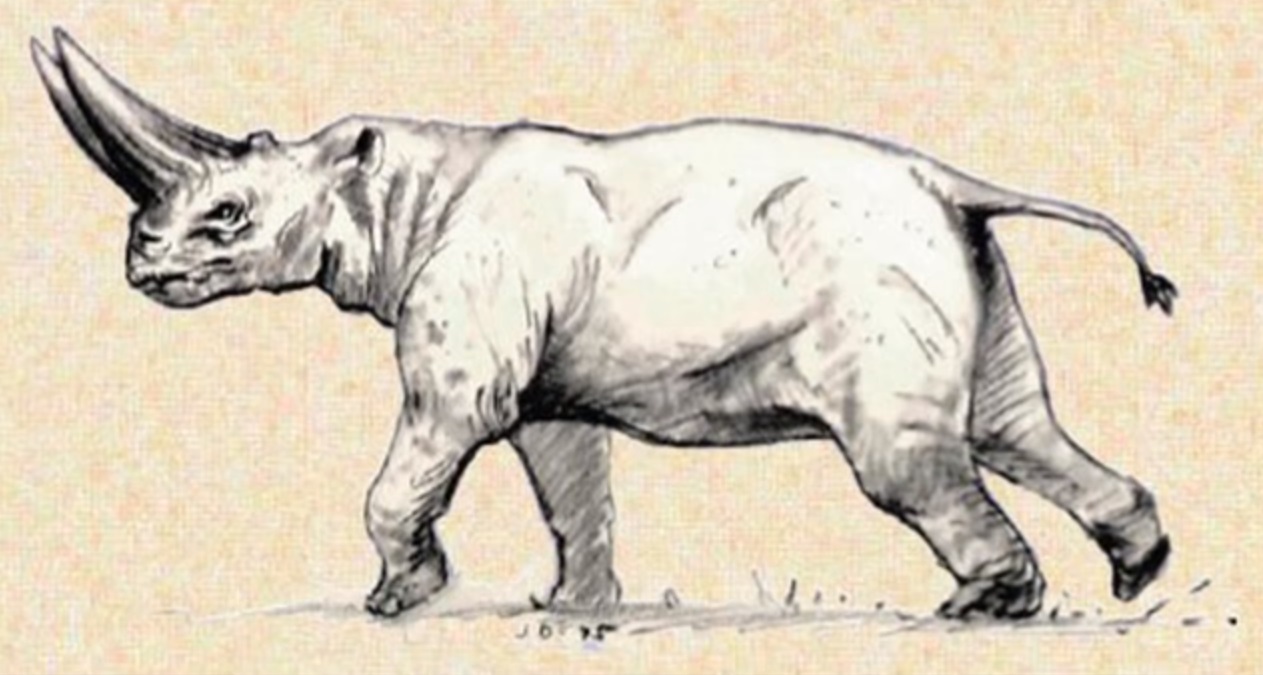
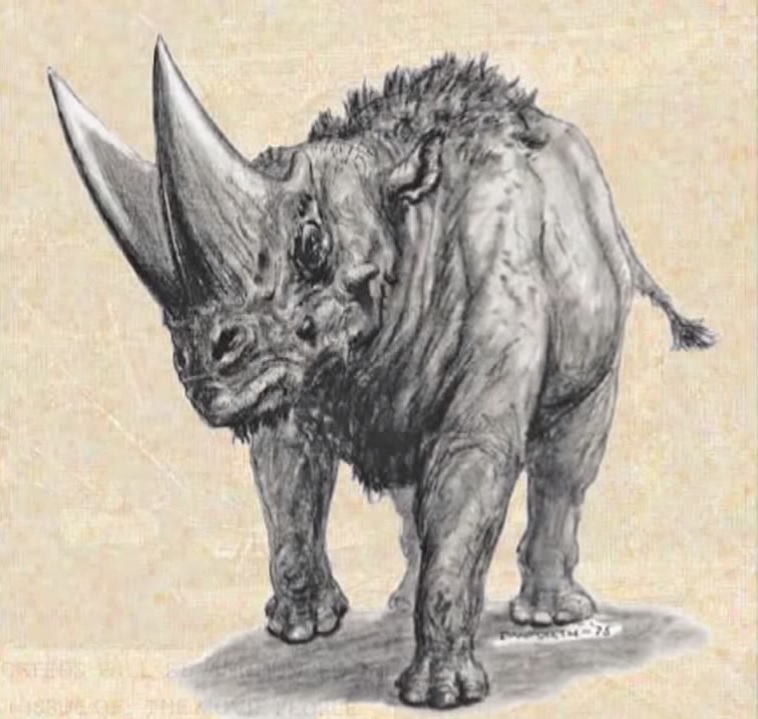
Concept art for the scrapped film The Legend of King Kong provides varying planned designs for Arsinoitherium. One piece depicts it practically the same in appearance to a modern rhinoceros, except with the two long horns like that of the real creature; unlike the real creature, however, it only has one short horn over its eyes. Two other pieces depict it closer in appearance to the real life Arsinoitherium, one hairless and the other with some patchy hair along its back, head, and chest.
Concept art for the 2005 King Kong film depicts it as fairly rhino-like, with rough, hairless gray skin. Its back has a steep hunch.
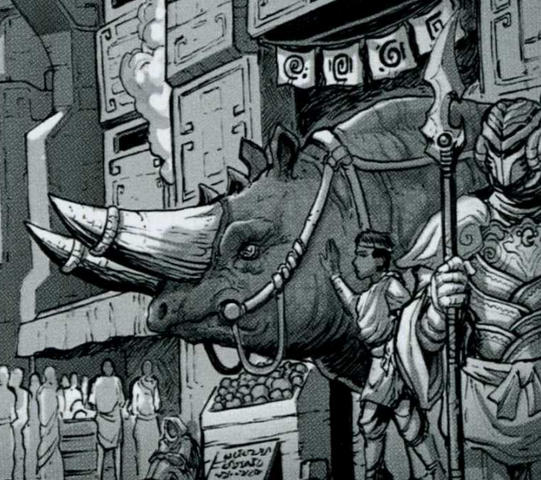
In The Last Hope, Arsinoitherium mostly resembles its real-life counterpart, but is much larger and exceptionally bulkier in comparison. Some are given ornamentation, such as on their horns.
Planned history
- Creation (1931)
- King Kong (1933)
- The Legend of King Kong (1976)
- King Kong (2005)
Creation

To be added.
King Kong (1933)
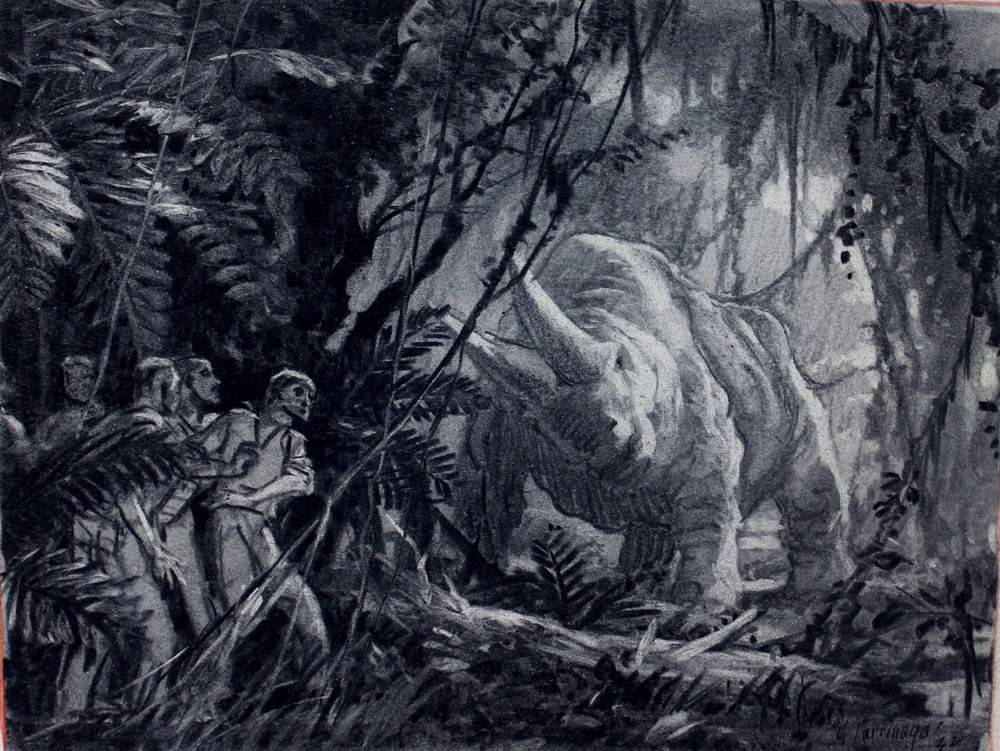
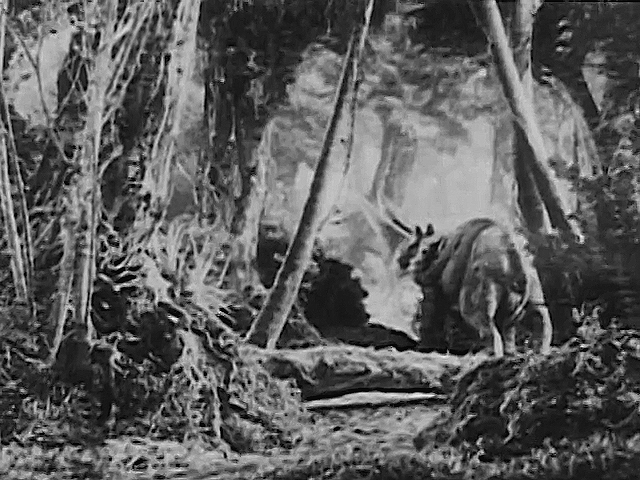
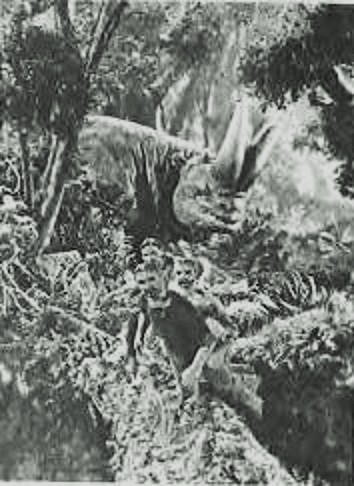
In the test reel, the Arsinoitherium was to appear during the log scene where it chased and charged at the Wanderer's crewmen out of the jungle and led them to the log that King Kong attacks. Director Merian C. Cooper then reshot the scene using a Styracosaurus instead.[4] Ultimately, the Arsinoitherium and the Styracosaurus were both cut from the final film.
The Legend of King Kong
Production artwork for the abandoned 1976 Universal film shows that the Arsinoitherium was again considered.[5]
King Kong (2005)
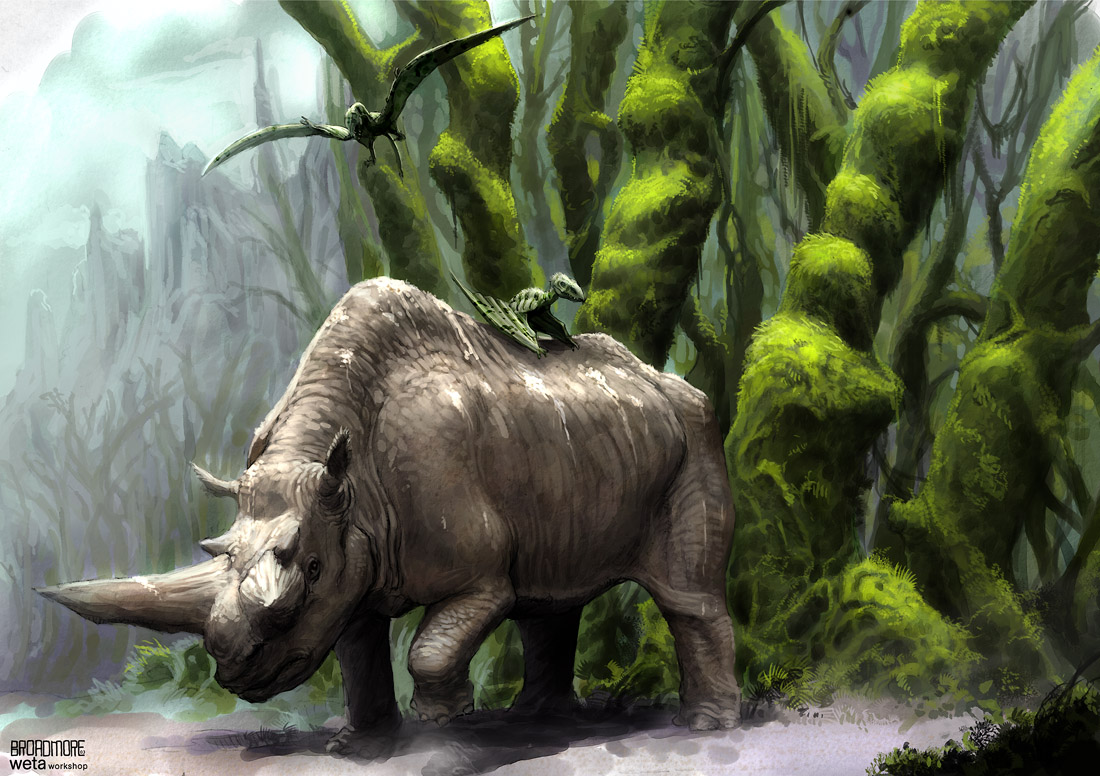
During early pre-production in 2003, Greg Broadmore created a piece of concept art he later referred to as "Rhino on Holiday" that prominently featured an Arsinoitherium in the jungle with two pterosaurs similar to Dimorphodon and Peteinosaurus around the animal.[2] The creature again did not end up being used in the finished film.
Abilities
Physical abilities
Due to their similarities with rhinos, Arsinoitherium are often depicted as powerful animals using their horns for attack and defense in a similar manner. For its planned appearance in the 1933 King Kong film, the Arsinoitherium would have charged at the crew of the Wanderer. In The Last Hope, the size and strength of Arsinoitherium was helpful to the Atlanteans, who used them as beasts of burden.
Despite being depicted charging quickly like a rhinoceros in some media—such as for its planned appearance in the 1933 King Kong film—it is thought their limbs were not actually adapted for such locomotion in real life, and rather for producing strong, forward-propelling motions to aid them in traversing swampy environments.[6][7]
Comics
- Godzilla, King of the Monsters (1992-1993)
- The Last Hope (2017)
Godzilla, King of the Monsters
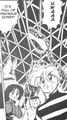
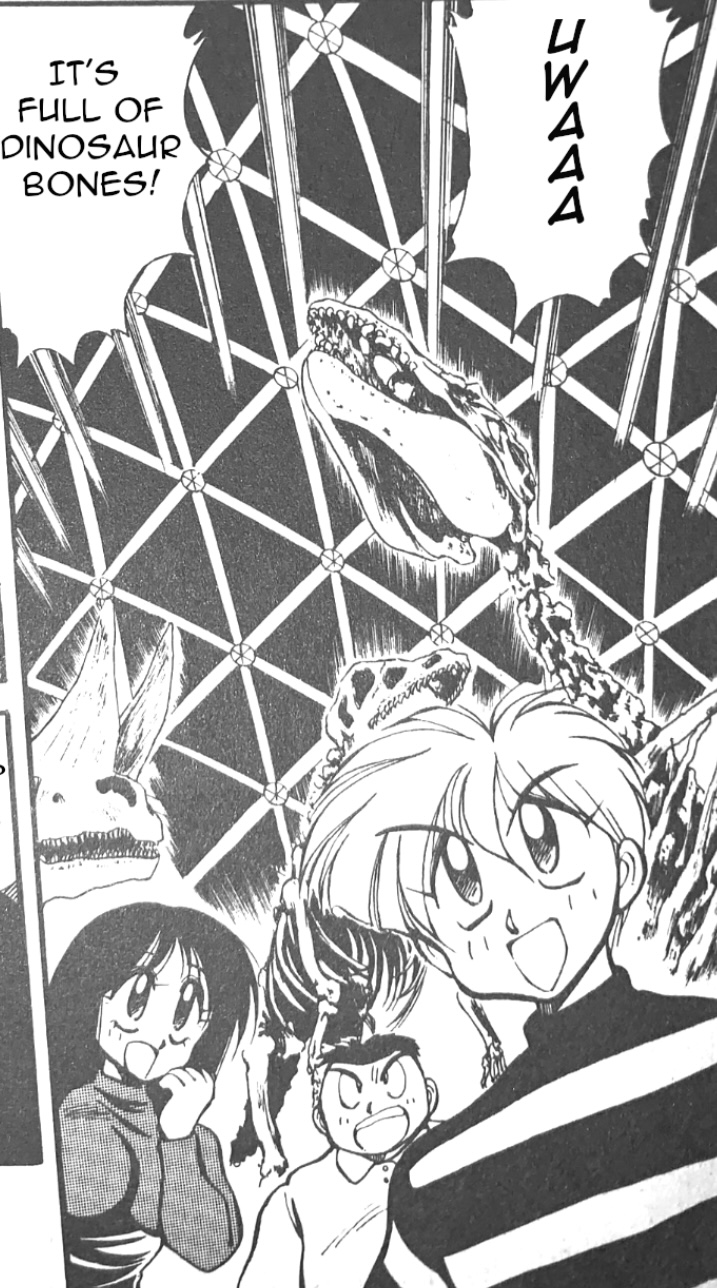
At a dinosaur exhibit in a museum, an Arsinoitherium skeleton can be seen among the prehistoric animals on display.
The Last Hope
Arsinoitheriums appear as a common beast of burden in ancient Atlantis until virtually being wiped out, alongside most of the civilization's other inhabitants, during the apocalyptic infestation of the voracious Gyaos.
Gallery
-
 Concept art by Mario Larrinaga
 -
-
-
-
-
-
 Concept art from The Legend of King Kong
 -
 Arsinoitherium skeleton in Godzilla, King of the Monsters
 -
 Concept art from The Legend of King Kong
 -
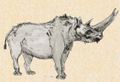 Concept art from The Legend of King Kong
 -
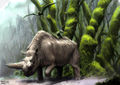 Concept art from King Kong (2005)
 -
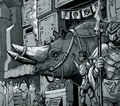 An Arsinoitherium from the one-shot Gamera comic The Last Hope
Trivia
- The front horns of the Arsinoitherium stop-motion puppet created for the 1933 film were made of wood attached to its armature by liquid latex.[8]
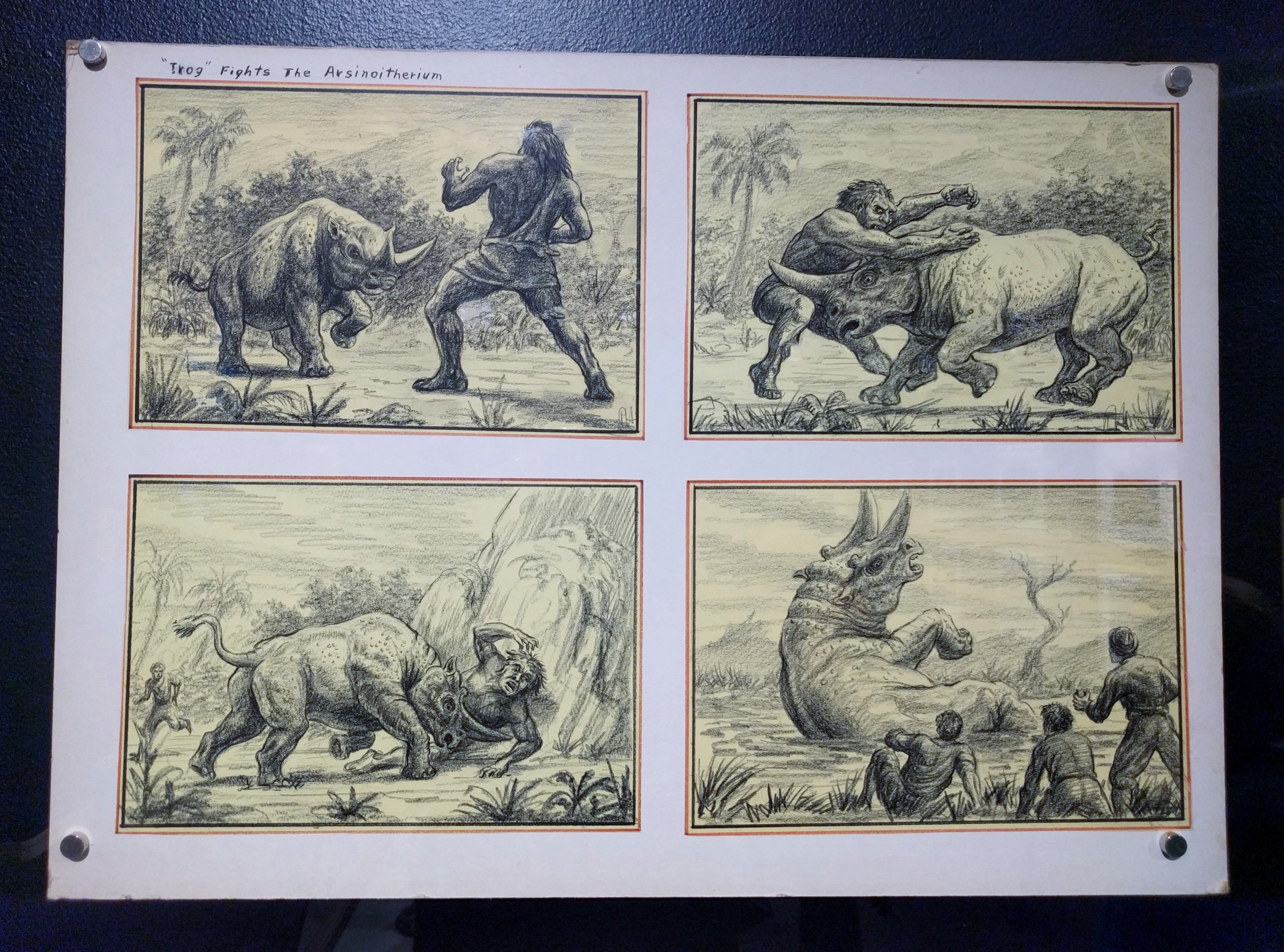
- Ray Harryhausen planned to have an Arsinoitherium appear in Sinbad and the Eye of the Tiger (1977) as one of the still-living prehistoric fauna of Hyperborea, even making pre-production concept art of the beast fighting a giant humanoid named the Troglodyte. The inclusion was a direct homage to the unused Arsinoitherium from both Creation and King Kong; ironically, Harryhausen's version also failed to make the final cut.
External links
References
This is a list of references for Arsinoitherium. These citations are used to identify the reliable sources on which this article is based. These references appear inside articles in the form of superscript numbers, which look like this: [1]
|
Comments
Showing 16 comments. When commenting, please remain respectful of other users, stay on topic, and avoid role-playing and excessive punctuation. Comments which violate these guidelines may be removed by administrators.

|

|

|

|

|

|