

The Luminous Fairies and Mothra (1961)
| ||||||||||||||||||||||||||||||||||||||||||||||||||||
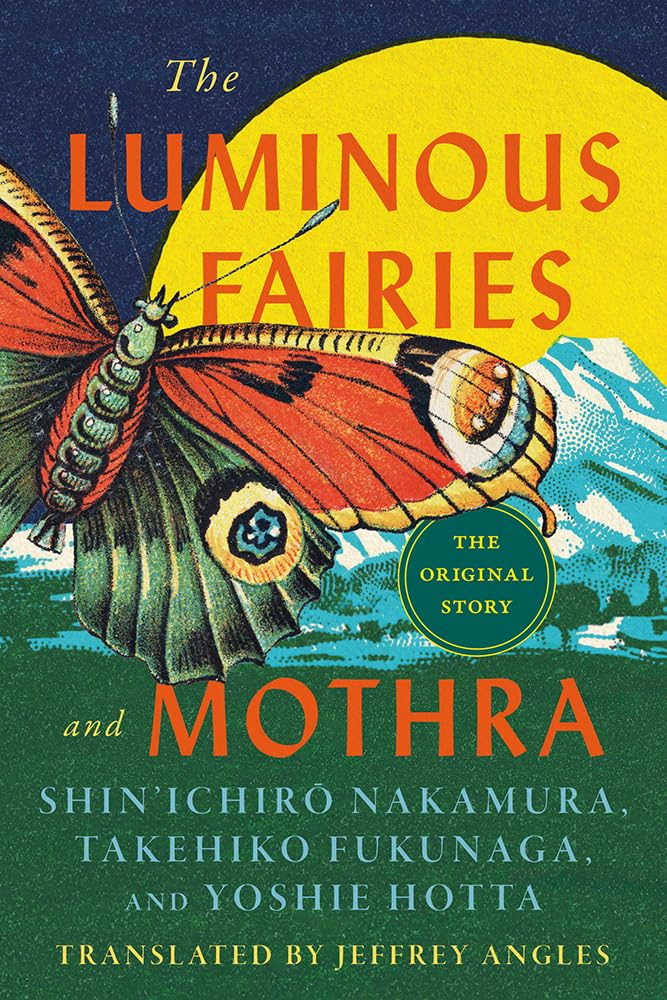
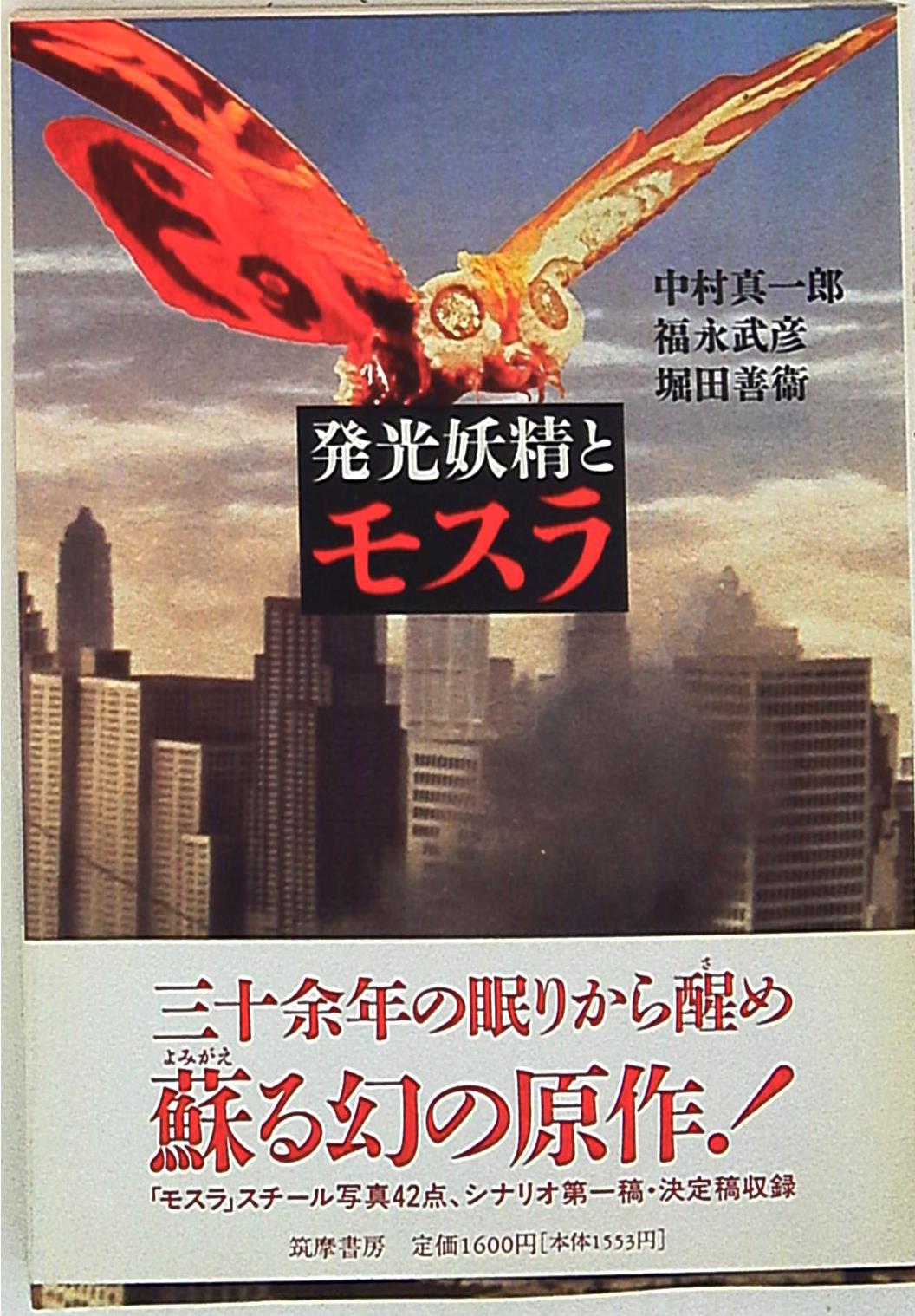
The Luminous Fairies and Mothra (発光妖精とモスラ Hakkō Yōsei to Mosura) is a serialized novel written in 1961 by Takehiko Fukunaga, Shinichiro Nakamura, and Yoshie Hotta. It marks the first appearance of Mothra in any form of media, and was the basis for her debut film. It was originally serialized in Asahi Weekly in January 1961, then republished as a paperback in September 1994.[1] University of Minnesota Press published an English translation by Jeffrey Angles on January 13, 2026.[2]
Plot
A Lovely Song from a Little Beauty in the Grassland (Takehiko Fukunaga)
Cargo ship Genyo-maru is sunk by a powerful typhoon. A rescue team is stunned to find four members of the crew alive and well on Infant Island, the site of numerous Rosilican hydrogen bomb tests. Even stranger, though no humans are known to live on the island, the men report waking up in a glowing cave where the indigenous inhabitants fed them soup and fruit, which seemingly protected them from radiation poisoning. A Japanese-Rosilican joint research expedition is quickly formed to investigate their claims, primarily physicists, biologists, doctors, and anthropologists. The sole linguist, Shinichi Chujo, and nuclear scientist Harada are both wary of Peter Nelson, the Rosilican information officer. When the expedition heads ashore, clad in radiation suits with built-in alarms, a large vampire plant attacks Chujo. Responding to his alarm, other members of the expedition reach Chujo to find him already freed; he claims that impossibly small women saved him. The next day, he uses the alarm again to call forth one of the women, a Shobijin who stands roughly 60 centimeters tall. Though her melodious language has no precedent, Chujo is able to communicate to her that Rosilica will no longer test hydrogen bombs on the island, to her joy. Before she can leave, Nelson seizes her, but her song quickly summons a group of furious Infant Islanders. Though the Rosilican releases her, he is resentful of the others for not standing their ground and openly declares the Shobijin to be less than human. Chujo, though enraptured by her, refrains from calling her again, wary that Nelson might win over the others if given another chance. He hears her song again, responding to his thoughts, then a chorus coming from each end of the island.
Four Small Fairies on Display (Shinichiro Nakamura)
The expedition returns to Japan to much fanfare, but refuses to speak to the press before heading to a hospital to test for radiation exposure, setting off a frenzy of speculation. In a terse press conference, Nelson finally divulges that they discovered something on the island besides humans, but not what it was. Japan Eastern News reporter Zenichiro Fukuda hounds numerous Japanese expedition members for answers. Harada offers half-serious advice that Fukuda should go to the island himself and ask Chujo to teach him the language, but the hot-blooded reporter does just that. Though helpful, the linguist remains quiet about what he saw on the island, only warning Fukuda to avoid the vampire plants. Fukuda quickly makes contact with the Infant Islanders, who lead him to the same glowing cave the Genyo-maru survivors witnessed. There they share with him their origin myth, in which Ajima, god of the night, created the sea, sky, land, and islands, and Ajigo, goddess of the day, created the sun, plants, and animals. From their union came the unhatching egg of Mothra and scores of glowing moths. The latter enraged Ajima with their numbers, and he retaliated by killing half of all life, then breaking himself into four pieces. In her grief, Ajigo also broke her body into four pieces, creating the tiny, immortal Airena who served Mothra. Each used silk from the moths to weave clothes for themselves.
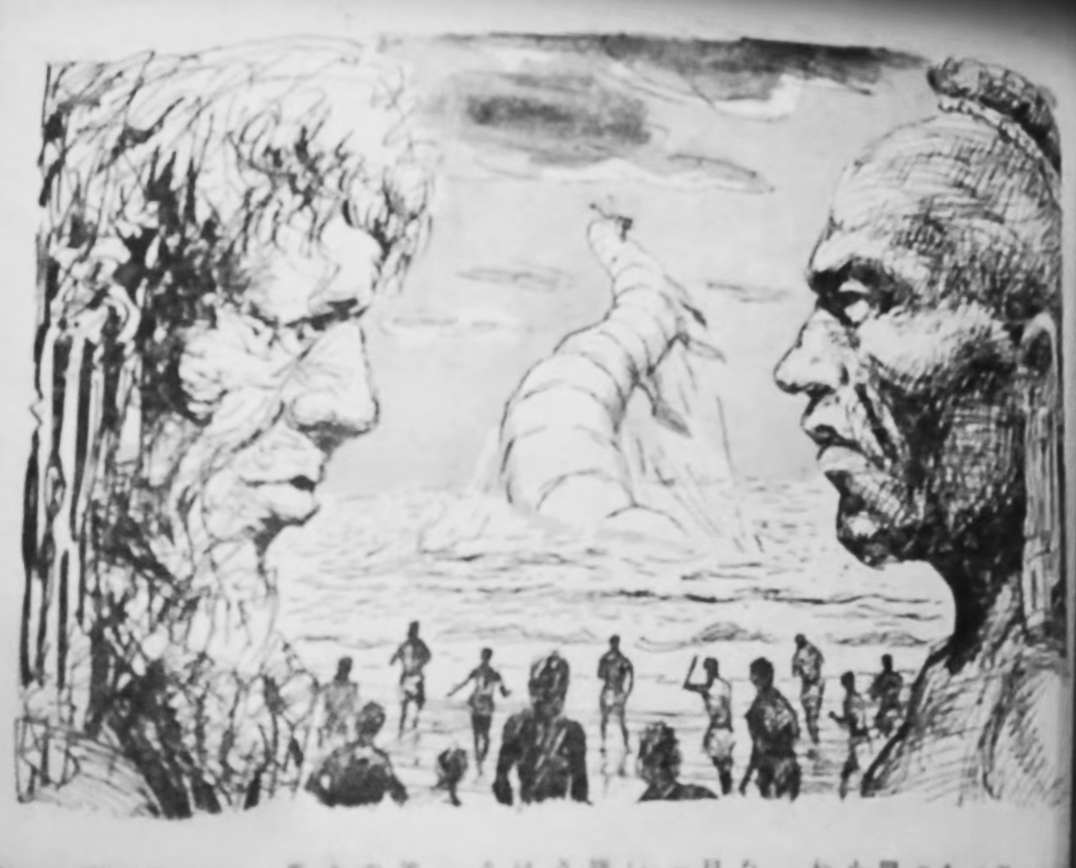
Fukuda dismisses the story as fantasy until he takes a different path through the cave and comes upon a massive glowing egg and four singing Shobijin. The next morning, he watches as a force led by Nelson storms Infant Island, kidnapping the Shobijin and shooting any Infant Islander who tries to intervene. When he tries to flee, he trips and loses consciousness. Nelson holds a press conference in Japan to reveal the Shobijin before announcing they will be performing in Tokyo's largest theater. Though well-attended by dignitaries and socialites, the show provokes humanitarian concerns with the public. Chujo attempts to convince Nelson to free the fairies, but the sneering promoter responds that they are his property. He offers Chujo tickets to see the show; overwhelmed by the need to see the fairies again, the linguist agrees. He notices, however, that their song contains a plea to a supernatural force. Meanwhile, Fukuda awakens in the cave to find the Infant Islanders tending to each other's injuries. They lead him to the egg and pour their anguish into ritual dances before it. Several nights later, it hatches into a giant silkworm larva—Mothra itself—who quickly crawls into the sea and vanishes from sight.
Mothra Reaches Tokyo Bay (Yoshie Hotta)
A sailor on the fishing boat chartered to pick up Fukuda spots Mothra swimming in the distance. Meanwhile, Chujo watches another performance by the Shobijin, joined by his assistant Michiko Hanamura. Their song is captivating no matter the musical backing—but when the show ends, they brighten and refuse to stop, repeating the word "Mothra" over and over. Chujo attempts to gain entrance to the green room, but is swiftly rebuffed. With both the Japanese prime minister and Rolisican ambassador present, hoping to use the fairies to help smooth over an unpopular military alliance the countries had recently formed, the event's security is heightened.
Fukuda reports on Nelson's abduction of the Shobijin in detail, but, fearing disbelief from his editors, simply describes Mothra as something resembling a giant piece of driftwood. After viewing with distaste a newspaper photo of the Shobijin with the two political figures, he spots Fukuda's article mentioning the "driftwood", which is echoed in another paper. Linking the object to the word "Mothra", he rushes to inform Hanamura and Harada of his insight. While Harada feels there's nothing they can do about the monster, should it exist, he is outraged by the rest of Fukuda's reporting. Chujo and Haruda attempt futilely to meet with Nelson, while Hanamura contacts a student protest leader she is friends with. Nelson, now traveling with a bodyguard, continues to refuse interviews while giving a single television station exclusive rights to cover the performances. The public is divided on the ethics of it, with many listeners detecting sadness in the Shobijin's songs.
Mothra, now much larger, is sighted by a cargo ship and a plane as it swims towards Japan. When Chujo and Haruda finally secure a meeting with Nelson, he scoffs at the prospect of Mothra's existence. Chujo suddenly begins to chant the monster's name, a chant the Shobijin quickly pick up in the other room. The fairies are unconcerned that Nelson refuses to return them to Infant Island, but express regret at the chaos Mothra will cause in Japan when it rescues them.
The Japanese government soon verifies Mothra's existence and orders coastal residents to prepare for evacuation while pondering activation of its alliance with Rosilica. Mothra soon makes landfall in Kamakura, briefly submerging the island of Enoshima in the process. Nelson nonetheless holds the scheduled Shobijin performance that night, which is protested by students led by Hanamura. The fairies' song causes Mothra to return to the sea, which Chujo and Fukuda believe was intended to reduce the destruction it would cause.
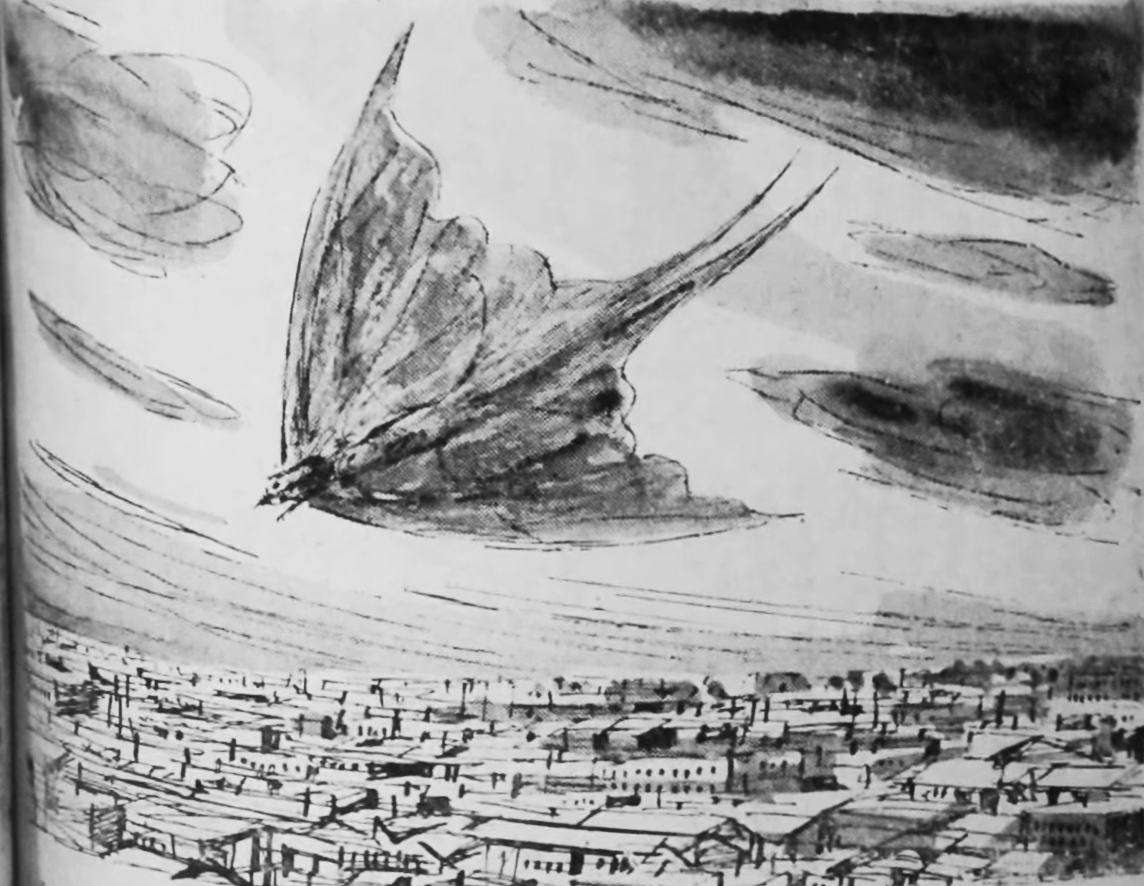
Rosilica publicly encourages Japan to activate their alliance, particularly because it would be in defense of what they consider to be Nelson's personal property. Nelson himself quietly flees for Rosilica with the Shobijin. Mothra soon makes landfall again in Tokyo, shrugging off the military force deployed against it. It crawls to the National Diet Building and spins a cocoon around it. Chujo and Fukuda publicly blame Nelson for the destruction, galvanizing more protesters. With Rosilica fearing Mothra will attack their country next, Japan accepts their offer to help destroy the monster, but limits their involvement to command over the JSDF. A heat-ray emitter sets the cocoon ablaze, unintentionally speeding Mothra's growth. She emerges as an imago whose wings repel the heat rays and takes to the sky, downing fighter jets.
Mothra soon raids Rosilica's capitol, New Wagon City, amidst protests over the violence Nelson ordered on Infant Island. He nonetheless keeps the Shobijin performing, and Mothra, too large to safely recover them, becomes more and more agitated. The Rosilican government asks for Chujo's aid in resolving the crisis due to his understanding of the Infant Island language; Fukuda accompanies him. By the time they reach the city, Mothra has largely reduced it to rubble. After talking with the fairies, Chujo and Fukuda arrange for them to be brought to the airport. The Shobijin sing to Mothra while mourning the destruction she's caused. When she touches down at the airport, they crawl seamlessly into her eyes.
Mothra makes a stop at Infant Island before soaring into space and entering a mysterious anti-world where humanity cannot yet follow. Chujo and Fukuda fly home in silence—until Fukuda jokes Chujo won't have an easy time if he marries such a skilled activist as Michiko.
Appearances
Monsters
Characters
|
Weapons, vehicles, races, and organizations
Locations
|
Gallery
-
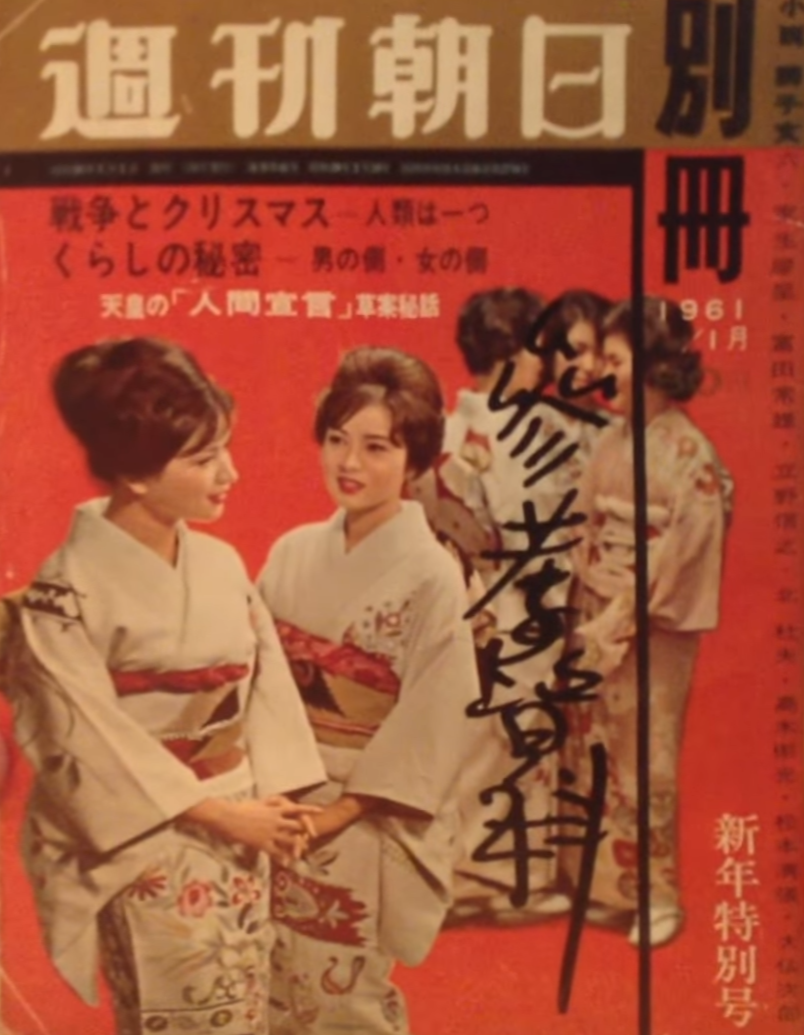
 The Asahi Weekly January 1961 issue which contains the original story
 -
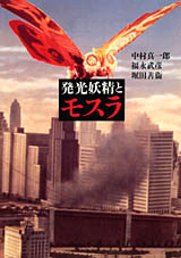
 The 1994 paperback front cover
 -
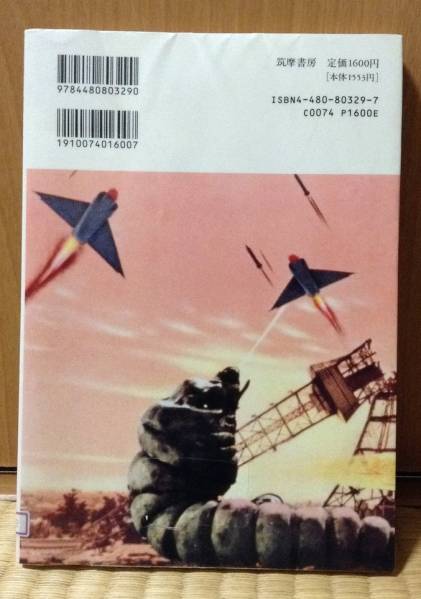
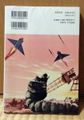 The 1994 paperback back cover
 -
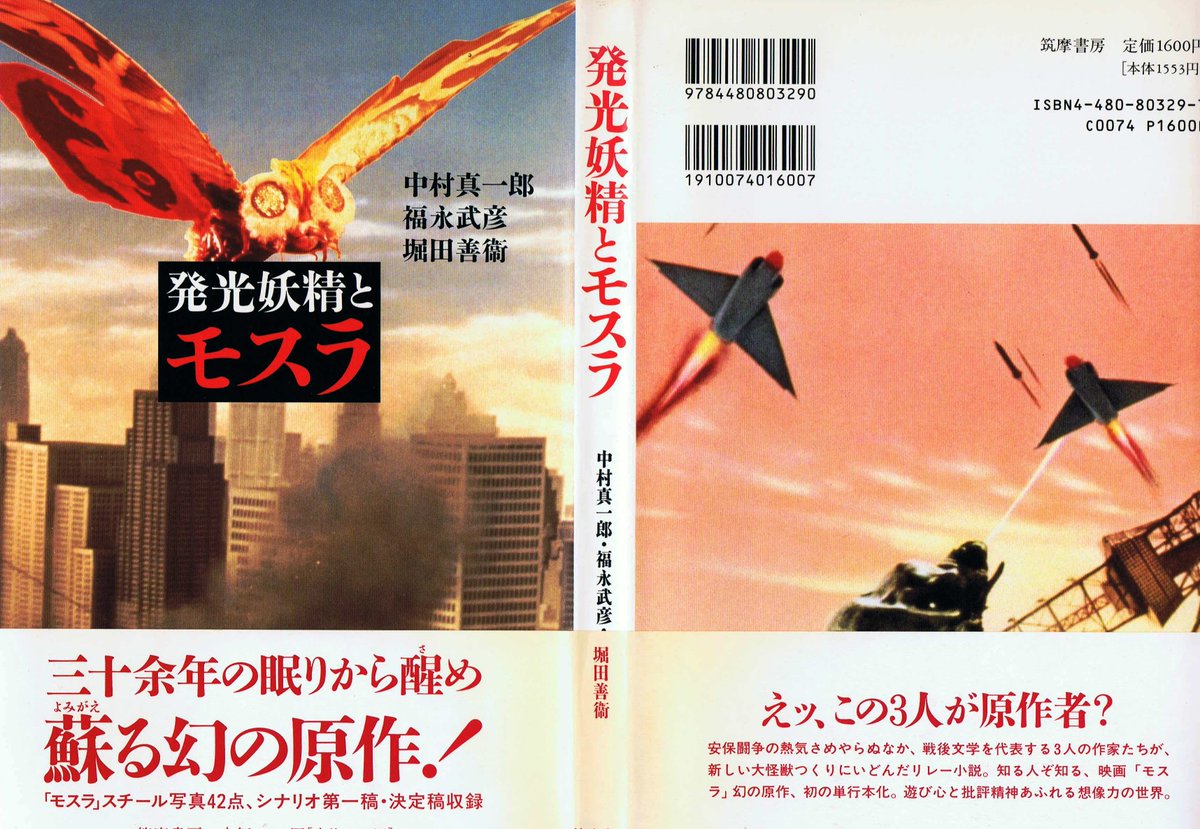
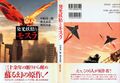 The 1994 paperback front and back covers with its obi
 -
 The Mothra Larva as originally depicted
 -
 The Mothra Imago as originally depicted
 -
 The islanders watching the Mothra Larva swim away from the island to rescue the Ailenas
 -
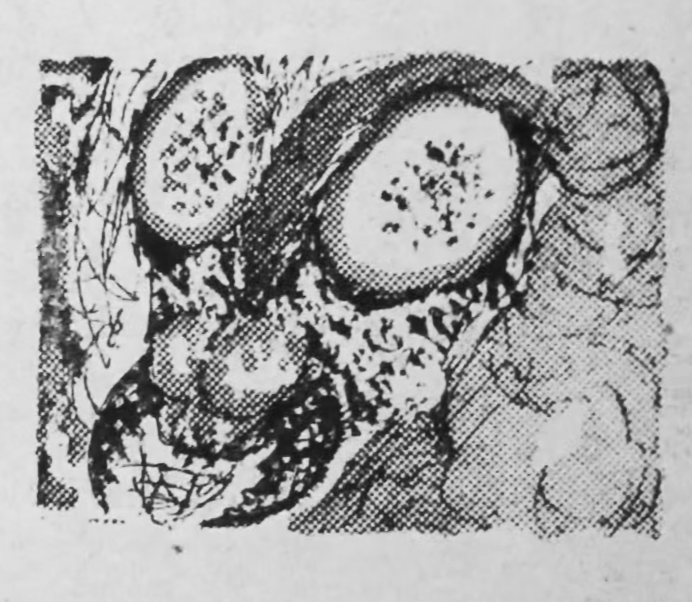
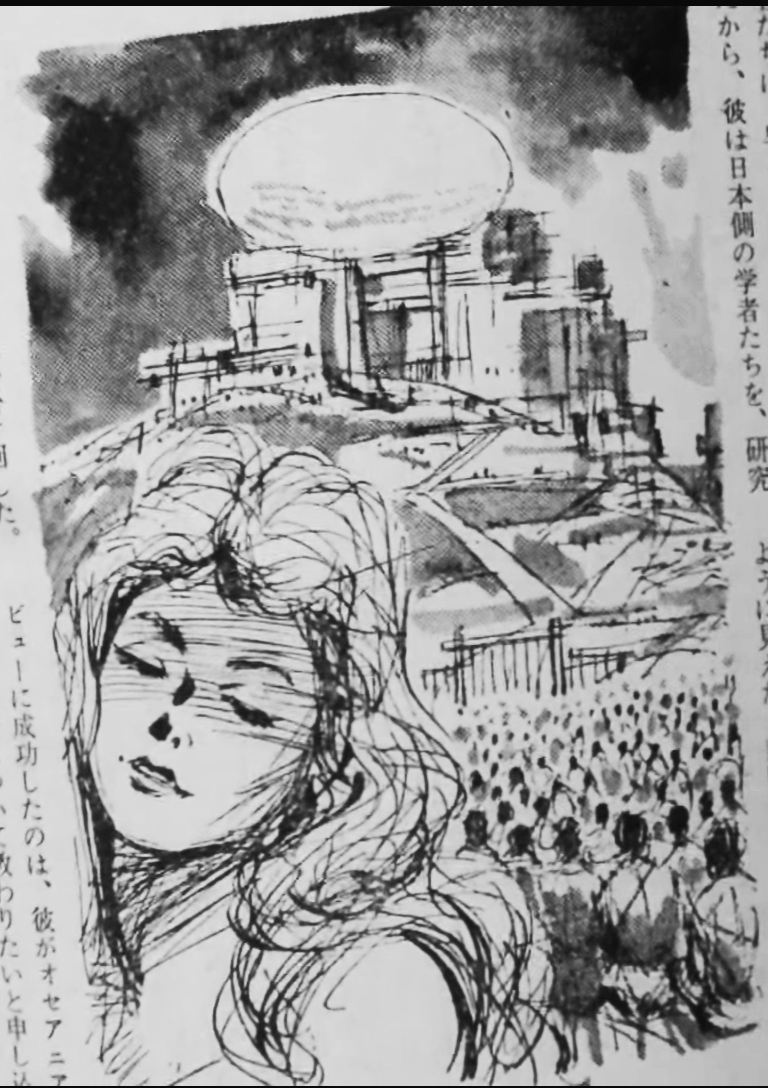
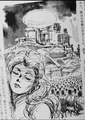 An Ailena
Trivia
- A news bulletin reports that Mothra is "larger than the Godzillas seen in the past", tying the story to the first two Godzilla films prior to any of Toho's science fiction films crossing over with them. Though the reference was removed from the film, Mothra soon encountered Godzilla in Mothra vs. Godzilla (1964).
References
This is a list of references for The Luminous Fairies and Mothra. These citations are used to identify the reliable sources on which this article is based. These references appear inside articles in the form of superscript numbers, which look like this: [1]
|

| |||||||||||||||||||||||||||||||||||||||||
Comments
Showing 17 comments. When commenting, please remain respectful of other users, stay on topic, and avoid role-playing and excessive punctuation. Comments which violate these guidelines may be removed by administrators.

|

|

|